
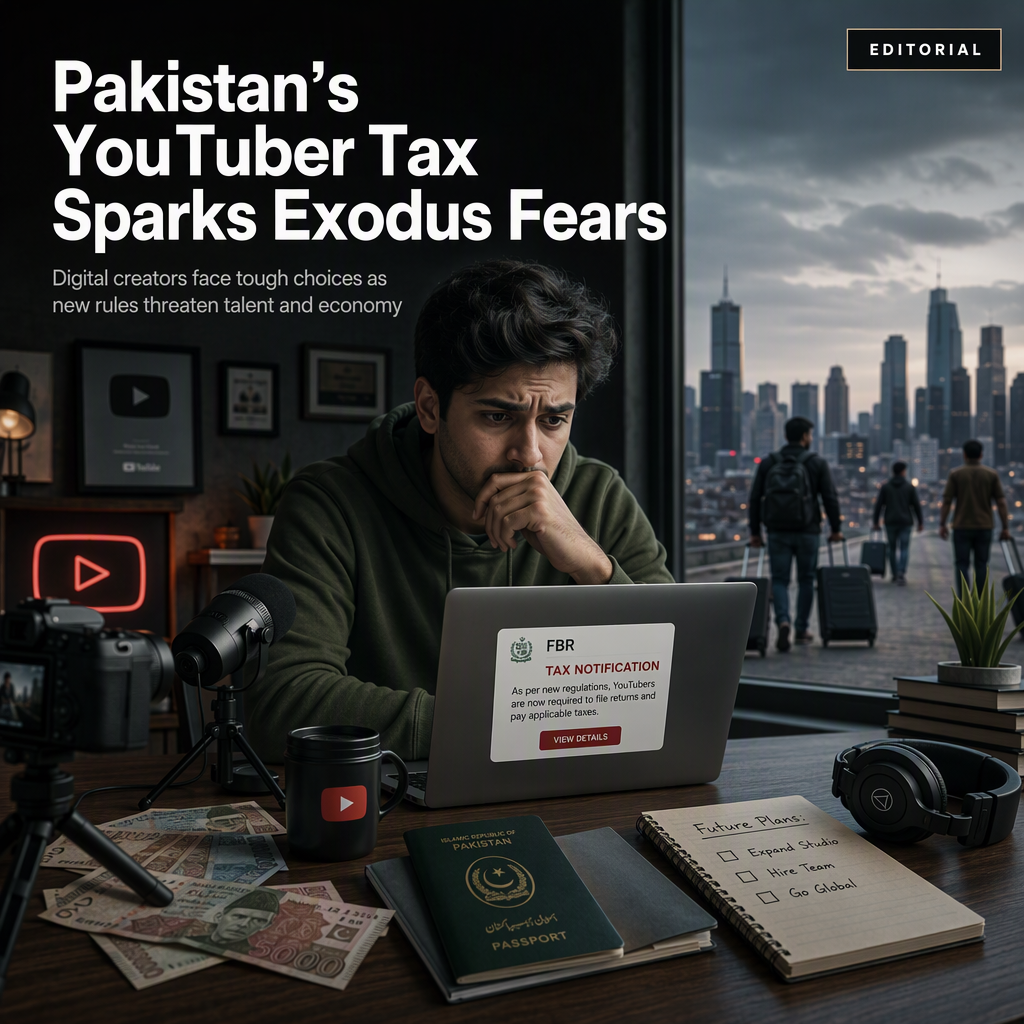
Pakistan has introduced strict new taxation rules targeting YouTubers and other content creators, raising concerns about a potential exodus of digital talent from the country [1]. The Federal Board of Revenue announced on September 23 that the new guidelines cap creators' deductible expenses at 30%, meaning 70% of their income will be considered taxable [1]. Additionally, the assumed income calculation is set at 70 cents per 1,000 views, a figure that has sparked contention between authorities and creators [1].
Financial experts warn that these measures could incentivize creators to move their operations abroad or receive payments in foreign accounts to avoid the higher tax burden in Pakistan [1]. The policy is viewed as potentially detrimental to Pakistan’s digital economy, which relies significantly on freelance and creator income [1]. A tax consultant noted, "This policy may force creators to relocate or find alternative ways to receive their earnings," emphasizing the risk of losing local talent and undermining the country's digital ecosystem [1].
The prevailing sentiment among creators is negative, with widespread concerns about the sustainability and competitiveness of their businesses under the new tax regime [1]. No market charts, technical analysis, or specific company ticker symbols were mentioned in the article [1].
CONCLUSION
Pakistan's new tax policy for YouTubers and content creators is generating significant concern within the digital community, with experts warning of a possible talent flight and negative impact on the country's digital economy. The restrictive deductible cap and income assumptions are seen as major hurdles, prompting creators to consider relocating or restructuring their operations.