German Retail Sales data for May surprised to the upside, with a month-on-month increase of 1.1%, beating expectations of a 0.1% contraction and reversing a downwardly revised 0.4% decline in April [1][2]. On a year-on-year basis, retail sales climbed 1.8% in May, compared to a 0.6% drop in April and well above the market consensus of 0% [1][2]. The data, released by Destatis, highlights a rebound in German consumer spending.
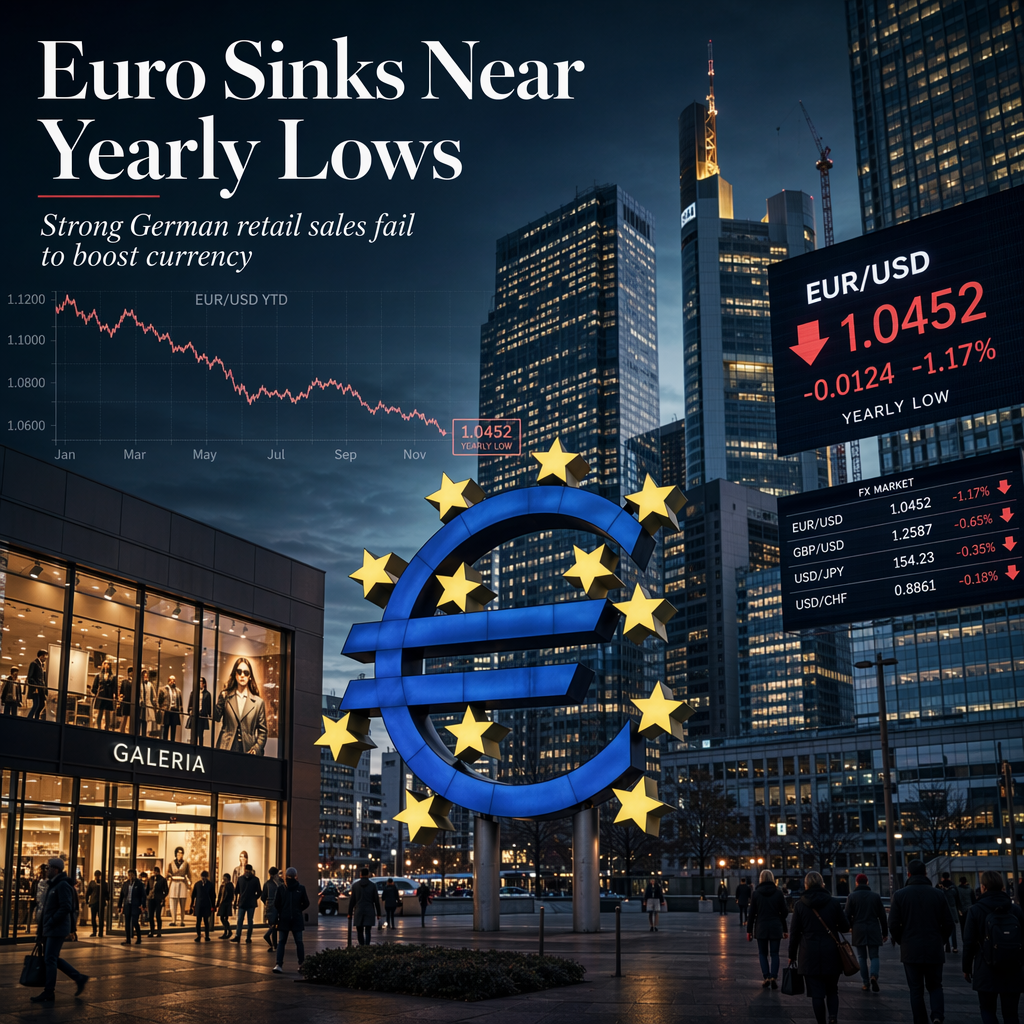
Despite the positive retail sales figures, the Euro (EUR) remained under pressure against the US Dollar (USD), trading at 1.1385–1.1386 at the time of reporting, close to yearly lows and on track for a nearly 2.30% decline in June—its weakest monthly performance since July of the previous year [1][2]. The upbeat data failed to spark a rally in the EUR/USD pair, which was down 0.31% on the day following the release [2].
The US Dollar's strength is being supported by market expectations that the US Federal Reserve (Fed) may hike interest rates as soon as September, amid persistent inflationary pressures linked to Iran’s war and recent robust US macroeconomic data [1]. The Fed's perceived hawkish stance has overshadowed positive European data, contributing to the Euro's weakness [1]. Additionally, the US Supreme Court's decision to block President Donald Trump's attempt to fire Fed Governor Lisa Cook has reinforced confidence in the central bank's independence [1].
Market volatility remains subdued as investors await key US employment indicators, including the JOLTS Job Openings data and Thursday’s Nonfarm Payrolls (NFP) report, with June payrolls expected to show a net employment increase of 110,000 after 172,000 in May [1]. On the geopolitical front, reports indicate that US and Iranian negotiators are in Doha to resume peace talks, which has kept oil prices at pre-war levels and provided some support to the Euro [1].
CONCLUSION
Despite stronger-than-expected German Retail Sales data, the Euro continued to weaken against the US Dollar, reflecting the dominance of US monetary policy expectations and geopolitical factors. The market reaction to the retail sales release was muted, with the EUR/USD pair remaining near yearly lows. Investors are now focused on upcoming US employment data, which could further influence currency movements.