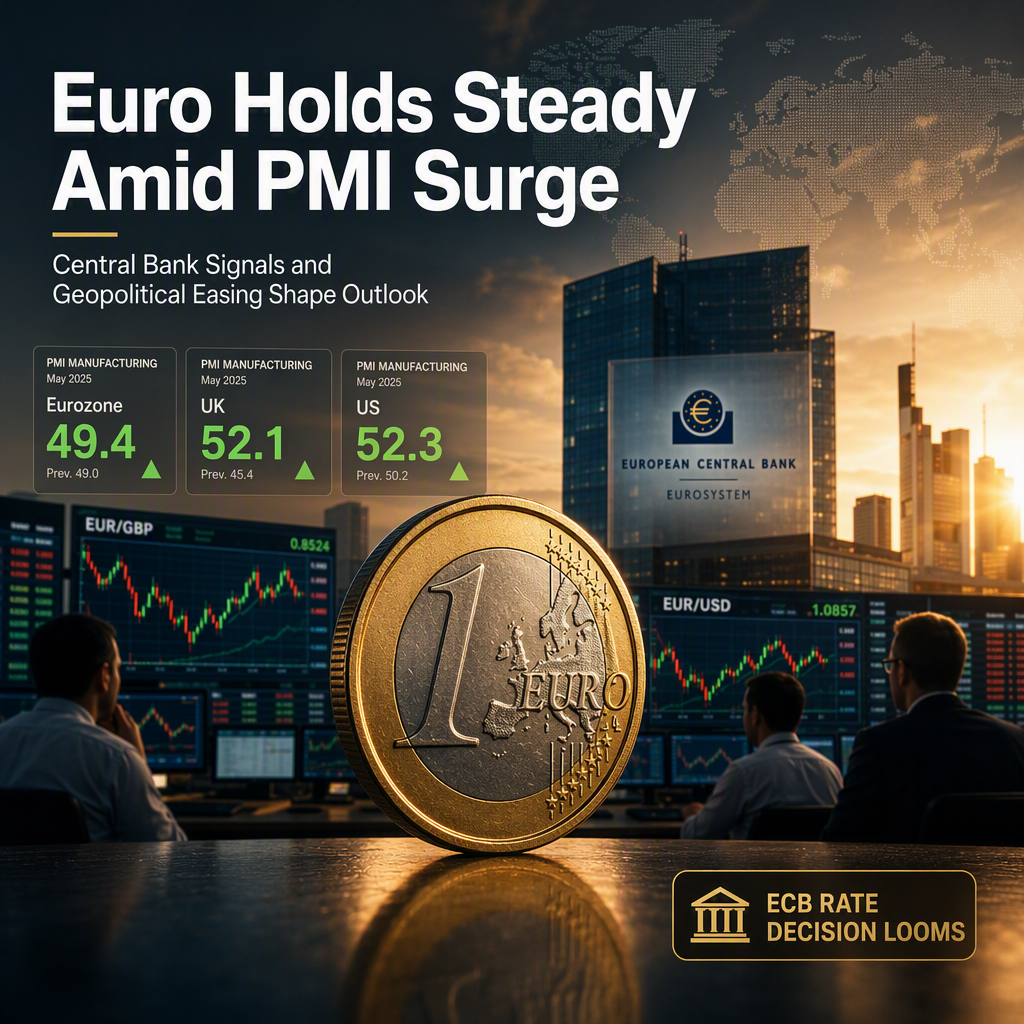
The Euro experienced mixed trading against both the British Pound and the US Dollar on Friday, as investors digested robust Purchasing Managers Index (PMI) data from the Eurozone, the UK, and the US, alongside evolving geopolitical signals from Iran. Against the British Pound, the Euro slipped, with EUR/GBP hovering just below the 0.8570 area, despite strong August flash PMIs on both sides. The Eurozone composite PMI reached a nine-month high, led by a notable surge in Manufacturing, particularly in Germany, where factory activity hit its highest level in over four years. However, German Services PMI fell below the 50 threshold, indicating contraction and contributing to a mixed outlook for the Euro. In the UK, the composite PMI also exceeded expectations, driven by Services, while Manufacturing eased in line with forecasts. Weaker-than-expected UK Retail Sales had minimal impact on Sterling's performance [1].
On the EUR/USD front, the Euro pared earlier gains as the US Dollar stabilized after retesting a three-month low. EUR/USD traded around 1.1677, down from an intraday high of 1.1711, its highest since May 14. US preliminary S&P Global PMI data showed business activity expanding in August, with the Composite PMI rising to a 52-month high of 56.0 and the Services PMI reaching a 20-month high of 56.8. The Manufacturing PMI, however, slipped to a five-month low of 53.2. The US Dollar Index (DXY) recovered to 98.82 after dipping to 98.56. Despite this pullback, EUR/USD remained on track for a fourth consecutive weekly gain, as concerns about US fiscal credibility and fading expectations of a Federal Reserve rate hike weighed on the Greenback. The CME FedWatch Tool indicated a 65% probability that the Fed would keep rates unchanged next month, following softer US employment and inflation data for July. Nonetheless, energy-driven inflation risks linked to the US-Iran stalemate kept the possibility of a rate hike alive [2].
Geopolitical developments also influenced market sentiment. Iranian President Masoud Pezeshkian signaled a desire to end conflict with the US "from a position of strength," suggesting a tone of de-escalation. This easing of Middle East tensions contributed to a more stable backdrop for European currencies, although it did not trigger a significant directional move [1].
Looking ahead, the monetary policy outlook appears to favor the Euro, with markets widely expecting the European Central Bank (ECB) to raise interest rates in September. ECB Governing Council member Martins Kazaks stated that the central bank remains "well positioned to tighten policy further if needed," noting that Euro area inflation is still near 3%, above the ECB's target. Kazaks emphasized that the September decision will be data dependent, but markets have largely priced in another 25 basis point hike following June's move [2].
CONCLUSION
The Euro's performance was shaped by strong PMI data, shifting central bank expectations, and signs of geopolitical de-escalation. While the Euro slipped against the Pound and pared gains versus the Dollar, the broader outlook remains supported by expectations of further ECB tightening. Market sentiment is cautious but leans slightly positive for the Euro, with upcoming central bank decisions and geopolitical developments likely to drive future moves.