
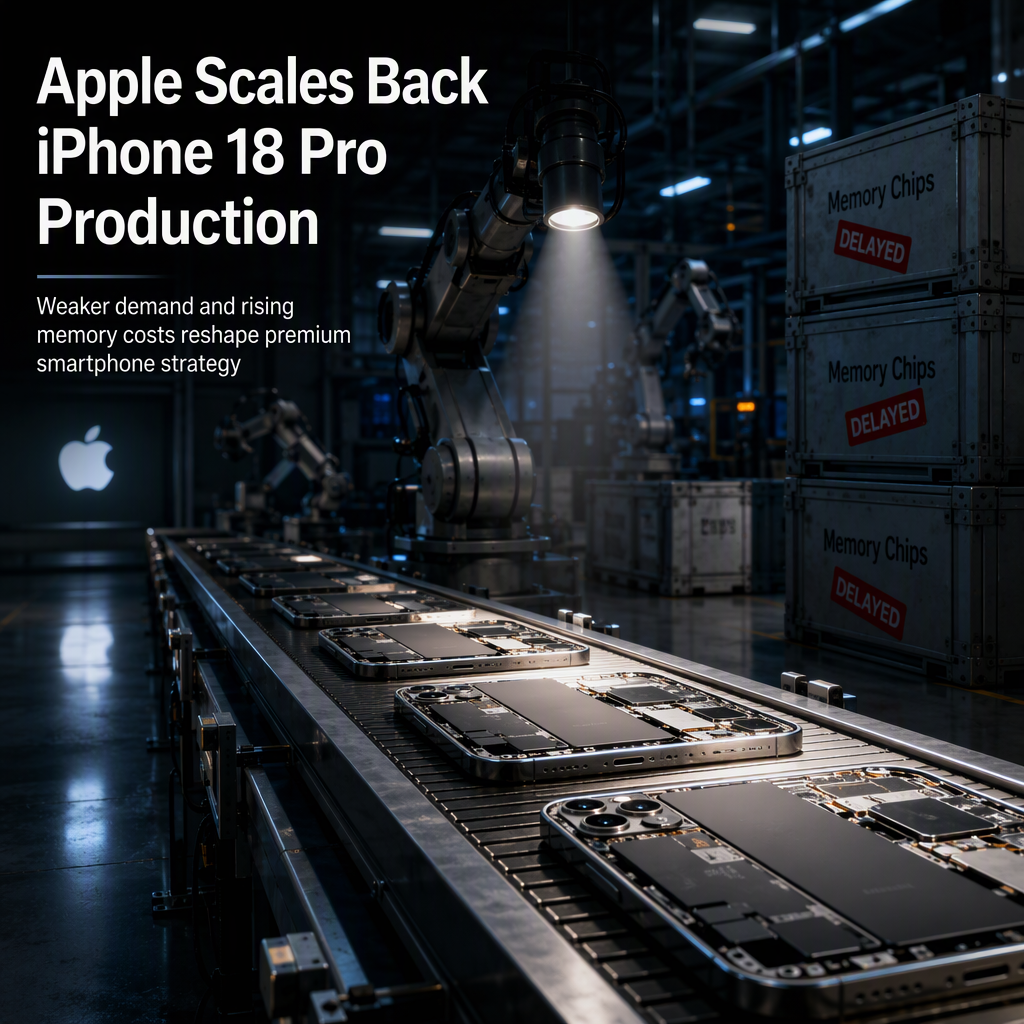
Apple has instructed some of its suppliers to reduce production of components for the newly launched iPhone 18 Pro and iPhone 18 Pro Max, following softer-than-expected consumer demand attributed to higher prices driven by soaring memory chip costs [1]. The iPhone 18 Pro, launched in September, has seen a cooler reception from consumers, with suppliers citing the premium handsets' price hike as a key factor behind weaker uptake [1]. Industry sources report that Apple is adjusting its production schedules for these models, trimming component orders to align with the softer demand outlook, which highlights the smartphone market's sensitivity to price increases, especially in the premium segment [1].
A supplier familiar with Apple's plans stated, 'The higher prices are definitely affecting consumer willingness to upgrade,' noting a noticeable drop in order volume compared to previous launches [1]. Apple's strategy of prioritizing premium models with advanced features and increased memory capacity has encountered resistance as consumers weigh the value of upgrades against the steeper price tag [1]. The company is expected to continue focusing on premium launches in 2026 but faces challenges in maintaining market share amid the global memory crunch [1].
Market analysts observe that while Apple remains a dominant force in the high-end smartphone sector, the latest iPhone launch underscores the need to balance innovation with affordability [1]. There is an expectation that Apple may need to reassess its pricing structure to sustain momentum in mature markets [1]. No specific price levels, technical indicators, or support/resistance data are provided, but the overall sentiment among suppliers is cautiously optimistic, with hopes that Apple will continue to innovate while adjusting production in response to market demand [1].
CONCLUSION
Apple's decision to cut iPhone 18 Pro production reflects the challenges of rising component costs and consumer price sensitivity in the premium smartphone market. While the company remains a leader in the sector, it may need to reconsider its pricing strategy to maintain growth and market share. The market impact is significant, as the move signals potential headwinds for Apple's premium device sales.