
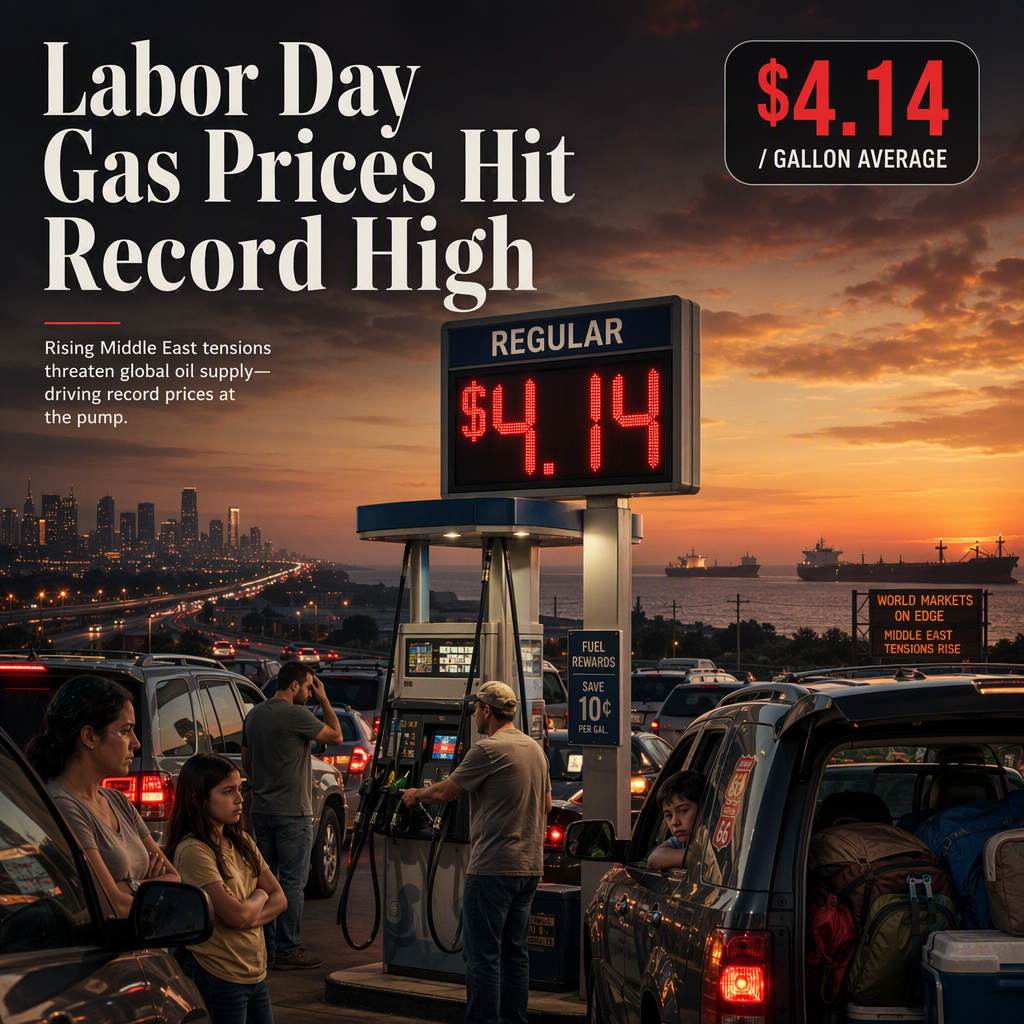
Americans are experiencing the most expensive Labor Day gas prices ever recorded, with the national average for regular gasoline reaching $4.14 per gallon on Monday. This figure is up about 4 cents from the previous week and nearly 95 cents higher than the same period last year, according to AAA. If this average persists, it will surpass the previous Labor Day record of $3.82 set in 2012 and mark the first time the national average has exceeded $4 per gallon during the holiday weekend [1].
Nearly 40 million Americans are expected to drive over the holiday, facing these unprecedented prices at the pump. The high prices are notable because gasoline demand typically falls after the peak summer driving season, and motorists usually see relief at the pump after Labor Day. However, this year, elevated crude oil prices—driven by conflict involving Iran—have offset the usual seasonal decline. The fighting in the region has raised concerns about potential disruptions to oil shipments through the Strait of Hormuz, a critical waterway that carries roughly one-fifth of the world's crude oil. These concerns have kept crude oil prices near $90 a barrel, preventing the typical post-Labor Day drop in gas prices [1].
Gas prices vary significantly by state, with California reporting the highest average at $5.78 per gallon, followed by Washington at $5.47 and Hawaii at $5.41. In contrast, Indiana has the lowest average at $3.44 per gallon, with Texas, Oklahoma, and Mississippi also reporting prices below $3.75 [1].
The outlook for gas prices in the coming weeks depends largely on crude oil prices. If tensions in the Middle East ease and oil prices retreat, drivers could see the usual seasonal decline in gasoline prices that typically follows Labor Day. However, continued instability could keep prices elevated for an extended period [1].
CONCLUSION
Record-high gas prices are impacting millions of Americans during the Labor Day holiday, driven by elevated crude oil prices linked to Middle East tensions. The market outlook hinges on geopolitical developments, with potential for relief if oil prices fall, but continued volatility if tensions persist.