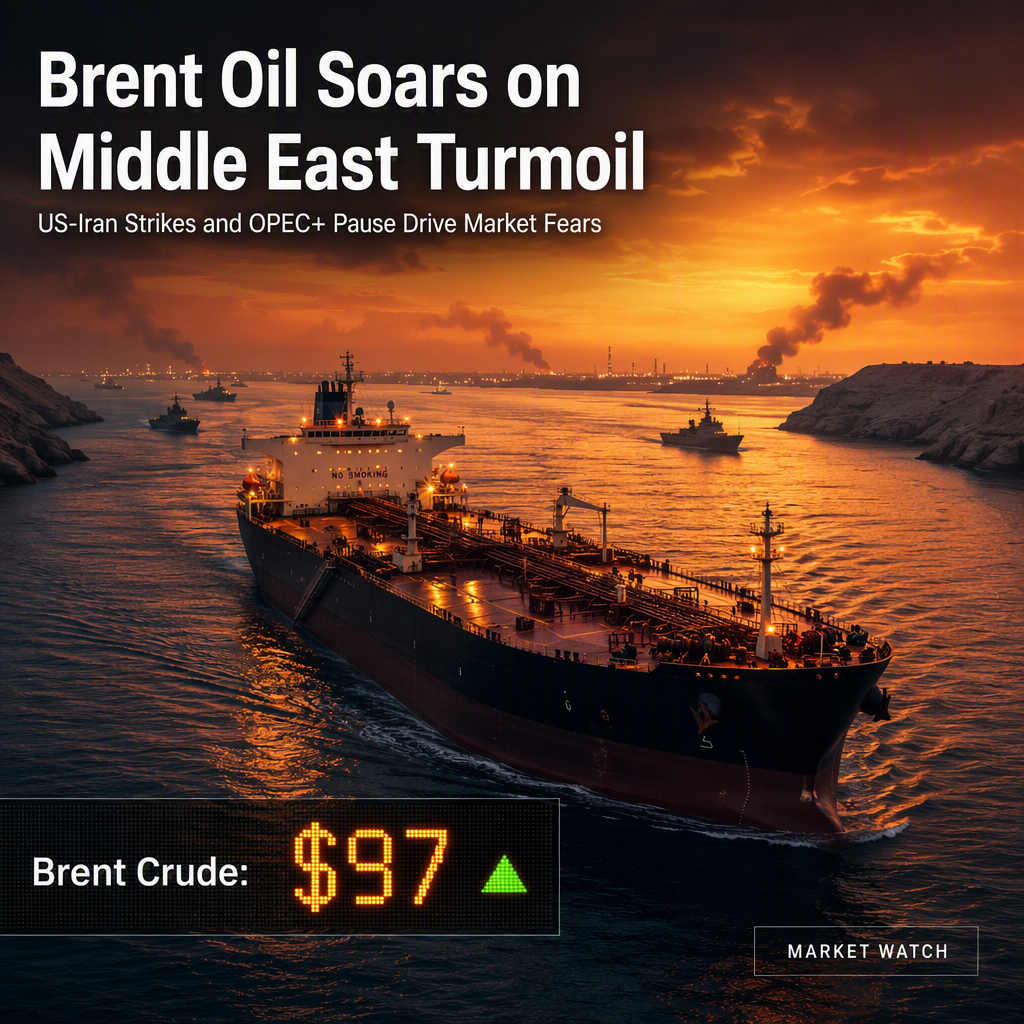
Brent crude oil prices have surged to approximately USD 97 per barrel, extending last week's gains, as renewed US-Iran strikes on commercial shipping around the Strait of Hormuz raise concerns about prolonged disruptions to Middle East energy flows [1]. Danske Bank’s research team highlights that these geopolitical tensions are keeping Brent elevated, with the ongoing Iran-related disruptions constraining OPEC+'s ability to control actual supply and prices [1].
OPEC+ decided to keep its oil output policy unchanged for October, with Reuters sources indicating the group is likely to pause further output increases in Q4 while it reviews 2027 quota baselines [1]. Despite this policy stance, the effectiveness of OPEC+ in steering supply and prices is limited due to the persistent conflict involving Iran and its impact on flows through the Strait of Hormuz [1].
Brent oil futures experienced an intraday low of USD 93 per barrel but rebounded following the US-Iran exchanges over the weekend, currently trading near USD 97 per barrel [1]. The elevated price reflects heightened supply risks and uncertainty in the region, which are significant market-moving factors [1].
No forward-looking analyst opinions or specific market reactions beyond price movement are provided in the source [1].
CONCLUSION
Brent crude prices have climbed to USD 97 per barrel, driven by renewed US-Iran tensions and OPEC+'s decision to pause output increases. The ongoing disruptions in the Middle East are keeping supply risks elevated, resulting in high market impact. OPEC+'s ability to influence prices remains constrained as long as the Iran conflict persists.