
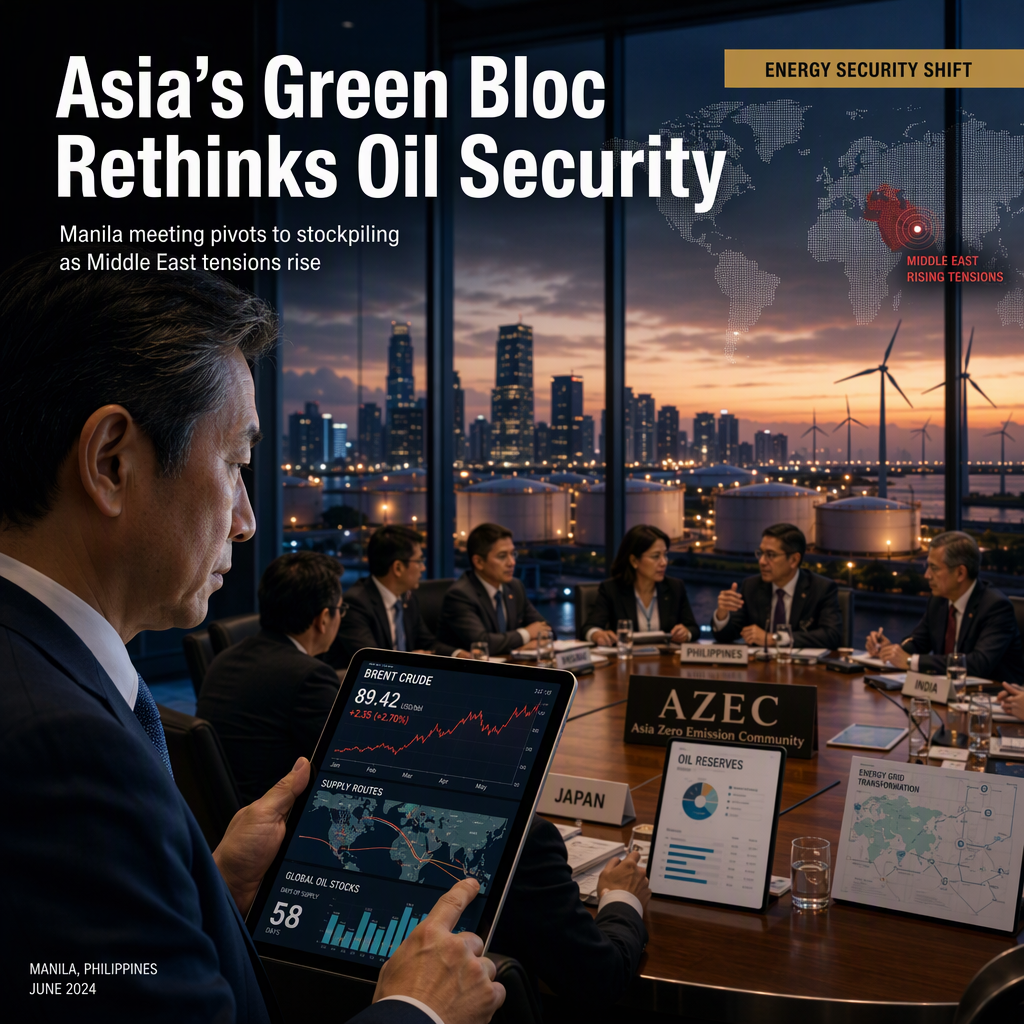
The Japan-led Asia Zero Emission Community (AZEC) convened in Manila on Thursday and agreed to strengthen oil stockpiles across member countries in response to ongoing instability in the Middle East, which has raised concerns about energy security and the reliability of oil supply routes in the region [1]. This decision marks a significant shift in AZEC's priorities, as the bloc was originally established to accelerate decarbonization and promote renewable energy adoption among its members [1].
The agreement comes amid heightened fears that conflicts in the Middle East could disrupt oil supplies and cause increased price volatility in the Asia-Pacific region [1]. Officials indicated that the new oil stockpiling measures will involve coordinated efforts among AZEC members, potentially including joint investments in strategic reserves, infrastructure development, and enhanced information sharing on supply and demand trends [1].
A senior Japanese official emphasized that while AZEC's commitment to decarbonization remains unchanged, addressing immediate threats to energy security is now a top priority: "Strengthening oil reserves is an essential step to protect our economies from external shocks" [1]. Analysts at the meeting warned that prolonged instability in the Middle East could result in significant energy price spikes and supply shortages, which would further complicate the region's transition to green energy [1].
No specific financial figures or targets for the oil stockpiling initiatives were disclosed, but member countries agreed to continue technical discussions and explore collaborative approaches to enhance collective energy resilience [1]. Industry observers noted that this pivot toward oil stockpiling may slow the pace of renewable energy investment in the short term as governments seek to balance energy security with long-term decarbonization goals [1].
CONCLUSION
The AZEC's decision to prioritize oil stockpiling reflects growing concerns over energy security due to Middle East instability. While the bloc maintains its long-term decarbonization ambitions, immediate measures to safeguard oil supplies may temporarily slow renewable energy investments in the region.