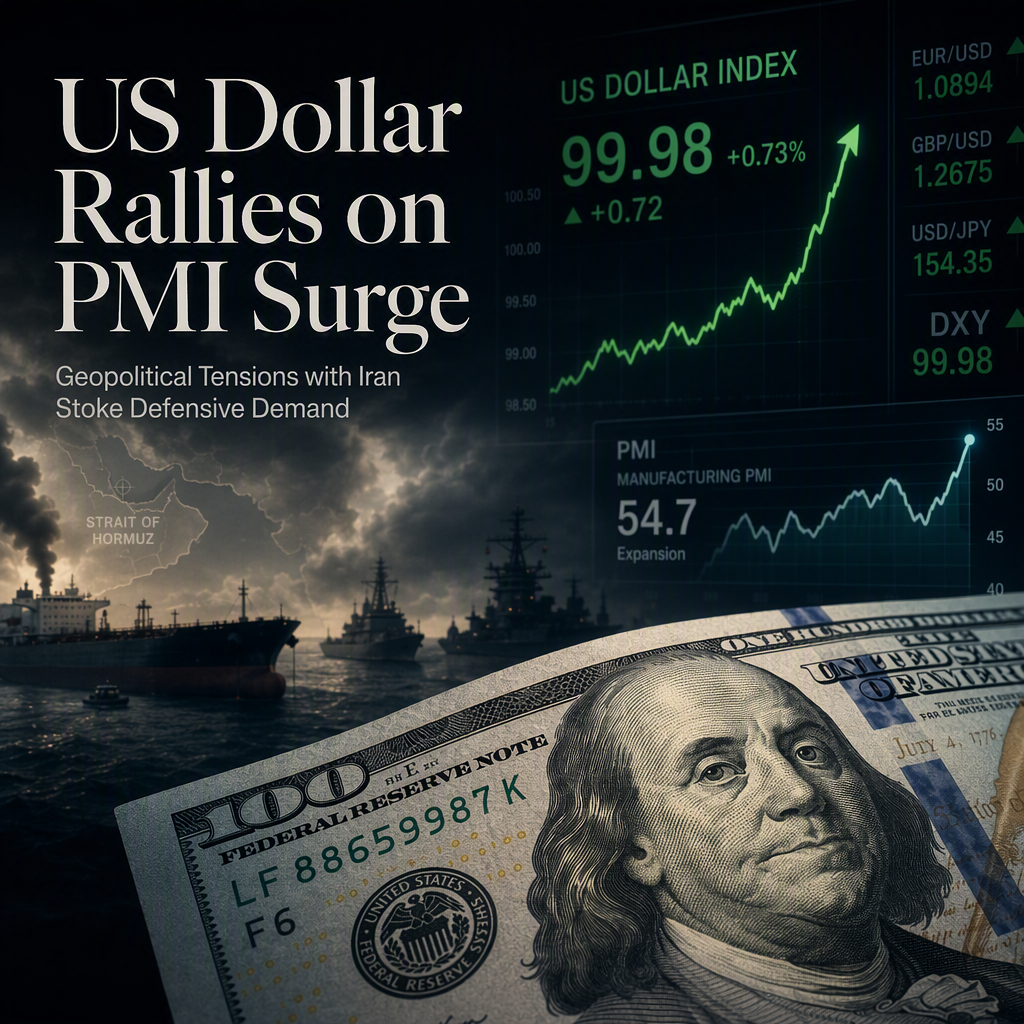
The US Dollar Index (DXY) staged a modest recovery on Monday, trading around 100 after rebounding from an intraday low of 99.42, which marked its weakest level since June 15 [1]. This rebound was supported by stronger-than-expected US manufacturing Purchasing Managers Index (PMI) data, with the ISM Manufacturing PMI rising to 55.6 in July from 53.3 in June, surpassing the market forecast of 54.0 and reaching its highest level since May 2022 [1].
The Greenback initially opened the week on a weaker note following US President Donald Trump's announcement that he had called off a planned strike on Iran, with negotiations anticipated to begin on Monday. However, sentiment shifted after Iran denied holding talks with Washington, and President Trump subsequently accused Iran’s leadership of being “duplicitous” and warned that the US Navy would maintain a blockade of the Strait of Hormuz until Iran agrees to a deal or surrenders [1]. This escalation in rhetoric cast doubt on the prospect of direct talks, sustaining defensive demand for the US Dollar [1].
Despite the rebound, uncertainty over the Federal Reserve’s monetary policy path could limit further gains for the Dollar. Strategists at Brown Brothers Harriman noted that the “USD rally from May has run its course,” and expect the DXY to retreat back into a 96.00-100.00 range. They highlighted that while resilient US economic activity continues to support the Dollar, this is being offset by “Fed Chair Kevin Warsh's failure to turn tough inflation rhetoric into a credible policy,” which undermines the policy backdrop that had previously supported the Greenback [1].
Looking ahead, market participants are focused on this week’s US labor market data for further clues on the Federal Reserve’s next move, with the CME FedWatch Tool indicating markets are pricing in around a 60% chance of a rate hike in September [1]. The upcoming Nonfarm Payrolls release is expected to be a key driver of market volatility, as it provides insight into US job creation and broader economic health [1].
CONCLUSION
The US Dollar Index has rebounded on the back of strong manufacturing data and heightened geopolitical tensions with Iran, but ongoing uncertainty around Federal Reserve policy is capping further gains. Market attention is now turning to upcoming labor market data, which could influence expectations for a potential Fed rate hike in September.