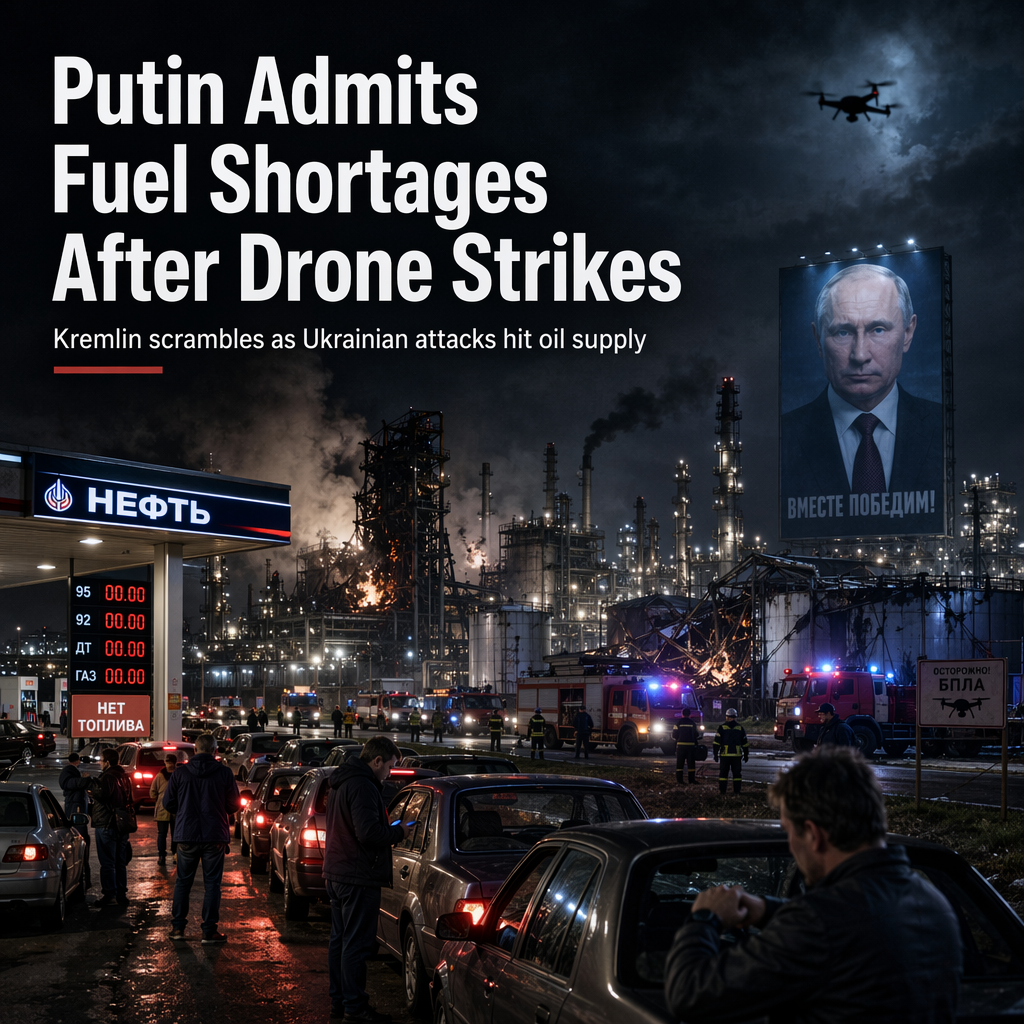
Russian President Vladimir Putin has publicly acknowledged that Russia is experiencing fuel shortages as a result of a series of long-range Ukrainian drone strikes targeting key energy infrastructure, including oil refineries [1]. This marks the first time Putin has detailed the extent of the impact these attacks have had on Russia's fuel production, stating that the Kremlin is addressing the situation by importing more fuel and expediting repairs to damaged facilities, which he described as a 'temporary deficit' [1]. Putin emphasized that all damaged facilities are being restored quickly and asserted that the issues are not critical, while also pledging to strengthen Russia's air defense systems to counter Ukraine's drone capabilities [1].
The Ukrainian attacks have intensified in recent weeks, with notable incidents such as a major explosion at Gazprom's Moscow Refinery earlier in the month [1]. Ukrainian President Volodymyr Zelenskyy reported that Ukrainian forces struck two additional Russian oil refineries on Sunday: one in the Krasnodar region, approximately 186 miles from the front line, and another in the Yaroslavl region, about 435 miles from the Ukrainian border [1]. Zelenskyy stated that each successful strike reduces resources available to the Russian war effort and brings Ukraine closer to peace [1].
Putin, addressing the ruling United Russia party congress, reiterated his commitment to achieving Russia's military objectives and acknowledged the challenges posed by the Ukrainian attacks, including visible effects such as queues at petrol stations [1]. He mentioned that a full ban on diesel exports was under consideration as a response to the shortages [1].
Analysts cited in the article suggest that the recent escalation in Ukrainian strikes could be shifting the conflict in Ukraine's favor, as the attacks aim to cut off Moscow's energy revenues and isolate Crimea, which Russia annexed in 2014 [1]. Ukraine's strategy has been bolstered by recent political developments, although specific details were not provided [1].
CONCLUSION
Russia is facing significant fuel shortages due to intensified Ukrainian drone strikes on its oil infrastructure, prompting the Kremlin to consider measures such as increased fuel imports and a potential diesel export ban. The attacks have disrupted Russian energy supplies and may be altering the dynamics of the ongoing conflict. Market participants should monitor further developments, as continued strikes could have broader implications for energy markets and regional stability.