
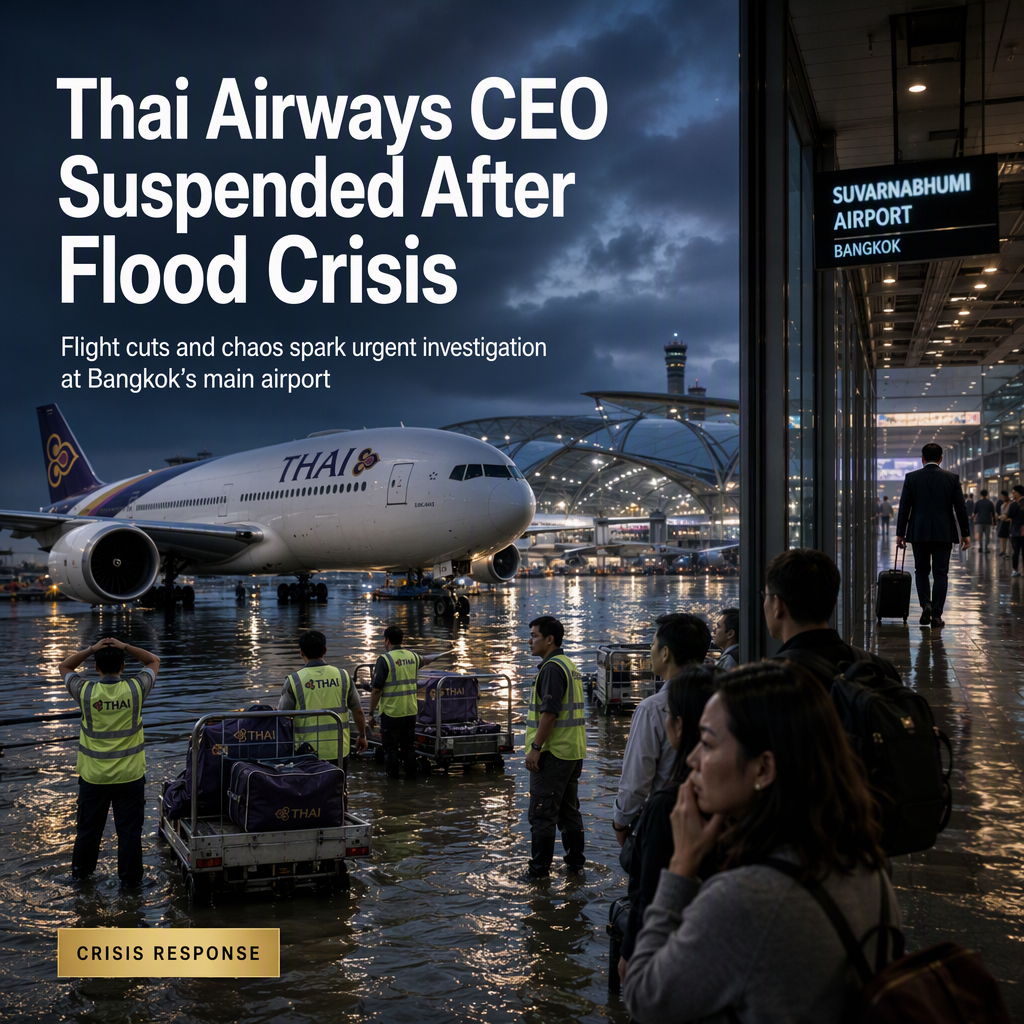
Thai Airways has suspended its CEO, Chai Eamsiri, following significant operational disruptions at Bangkok's Suvarnabhumi Airport during recent flooding in the city [1]. The suspension comes after reports of delayed luggage and other operational troubles that have negatively affected the airline's reputation [1]. In response to the crisis, Thai Airways announced it will conduct an investigation into the incidents and is taking steps to address the problems and restore traveler confidence [1].
As part of its immediate response, the airline has cut 30% of its flights in the wake of the flooding, aiming to better manage resources and minimize further disruptions [1]. Company officials acknowledged that the delays in luggage handling and other airport operations were significant issues, raising concerns among passengers and stakeholders about the airline's crisis management capabilities [1].
The suspension of the CEO is viewed as a move to reassure stakeholders and demonstrate accountability for the operational failures [1]. Market analysts are closely monitoring the situation for any further impact on Thai Airways' stock and financial outlook, given the reputational damage and ongoing operational challenges [1]. An airline spokesperson emphasized that the recent events have highlighted the need for improved crisis management and operational efficiency within the company [1]. Thai Airways is expected to provide further updates as the investigation continues [1].
CONCLUSION
Thai Airways' suspension of its CEO and the reduction of flights signal serious efforts to address the operational fallout from the recent Bangkok flooding. The airline faces heightened scrutiny from analysts and stakeholders as it works to restore its reputation and operational stability. The market will be watching closely for further developments and the outcome of the ongoing investigation.