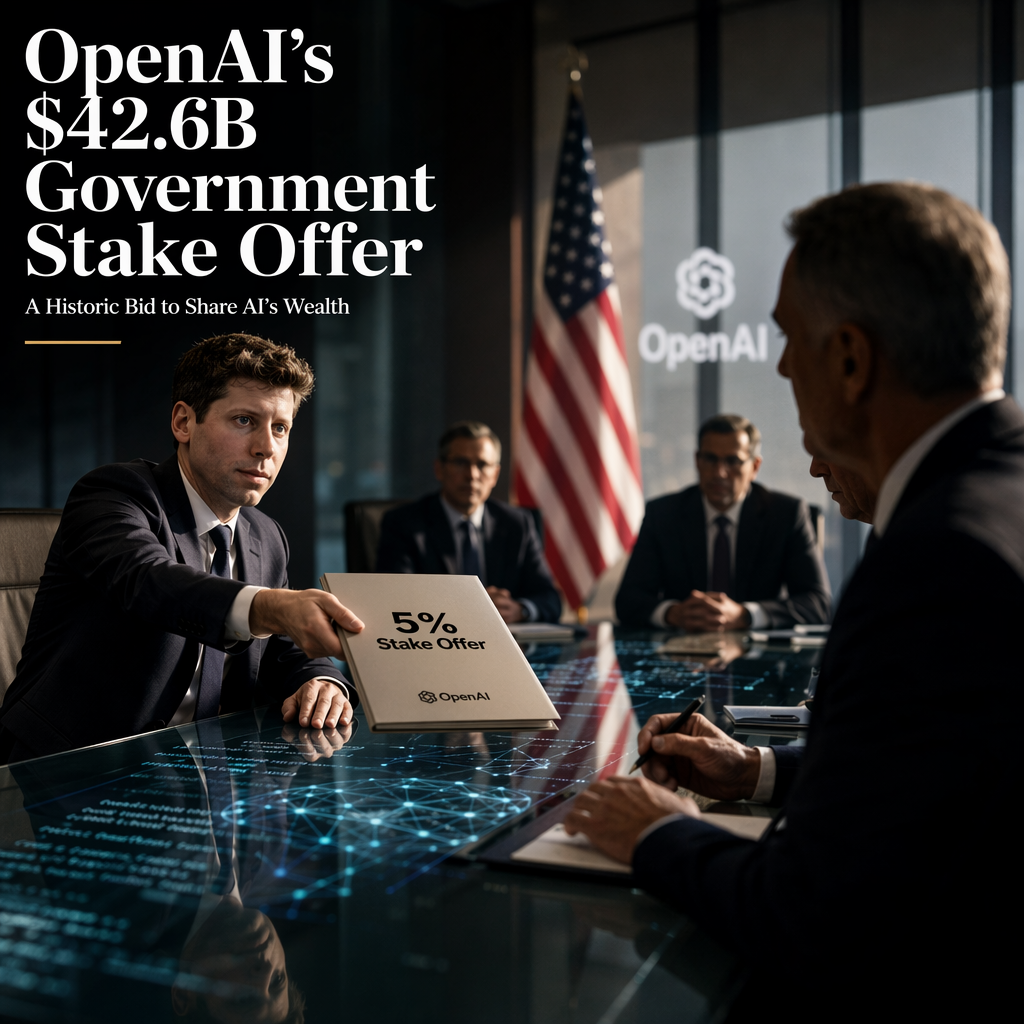
OpenAI has proposed granting the U.S. government a 5% stake in the company, according to a Financial Times report cited by CNBC, as part of efforts to address increasing political scrutiny in Washington [1]. The proposed stake is valued at approximately $42.6 billion, based on OpenAI's post-money valuation of $852 billion following a record-breaking funding round in March [1].
CEO Sam Altman reportedly argued that providing the public with a financial interest in OpenAI is the best way to share the economic benefits of artificial intelligence, with the 5% stake being suggested in early discussions with the Trump administration [1]. The report notes that it is unclear whether the administration will pursue the offer, and both the White House and OpenAI declined to comment on the matter [1].
The proposal also envisions other U.S. AI companies potentially ceding similar stakes to the government, though it remains uncertain if rival firms would participate [1]. This development follows over a year of discussions about a possible government stake, with Altman first pitching the idea to the Trump administration in early 2025 [1]. In April, OpenAI proposed the creation of a 'public wealth fund' to hold assets from AI companies and distribute economic gains to the public [1].
There is precedent for such arrangements: the U.S. government currently holds a 10% stake in Intel Corp after an $8.9 billion investment, and President Donald Trump has previously expressed support for the government taking ownership stakes in major technology firms, describing it as a way to make Americans 'partners in this revolution' [1].
CONCLUSION
OpenAI's proposal to offer a 5% stake to the U.S. government marks a significant move to address regulatory and political concerns. The initiative, valued at $42.6 billion, could set a precedent for other AI companies and reflects ongoing discussions about public participation in the AI sector's growth. Market implications are potentially high, pending the administration's response.