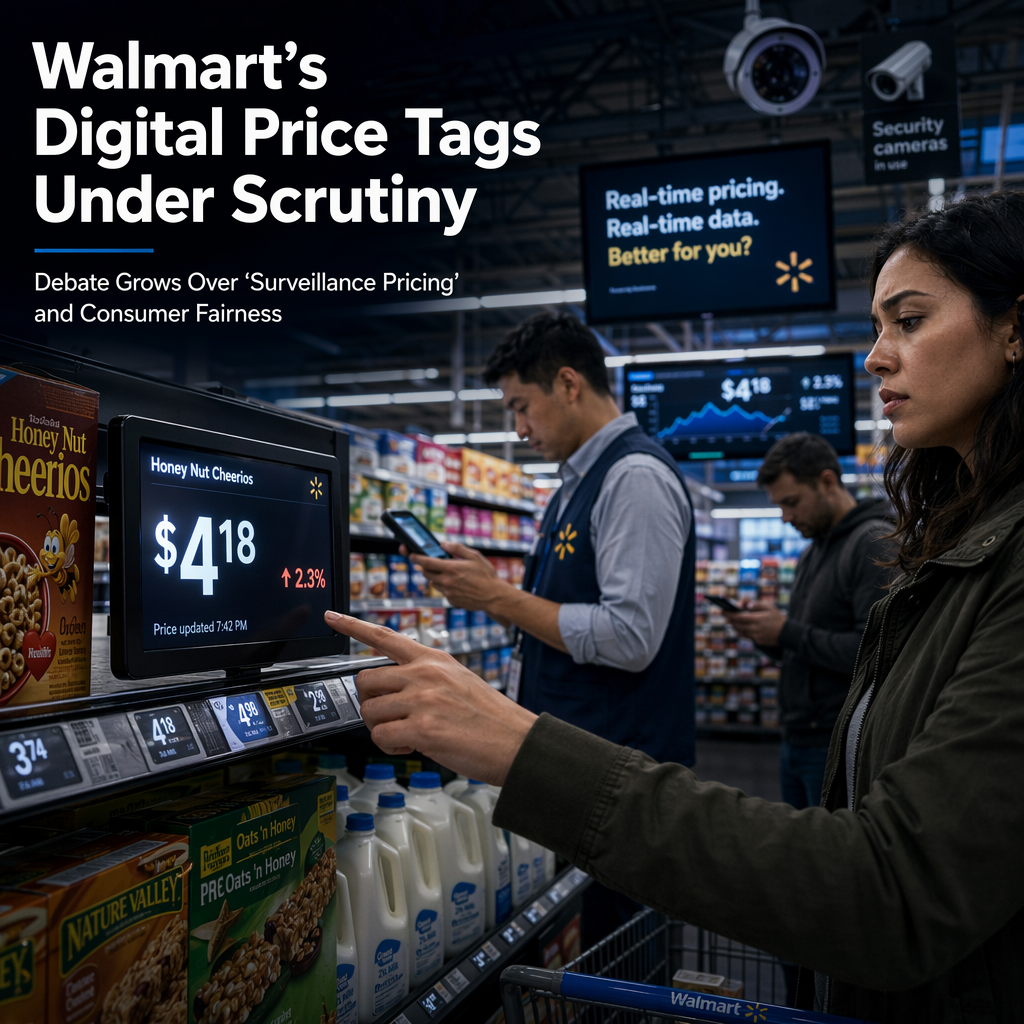
Walmart is rolling out digital price tags in its stores, prompting concerns among consumer advocates about the potential for 'surveillance pricing'—the practice of adjusting prices in real time based on shopper data or behavior [1]. While Walmart has denied using digital price tags to change prices as customers shop, stating, 'We are committed to transparent and fair pricing for all customers,' and that the technology is intended to facilitate quick price updates for sales or inventory changes, skepticism remains among some consumers and lawmakers [1].
The anxiety centers on the possibility that digital pricing could enable retailers to implement personalized pricing, where prices vary for different shoppers based on factors such as demand, time of day, or individual shopping habits [1]. In response to these concerns, some states have started drafting or passing legislation to ban or restrict personalized pricing, citing issues of privacy and fairness [1]. Lawmakers warn that without regulation, retailers could theoretically charge different prices to different shoppers for the same item at the same time, potentially eroding consumer trust and leading to higher average prices [1].
The debate has highlighted a broader discussion about the role of technology in retail. Proponents argue that digital price tags allow stores to respond more efficiently to market changes, reduce pricing errors, and implement discounts more quickly [1]. Critics, however, caution that without proper safeguards, the technology could be used to exploit less tech-savvy shoppers or those unaware of how their data is being used [1].
Financial analysts are monitoring the situation closely, as the adoption of digital and dynamic pricing strategies by retailers could have significant implications for consumer behavior, competition, and overall market pricing trends [1]. The outcome of new state laws and ongoing public scrutiny is expected to influence how retailers balance technological innovation with transparency and consumer protection in the future [1].
CONCLUSION
Walmart's introduction of digital price tags has ignited a debate over privacy, fairness, and the potential for personalized pricing. While Walmart maintains its commitment to transparent pricing, legislative and public scrutiny may shape the future use of such technology in retail. The evolving regulatory landscape and consumer sentiment will be key factors for market participants to watch.