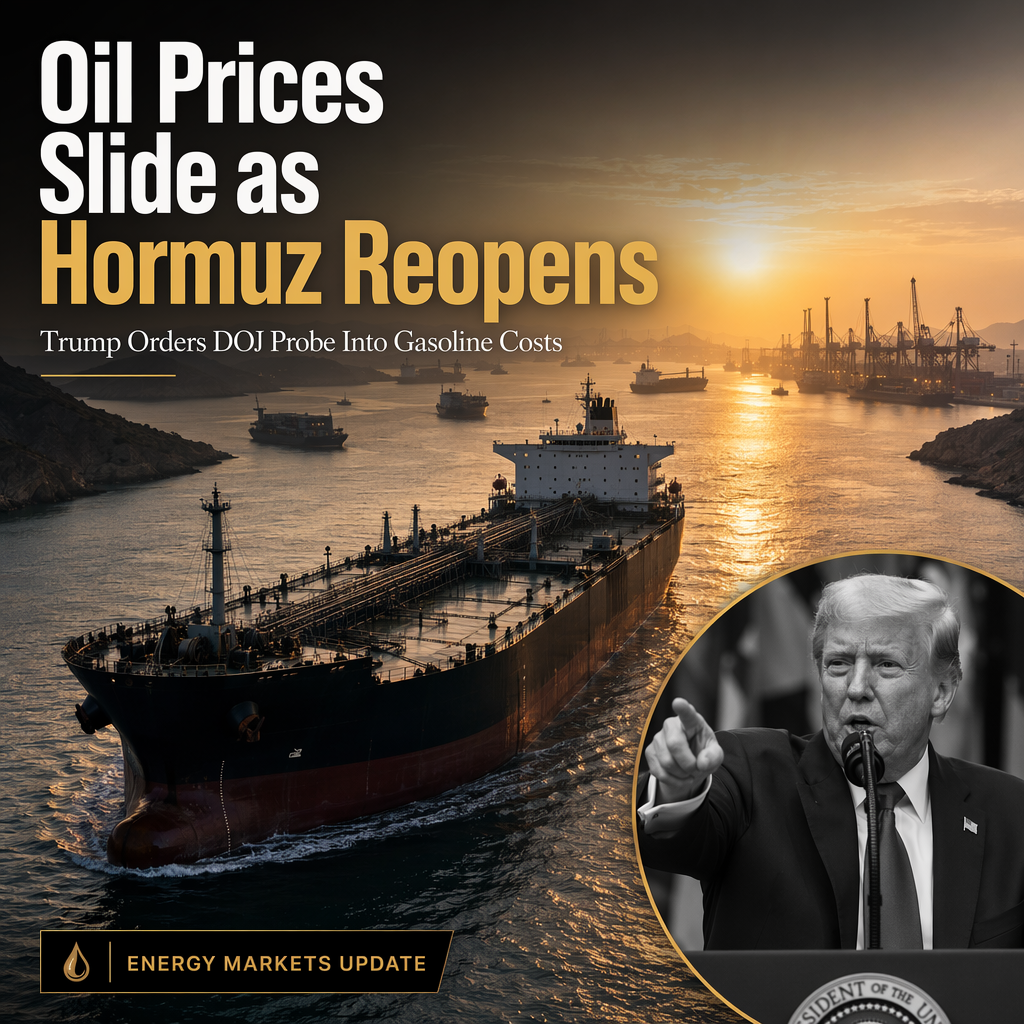
Oil prices declined as concerns over disruptions to shipping through the Strait of Hormuz eased, with more than 11,000 seafarers cleared to transit the key oil shipping route after safety guarantees were secured by the International Maritime Organization (IMO) in cooperation with Iran, Oman, the United States, and other regional states [1]. Brent crude futures for August fell 0.91% to $76.38 a barrel, while U.S. West Texas Intermediate futures for August dropped 0.94% to $72.52 per barrel during Asian trading hours on Wednesday [1].
U.S. President Donald Trump criticized oil companies for not lowering gasoline prices in line with the recent decline in crude prices, accusing them of 'gouging' consumers and instructing the Department of Justice to investigate fuel prices [1]. Trump stated, 'The big Oil Companies are not dropping their price at the pump commensurate with the sharply lower prices they are paying for Oil. Those prices are dropping like a rock!' and added, 'Gasoline prices better start going down a lot faster than what I'm seeing!' [1].
Karen Young, a senior research scholar at the Columbia University Center on Global Energy Policy, described Trump's comments as 'political theater,' explaining that gasoline prices in the U.S. are influenced by state and local taxes and that it typically takes a couple of weeks for changes in crude prices to be reflected at the pump [1].
Supply chain pressures had increased due to longer transit times for vessels trapped in the Strait of Hormuz and disruptions to air freight capacity, according to Aditi Rasquinha, CEO of DHL Global Forwarding Greater China. However, with the reopening of the Strait, these pressures are expected to ease, though normalization of the supply chain will take some time [1].
CONCLUSION
Oil prices fell as the reopening of the Strait of Hormuz alleviated supply concerns, while President Trump's call for a DOJ probe into gasoline prices added political pressure on oil companies. Market sentiment remains cautious, with expectations that supply chain normalization will be gradual and gasoline prices may not immediately reflect lower crude costs.