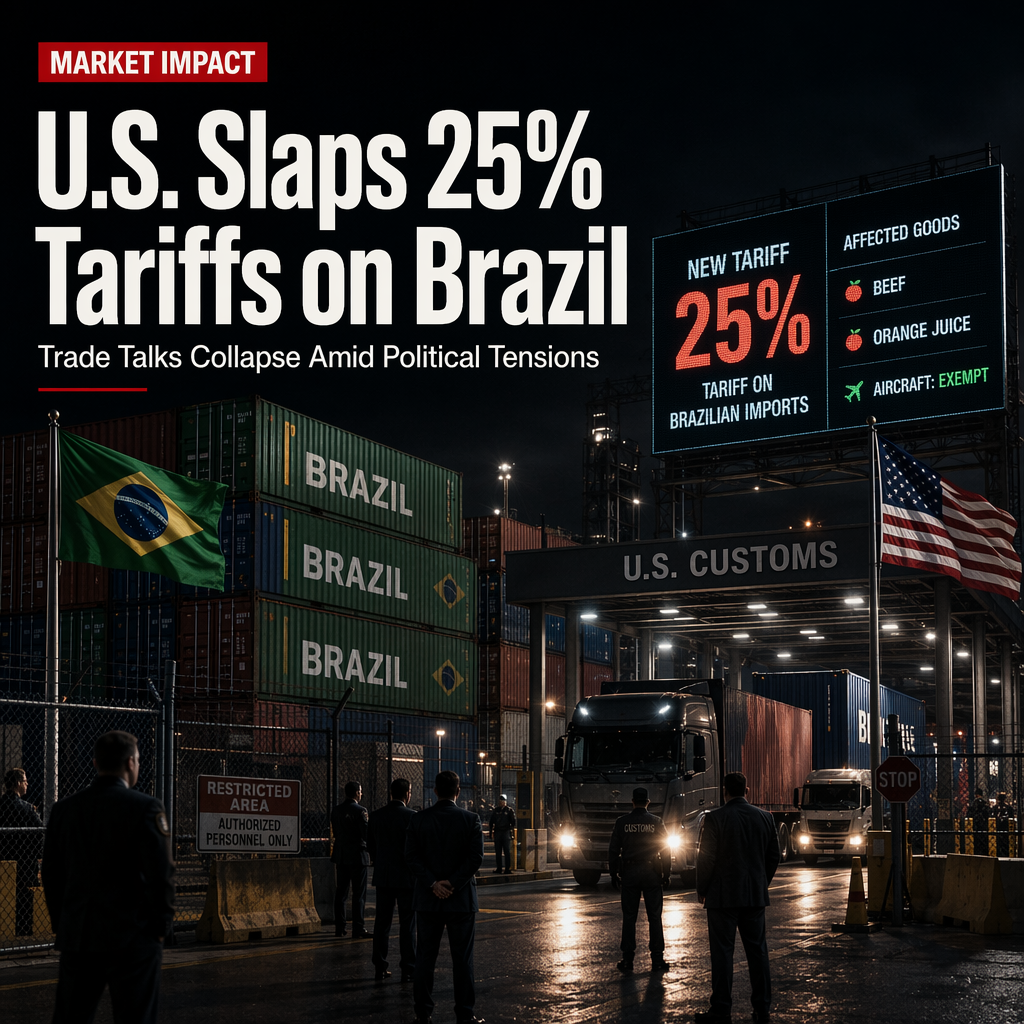
The United States has announced the imposition of 25% tariffs on most imports from Brazil, effective July 22, following a yearlong Section 301 investigation into what Washington describes as unfair trade practices by Brazil [1]. The tariffs target a range of Brazilian practices, including directives for American technology firms such as X, Meta, and Google to remove certain political content and suspend accounts belonging to U.S. residents, preferential tariffs for Mexico and India, weak intellectual property enforcement, and barriers in the ethanol market [1].
Certain goods, including beef, orange juice, aircraft and parts, and energy products, are exempt from the new tariffs [1]. The decision comes after negotiations between the two countries broke down, despite several high-level meetings between Brazilian officials and the U.S. Trade Representative in recent weeks [1]. The U.S. Trade Representative's office stated that the additional tariffs are necessary to level the playing field for American workers and companies [1].
This move follows the U.S. Supreme Court's February decision to strike down former President Donald Trump's previous 50% tariffs on Brazilian goods, leaving only a 10% global tariff in place. Trump has since sought to reinstate his tariff authority through Section 301 investigations, which allow for the imposition of levies without further congressional approval if unfair trade practices are found [1].
Brazil's trade ministry did not immediately comment on the new tariffs. In response to the announcement, U.S. Secretary of State Marco Rubio criticized Brazilian President Luiz Inacio Lula da Silva's government for not negotiating in good faith, stating that the tariffs were the result of Lula "putting his own ego ahead of making a deal" [1]. Lula, for his part, previously stated that Brazil would not accept the treatment proposed by the U.S., referring to the 25% tariffs [1]. The dispute has also become a topic in Brazil's upcoming October presidential election, with Lula accusing Senator Flavio Bolsonaro of contributing to the tariffs after his visit to Washington, a claim Bolsonaro denies [1].
Additionally, a separate U.S. investigation into forced-labor enforcement could result in an extra 12.5% duty on Brazilian goods, with a decision expected next week [1].
CONCLUSION
The U.S. decision to impose 25% tariffs on most Brazilian imports marks a significant escalation in trade tensions, with potential for further duties pending another investigation. The move is expected to have a high market impact, affecting a wide range of goods and drawing political reactions in both countries.