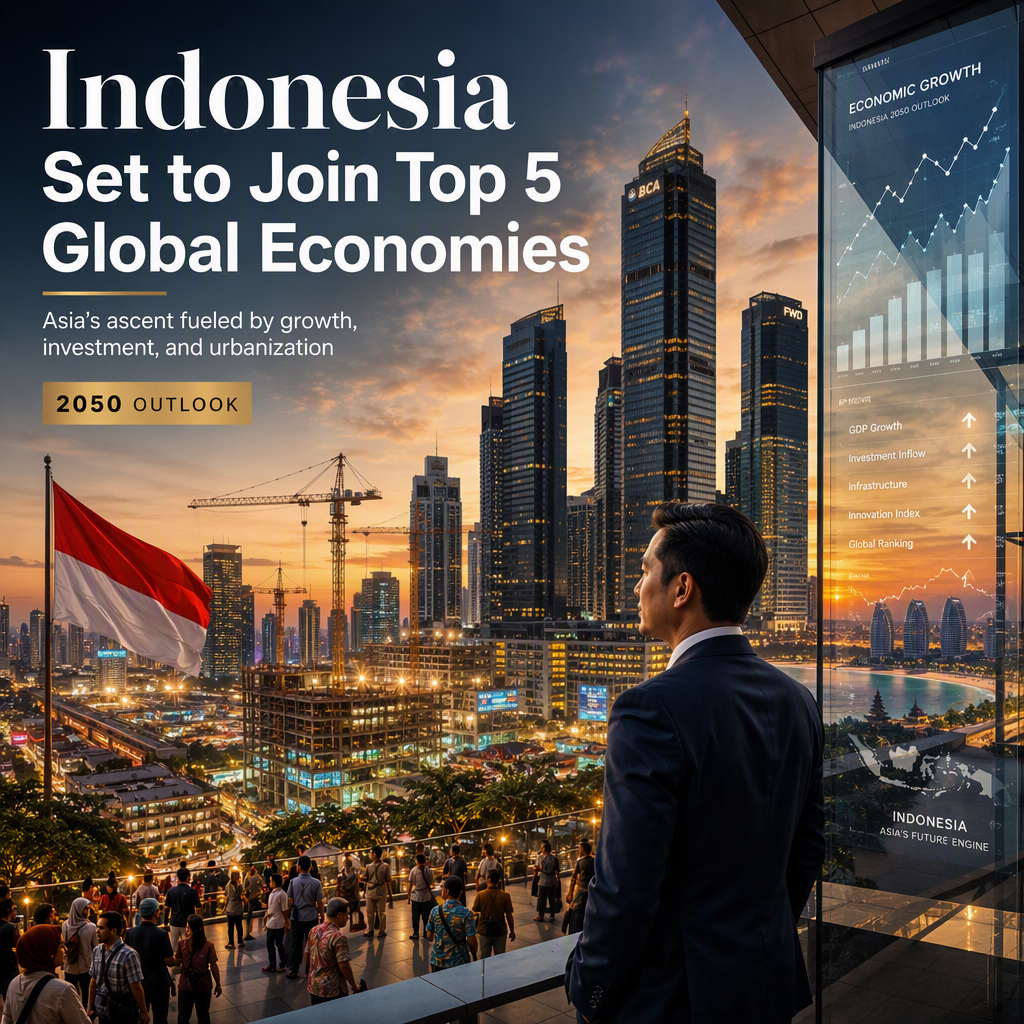
According to projections discussed by Kevin Daly, Goldman Sachs co-head of economics for Central and Eastern Europe, the Middle East and Africa, Indonesia is expected to surpass Brazil and Russia in economic size, positioning itself as a top five global economy by 2050. This anticipated growth is attributed to Indonesia’s large and growing population, as well as ongoing urbanization, which are seen as key drivers of economic expansion. The article also highlights that Pakistan’s population increase is expected to serve as a tailwind for its future economic growth, further underscoring the shift in economic power toward Asia as global growth slows [1].
Asia’s continued economic ascent is contrasted with slower projected growth rates globally. Indonesia’s rise is supported by significant investments, including a $28 billion commitment aimed at enhancing international competitiveness through the development of financial centers such as Jakarta and Bali. Market analysis indicates that Indonesia’s ambitious growth targets are met with certain challenges, including infrastructure demands and the need for sustainable development. Nevertheless, financial data points to robust investment flows into the region, with technical indicators showing resilient performance in key sectors like real estate and urban development [1].
The financial outlook for Indonesia and other rising Asian economies remains bullish, with expectations that Indonesia will break into the top five global economies by 2050. This optimism is underpinned by favorable demographic trends and strategic investments, despite the business reality checks that may temper the pace of growth [1].
CONCLUSION
The article projects a bullish outlook for Indonesia and Asia, driven by demographic advantages and strategic investments. While challenges such as infrastructure and sustainability remain, Indonesia is expected to become a top five global economy by 2050, signaling a continued shift in economic power toward Asia.