
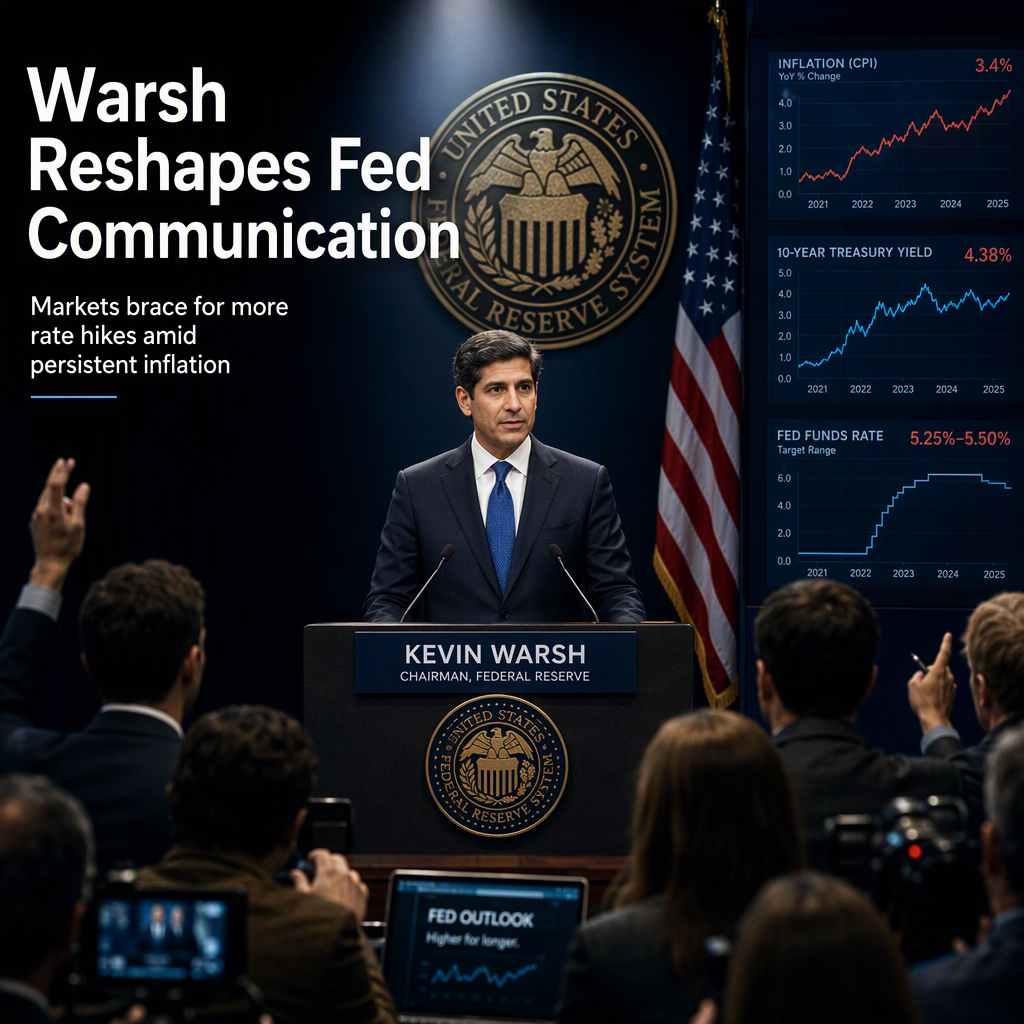
Federal Reserve Chairman Kevin Warsh has initiated a significant overhaul of the central bank's communication strategy, abandoning traditional forward guidance and placing greater emphasis on broad financial conditions rather than the previous focus of Fed chairs [1]. Warsh's tenure, now at 127 days, has been marked by swift changes in areas directly under his control, including shortening post-meeting news conferences and reorganizing reporter seating, which signal a deeper shift in monetary policy communication [1].
Despite these visible changes, larger institutional reforms such as shrinking the Fed's balance sheet are progressing more slowly. Warsh has appointed five task forces to examine Fed practices, with reports expected early next year. He has not yet acted on his priority to reduce the balance sheet, citing inflation as a more pressing concern [1].
Last week, the Fed unanimously raised interest rates by a quarter-point, the first increase since 2023. This move addressed concerns about Warsh's independence from President Donald Trump and signaled a willingness to support further hikes if inflation remains elevated [1]. The 2-year Treasury yield traded nearly a full percentage point above the effective federal funds rate, the largest spread since 2023, indicating that traders expect additional rate increases [1].
Inflation, measured by the Fed's preferred personal consumption expenditures indicator, stood at 3.7% in July, remaining above the central bank's 2% target for more than five and a half years [1]. Warsh has dismissed the traditional concept of the funds rate being accommodative, neutral, or restrictive, stating at his September 16 news conference that the concept is "useful academically" but irrelevant to the decision to hike rates [1].
CONCLUSION
Kevin Warsh's rapid changes to Fed communication and policy framework have signaled a break from tradition, with markets anticipating further rate hikes amid persistent inflation. The unanimous rate increase and elevated Treasury yields reflect strong market expectations for continued tightening. Larger reforms, such as balance sheet reduction, remain on hold as inflation takes precedence.