
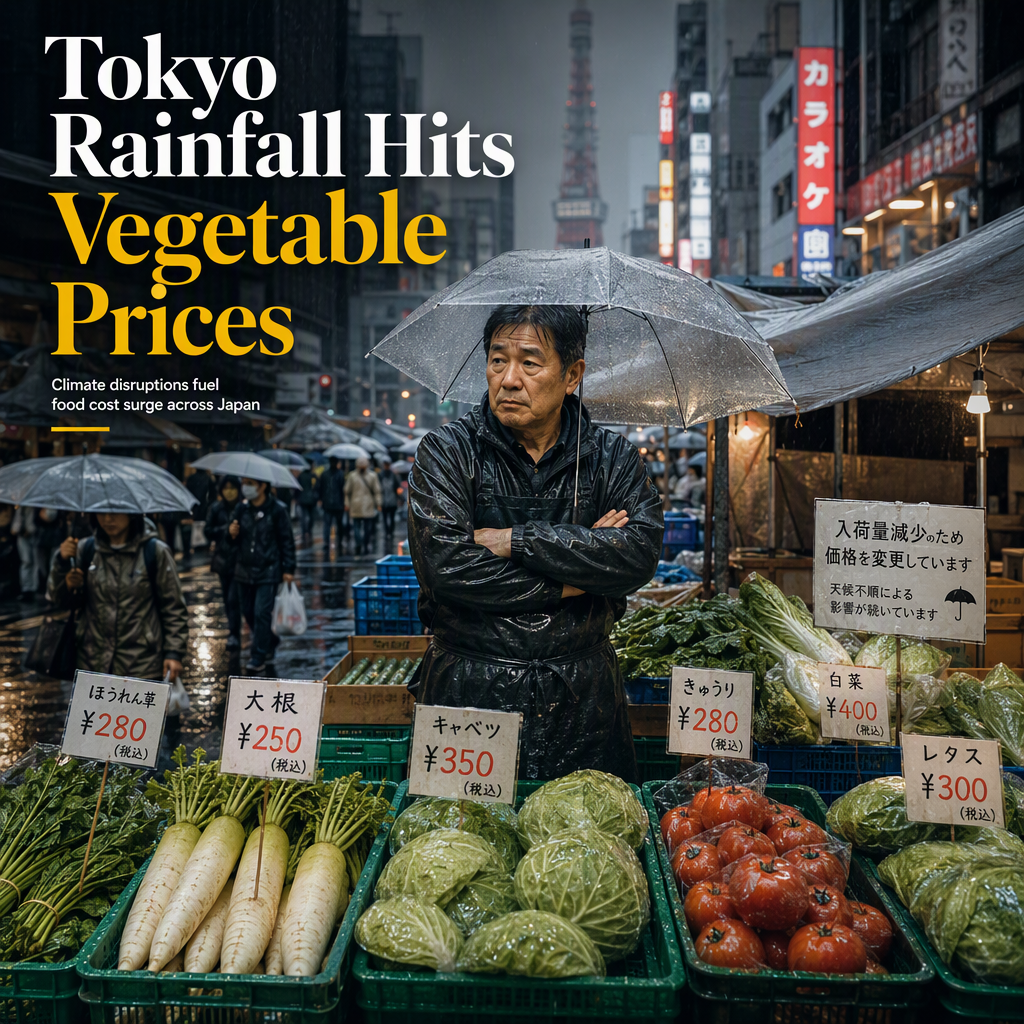
Tokyo has experienced an unusual weather event, with 37 consecutive days of rain this summer, significantly impacting the supply and pricing of fresh vegetables in the city [1]. The persistent rainfall has led to reduced crop yields, resulting in higher prices for consumers [1]. This climate anomaly is part of a broader pattern of severe weather events affecting Japan's economy, as both businesses and the government struggle to respond to the intensifying effects of climate change [1].
While Tokyo faces excessive rainfall, other regions in Japan are contending with water shortages, which have disrupted local agriculture and businesses [1]. In response to these shortages, Toyota has limited its water usage at some manufacturing facilities, illustrating how extreme weather is forcing companies to adapt their operations to manage resource risks [1].
Industry analysts and the government are closely monitoring the situation, as ongoing climate-related disruptions could have broader implications for Japan's food security and economic stability [1]. Vegetable prices are expected to remain volatile as long as the weather remains unpredictable [1].
CONCLUSION
Tokyo's extended period of rainfall has led to reduced vegetable crop yields and higher prices, highlighting the vulnerability of Japan's economy to climate-related disruptions. With both excessive rain and water shortages affecting different regions, businesses and the government are adapting to manage resource risks. Analysts expect continued volatility in vegetable prices as unpredictable weather persists.