
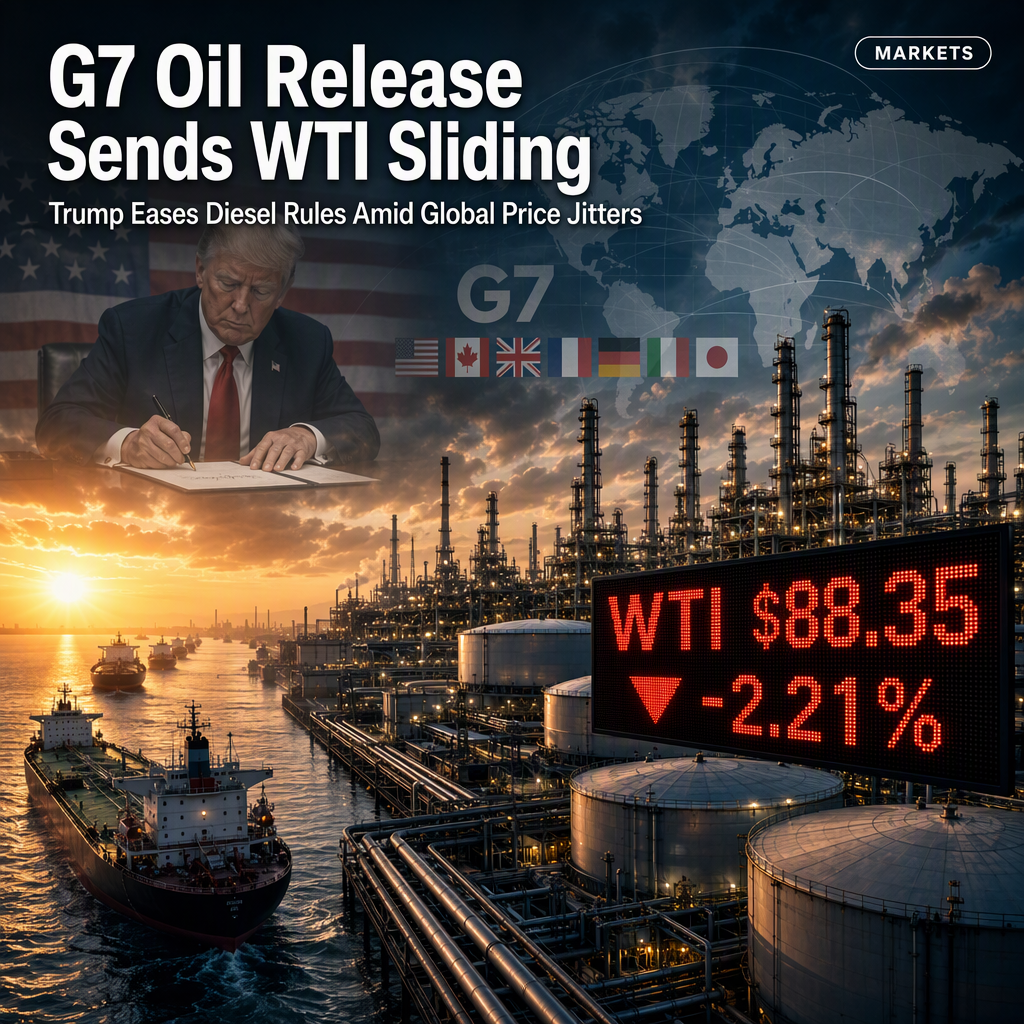
West Texas Intermediate (WTI), the US crude oil benchmark, experienced a notable decline, trading around $88.60 during early Asian hours on Tuesday, with a reported daily drop of 2.21% to $88.35 at the time of writing [1][2]. The price pressure follows the Group of Seven (G7) nations' agreement to release 100 million barrels of diesel and crude from emergency reserves, a move intended to boost global oil supplies. This decision was made after pressure from US President Donald Trump, who also secured a pledge from the G7 to refrain from energy export restrictions [1].
In a related development, President Trump signed an executive order late Monday to ease restrictions on the use of tax-exempt, red-dyed diesel, waiving the off-road requirement and allowing broader purchase of this fuel variety. Trump stated that this measure aims to reduce fuel costs ahead of the November midterm elections [1][2]. According to Tim Waterer, chief analyst at KCM Trade, the G7's strategic reserve release and rising Middle East crude exports are alleviating immediate supply concerns, contributing to subdued oil prices despite ongoing risks in the Gulf region [1].
Market participants are also awaiting the American Petroleum Institute (API) crude oil stockpiles report, which could further influence WTI prices depending on whether it shows a draw or build in inventories [1]. Meanwhile, geopolitical tensions remain elevated, with Yemen’s Houthi group claiming responsibility for attacks on Saudi airports, an oil facility, and military sites, which could help limit further declines in oil prices [1].
Analysts at Rabobank caution that the ongoing US war in Iran is entering a new escalation phase, potentially keeping oil prices elevated. They warn that the apparent resilience of regional supply routes may be deceptive, as key infrastructure remains vulnerable [1]. Technical analysis indicates a neutral-to-bearish near-term bias for WTI [1].
CONCLUSION
The coordinated release of emergency oil reserves by the G7 and President Trump's executive order to ease diesel restrictions have led to a significant drop in WTI prices. While immediate supply concerns are alleviated, ongoing geopolitical risks and upcoming inventory data could influence future price movements. Market sentiment remains cautious amid persistent Middle East tensions and the potential for further escalation in the US-Iran conflict.