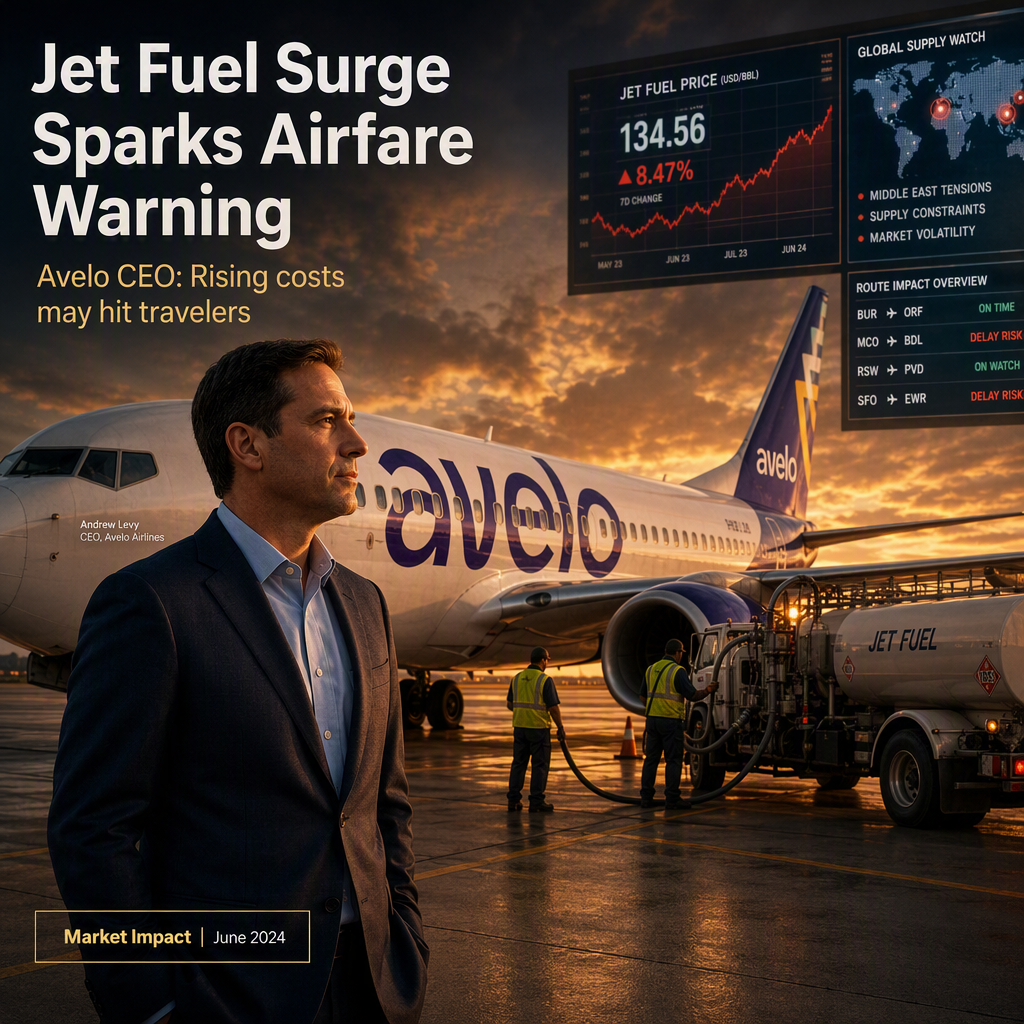
Avelo Airlines CEO Andrew Levy has warned that airfares may rise as jet fuel prices have surged to what he describes as 'uncomfortably high' levels, creating significant cost pressures for the ultra-low-cost carrier. Levy attributed the recent spike in fuel prices to the ongoing Iran conflict, which has led to disruptions along Middle East shipping routes and heightened supply concerns. According to the International Air Transport Association, the global average jet fuel price increased by 9% from the previous week to $171.01 per barrel, as reported by Reuters [1].
Levy stated that Avelo will likely have to pass at least some of these higher costs onto customers, emphasizing, 'At the end of the day, we have to be able to pass these costs onto our customers.' He also noted that other industry leaders share this concern, citing Ryanair CEO Michael O'Leary's warning that airfares could rise 'significantly' if oil prices remain elevated [1].
Despite the increased fuel costs, Levy reported that demand at Avelo has remained resilient, with the airline experiencing a 'very, very strong summer even with high fuel prices.' He acknowledged ongoing challenges from inflation and other rising costs over the past few years but expressed confidence in the airline's ability to adapt [1].
Avelo, which launched in April 2021 and is based in Houston, primarily targets personal travelers using secondary airports near major metropolitan areas. Levy highlighted the importance of being mindful of price sensitivity among their customer base, stating, 'Everybody has a price at which they're going to travel either more often or less often.' The airline recently extended its booking schedule through April 2027 and now serves more than 35 destinations, with plans to launch commercial service from McKinney National Airport [1].
CONCLUSION
Avelo Airlines is facing mounting cost pressures due to a sharp rise in jet fuel prices, prompting warnings of potential airfare increases. While demand has remained strong, the airline and its peers are closely monitoring fuel costs and their impact on travelers' price sensitivity. The situation underscores ongoing volatility in the airline industry driven by external geopolitical factors.