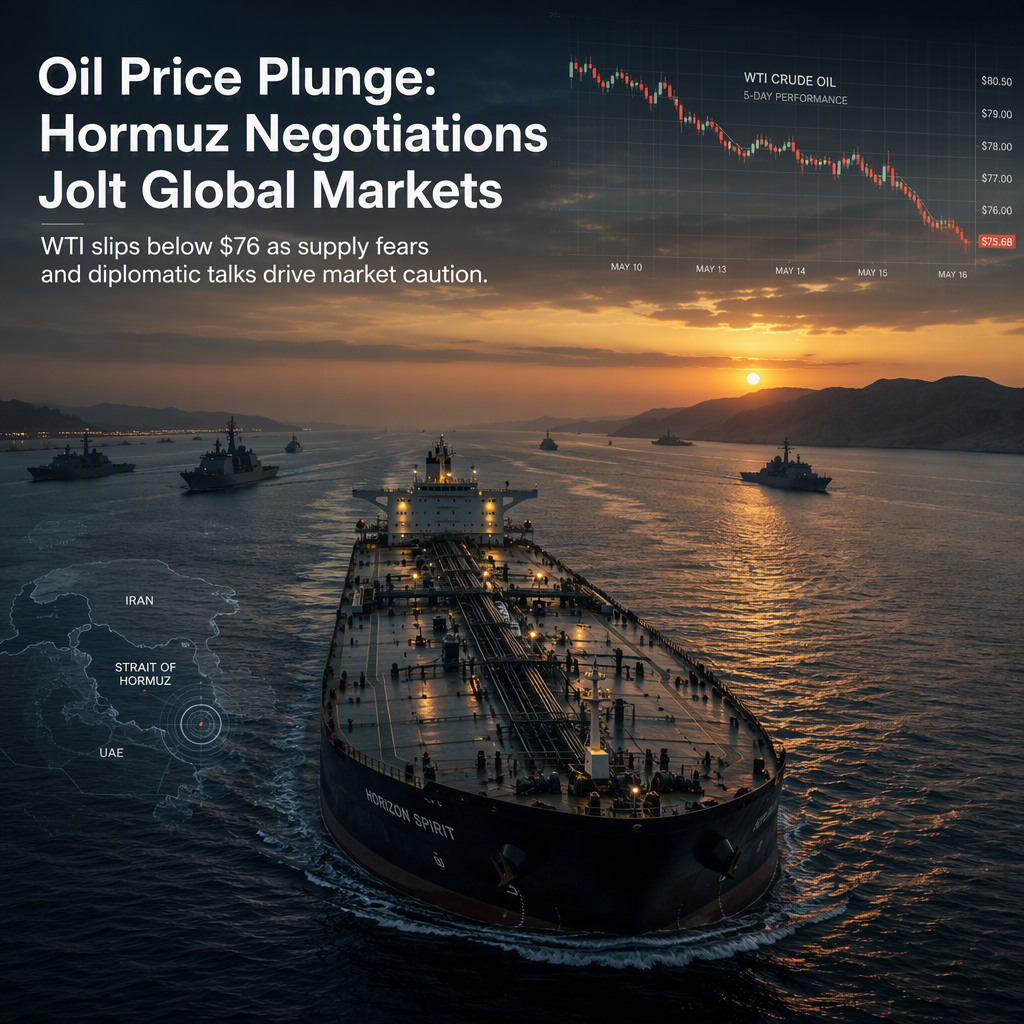
WTI Oil prices have retreated below $76.00 per barrel, marking a 10% weekly decline, as markets react to ongoing negotiations between Iran and Oman regarding the reopening of the Strait of Hormuz, a crucial passage for global oil shipments [1][2]. The talks are being closely monitored by energy markets due to the potential for immediate effects on oil prices and volatility, given Hormuz's role as a vital chokepoint for a significant percentage of the world’s oil supply [2].
Previously, concerns were raised by a report from Iran's Farsnews agency, which indicated Tehran was considering a plan to ban US and Israeli vessels from Hormuz and impose fees of five to seven percent of cargo for ships crossing the waterway. This proposal would conflict with the US stance on keeping sea routes free from tolls or restrictions [1]. President Donald Trump expressed optimism about a swift resolution, stating the Strait is "sort of open" and under US control, but warned of possible actions by Iranian forces, such as "shooting something" or "dropping a mine" [1]. Trump also addressed concerns about the US military’s munitions supply, asserting that the US can defend its interests and maintain a strong presence in the region, despite analyst warnings about declining inventories of precision-guided munitions [2].
Rabobank analysts highlighted that global oil inventories are being drawn down at a rate of 2-5 million barrels per day, with an additional 5-6 million barrels per day of refined products. They cautioned that these stockpiles are a finite buffer and "won’t last forever," emphasizing the limits of using stored crude and products to cushion supply disruptions [1]. Rabobank’s base case projects a protracted recovery in crude flows, estimating Hormuz could only return to 50-60% of prewar flows by 2027, with Middle East refinery exports normalizing by mid-2028. This suggests refined product markets may face more persistent tightness even as crude flows gradually normalize [1].
Market sentiment remains cautious, with analysts monitoring the negotiations for potential volatility. Some suggest that a breakthrough in talks could stabilize prices, while continued tensions may result in price spikes and increased risk premiums [2]. No specific technical indicators or additional price levels were provided in the NBC report [2].
CONCLUSION
WTI Oil has experienced a sharp weekly decline amid uncertainty surrounding the Iran-Oman negotiations to reopen the Strait of Hormuz. Analysts warn that global oil inventories are being rapidly depleted and may not provide lasting protection against supply disruptions. The outcome of the talks remains pivotal for market stability, with traders awaiting further developments and official statements.