
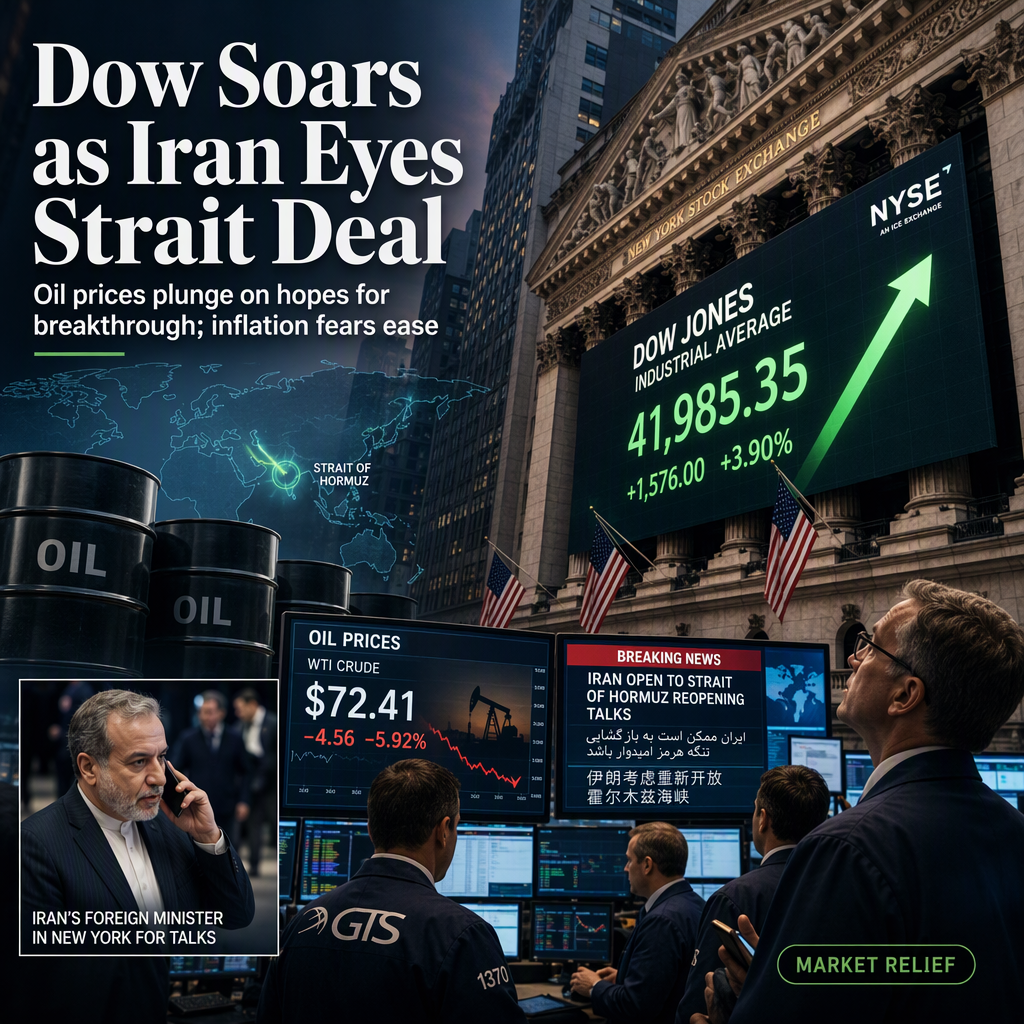
Iran has proposed reopening the Strait of Hormuz within seven days if Washington accepts its terms, which include returning to a June memorandum of understanding, lifting the US naval blockade, unfreezing Iranian assets, restoring an oil sanctions waiver, and ending Israel's war in southern Lebanon, most of these actions to be completed within four to five days [1]. Iran's Foreign Minister Abbas Araghchi is currently in New York awaiting a response, while both US President Trump and Iranian President Masoud Pezeshkian have expressed a desire for a deal, though they disagree on whether it should be finalized before or after the US election on November 3 [1]. The Dow Jones Industrial Average rebounded near 51,800 on Friday, breaking a three-session losing streak, as buyers responded positively to the news of Iran's offer, even before Washington has replied [1]. West Texas Intermediate (WTI) Crude Oil prices fell toward $92.00 following the offer, providing relief to 29 of the Dow's 30 members, with Chevron (CVX) being the only oil producer in the index [1]. Lower oil prices are seen as easing inflationary pressures, which the Federal Reserve is currently raising rates to combat [1]. Brent Crude Oil had surged to a session high near $108.00 after Houthi missile attacks on Saudi Arabia but retreated on reports of a phased deal, having gained more than 17% in September [1]. The 10-year Treasury yield reached 5.23% on Friday, its highest since June 2007, while the 30-year yield hit its highest since 2004 on Thursday [1]. The average 30-year mortgage rate is above 7%, impacting the housing market for companies like Home Depot (HD) and Sherwin-Williams (SHW) [1]. Durable goods orders were flat in August, outperforming the forecasted 0.4% drop, and business equipment orders rose 1.6% versus 0.5% expected [1]. The University of Michigan survey showed consumers expect 4.6% inflation over the next year, higher than the Fed's 3.75-4.00% rate [1]. As crude oil prices fell, traders reduced the probability of an October Fed rate hike to about 66% from 77.5% the previous day [1].
CONCLUSION
Iran's offer to reopen the Strait of Hormuz has lifted the Dow Jones Industrial Average and pushed oil prices lower, easing inflation concerns for most index members. The market is responding positively to the prospect of a deal, though uncertainty remains regarding the timing and terms. Lower oil prices and improved durable goods data have also reduced expectations for an imminent Fed rate hike.