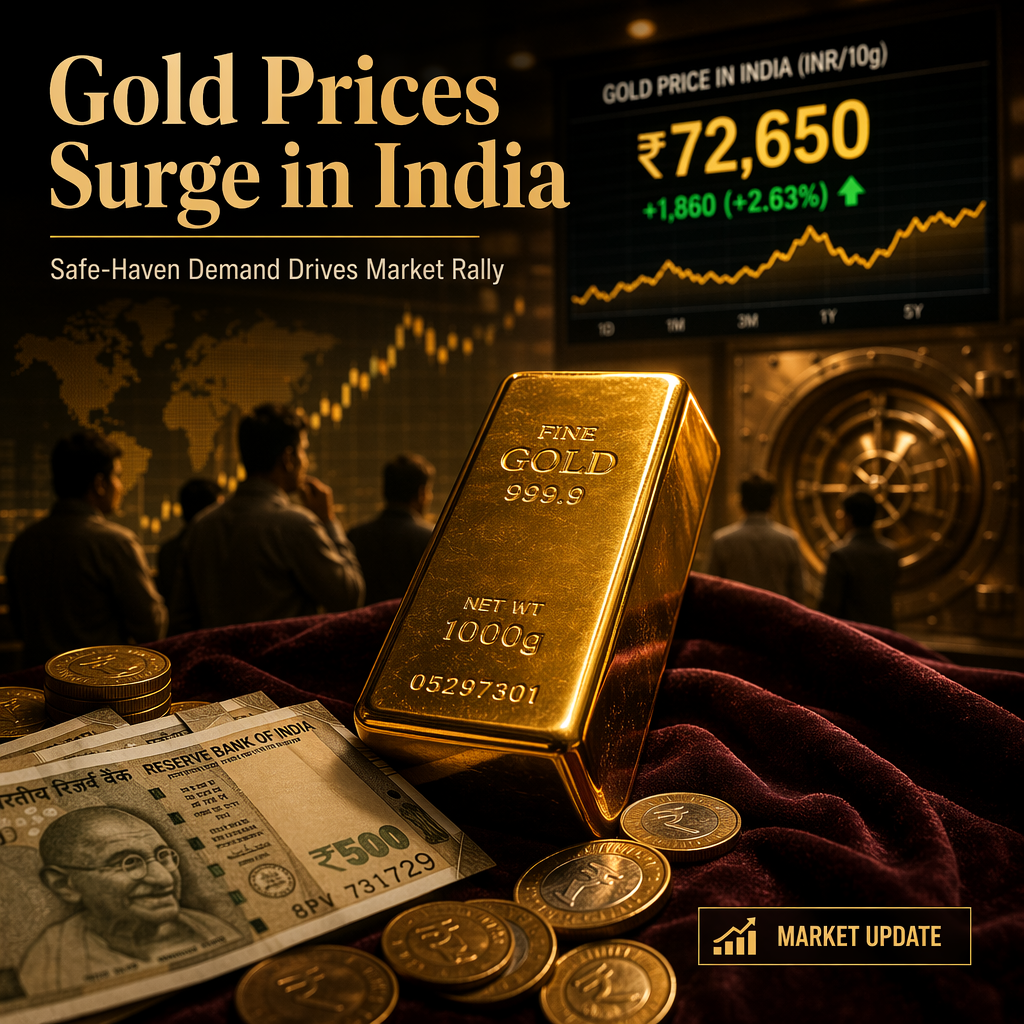
Gold prices in India increased on Thursday, according to FXStreet data. The price for gold stood at 12,410.68 Indian Rupees (INR) per gram, up from INR 12,310.58 per gram on Wednesday. Similarly, the price per tola rose to INR 144,755.20 from INR 143,588.20 a day earlier [1]. FXStreet notes that these prices are calculated by adapting international gold prices (USD/INR) to local currency and measurement units, with daily updates based on market rates at the time of publication. However, it is mentioned that local rates could diverge slightly from these reference prices [1].
The article highlights that gold is widely regarded as a safe-haven asset, especially during turbulent times, and is also seen as a hedge against inflation and depreciating currencies. Central banks are identified as the largest holders of gold, with emerging economies such as China, India, and Turkey rapidly increasing their reserves. In 2022, central banks added 1,136 tonnes of gold worth around $70 billion to their reserves, marking the highest yearly purchase since records began, according to data from the World Gold Council [1].
Gold's price is noted to have an inverse correlation with the US Dollar and US Treasuries, and it tends to rise during periods of geopolitical instability or recession fears due to its safe-haven status. Lower interest rates generally support higher gold prices, while higher rates can weigh on the metal. The article emphasizes that most gold price movements depend on the behavior of the US Dollar, as gold is priced in dollars [1].
No specific market reactions or analyst forecasts are provided in the article. The focus remains on the factual increase in gold prices and the underlying factors that typically influence gold markets.
CONCLUSION
Gold prices in India have risen, reflecting ongoing demand for the precious metal as a safe-haven asset. The increase aligns with broader trends of central bank accumulation and gold's role as a hedge against economic uncertainty. Market participants will continue to monitor currency movements and global economic conditions for further direction.