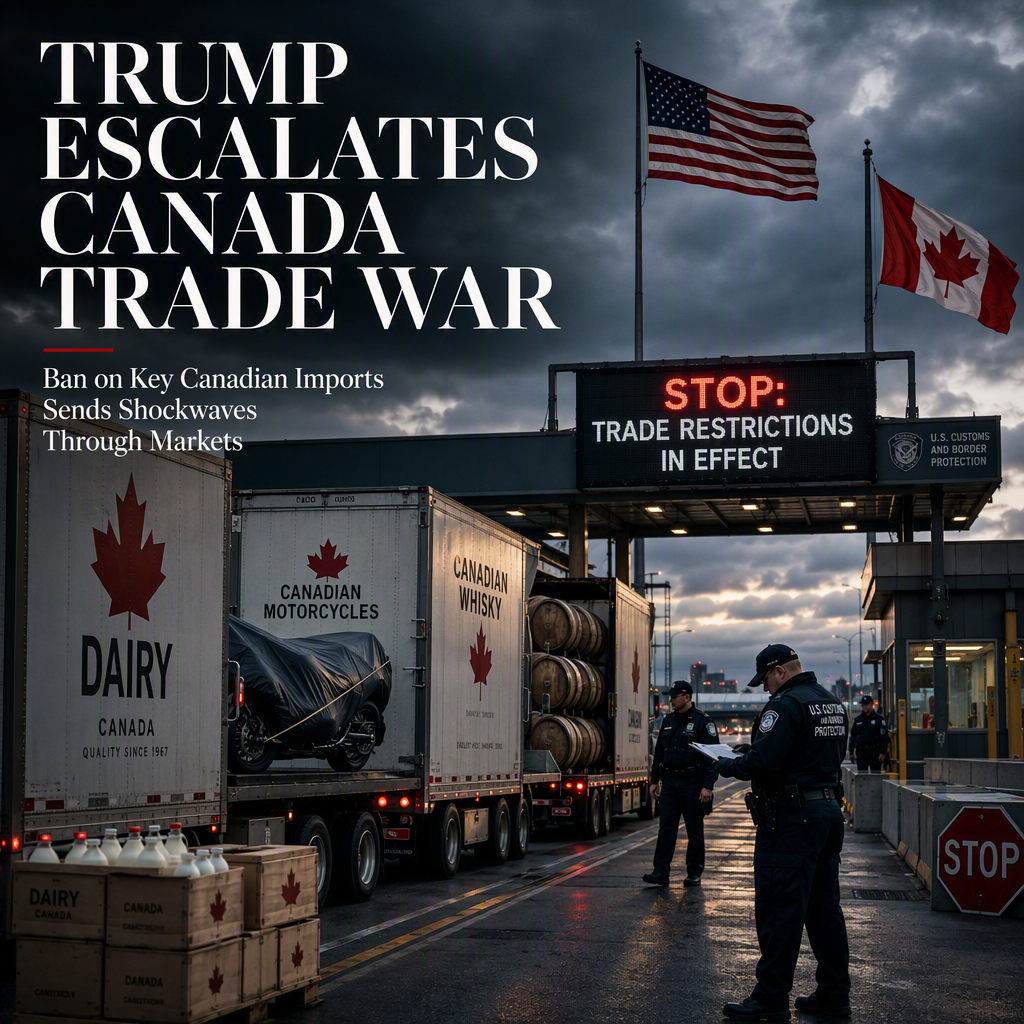
President Donald Trump has announced a significant escalation in the ongoing trade dispute with Canada by moving to ban imports of certain Canadian products, specifically targeting motorcycles, dairy goods, and alcoholic beverages [1]. This action is a direct response to what the White House describes as unfair trade practices by Canada, with a particular focus on the dairy sector [1]. The administration has previously accused Canadian dairy producers of flooding the U.S. market with subsidized goods, which they argue disadvantages American farmers [1].
While the announcement did not include specific dollar amounts, tariff rates, or a detailed list of affected products, analysts expect the measures to have a notable effect on trade flows between the two countries and potentially prompt retaliatory actions from Canada [1]. The U.S. market is described as a significant outlet for Canadian manufacturers and exporters, suggesting that the ban could have substantial economic implications for those sectors [1].
Market analysts are closely monitoring the situation for potential impacts on the agricultural and manufacturing sectors, as well as possible price fluctuations in the affected product categories [1]. There is also concern among investors about the possibility of broader market volatility and shifts in currency exchange rates between the U.S. and Canada as a result of the escalating trade tensions [1].
No official details have been released regarding the duration of the bans or the specific product lists, but further guidance is expected from the Department of Commerce [1]. Financial advisors are recommending that companies with exposure to cross-border trade monitor developments closely and consider hedging strategies to mitigate potential losses [1]. The situation adds further uncertainty to already tense trade relations, and market sentiment remains cautious as stakeholders await a response from Canada [1].
CONCLUSION
The Trump administration's move to ban select Canadian imports marks a significant escalation in U.S.-Canada trade tensions, with analysts anticipating notable impacts on trade flows and market volatility. As details remain limited and the potential for Canadian retaliation looms, market participants are advised to remain vigilant and consider risk mitigation strategies.