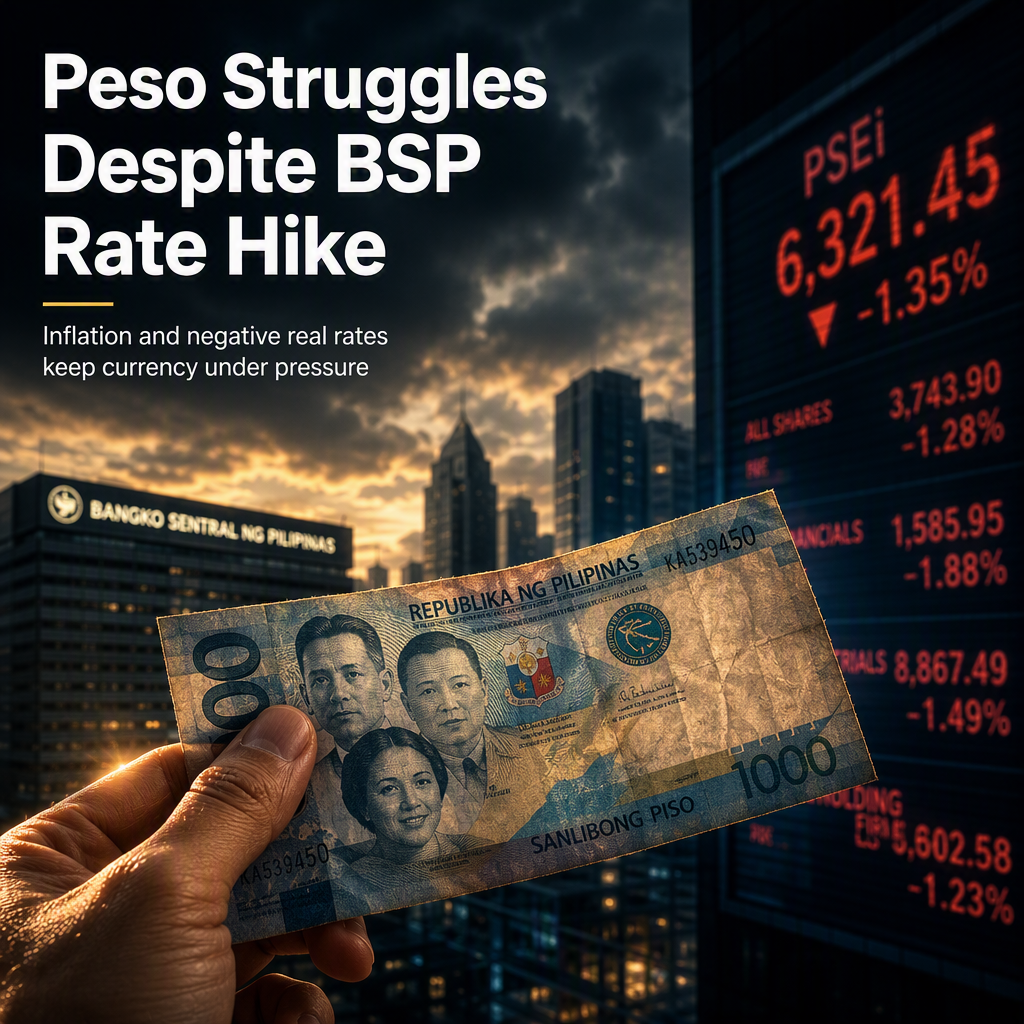
The Bangko Sentral ng Pilipinas (BSP) implemented its third consecutive 25 basis point rate hike, raising the policy rate to 5.00% [1]. According to Brown Brothers Harriman’s (BBH) Elias Haddad, this move was largely anticipated by the market, with 20 out of 25 analysts polled by Bloomberg expecting the increase, while the remaining analysts predicted a hold [1]. The BSP characterized the rate hike as a 'preemptive monetary action' aimed at countering upside price risks stemming from 'severe El Niño conditions on agricultural prices' and 'potential wage adjustments' [1].
Despite the central bank’s actions, Haddad contends that the BSP’s policy remains behind the curve, as inflation continues to exceed the central bank’s 4% upper tolerance band [1]. The market is currently pricing in nearly 75 basis points of additional tightening over the next 12 months, yet negative real rates persist, which is expected to keep the Philippine Peso underperforming relative to its Asian peers [1].
The report suggests that, although the BSP describes its latest move as preemptive, the ongoing inflationary pressures and lagging policy response render the action more reactive in nature [1]. This environment of negative real rates and expectations for further tightening highlights ongoing challenges for the Philippine Peso [1].
CONCLUSION
The BSP’s third consecutive rate hike to 5.00% was widely anticipated, but analysts argue that policy remains behind the curve as inflation stays elevated. Persistent negative real rates and expectations for further tightening suggest continued underperformance for the Philippine Peso relative to regional peers.