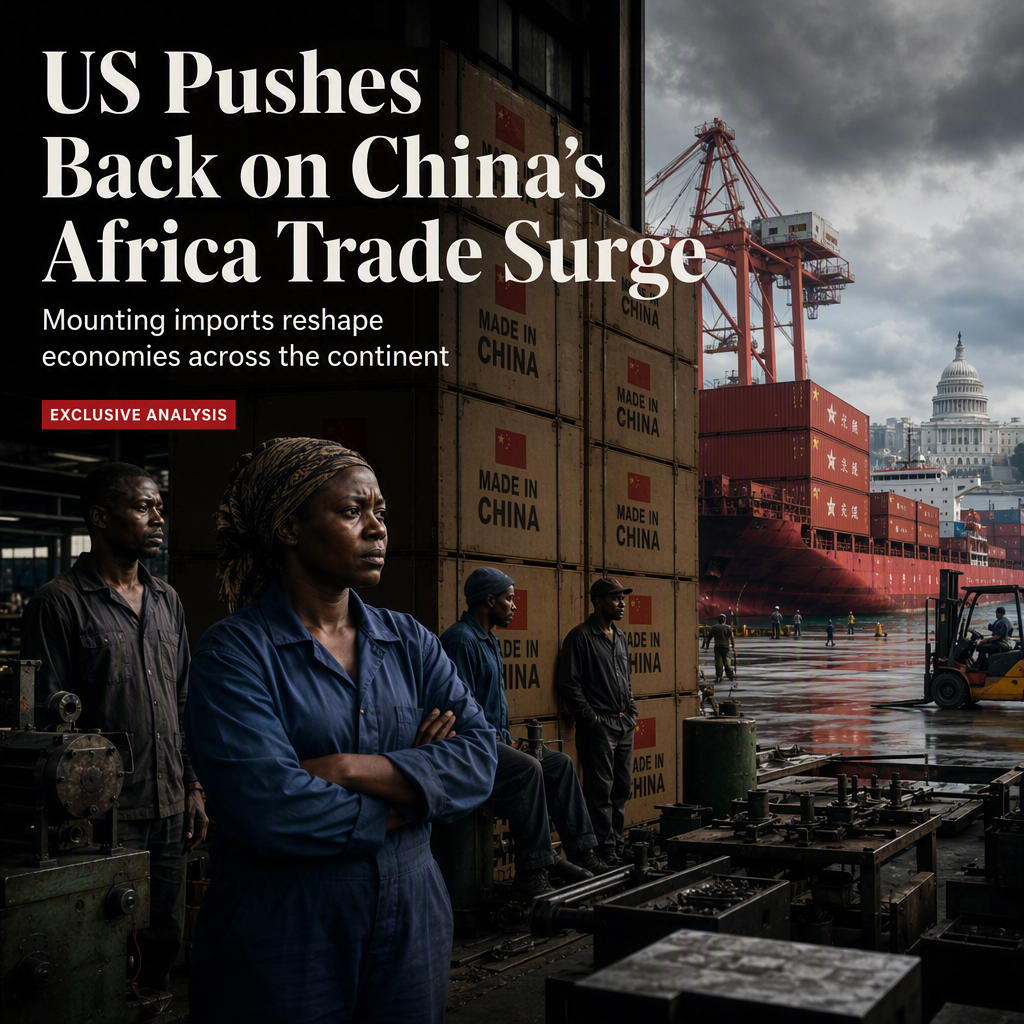
A top U.S. State Department official has criticized China's trade practices in Africa, highlighting what analysts describe as the 'China shock wave' that is negatively impacting African economies [1]. African manufacturing sectors are reportedly suffering due to a significant influx of Chinese imports, which is compounded by China's extraction of raw materials, including critical minerals, from the continent and a lack of reciprocal importation of African goods [1]. According to the China Global South Project, in 2025, Chinese exports to Africa reached $225 billion, while imports from Africa were only about $123 billion, indicating a substantial trade imbalance [1].
Assistant Secretary of State for African Affairs Frank Garcia stated that 'no country is immune to the negative impacts of China’s unfair trade practices and state-subsidized overcapacity,' noting that China's economic engagement has led to unsustainable debt, economic coercion, and an oversupply of Chinese imports that threaten the development of local industries in Africa [1]. Garcia emphasized that the U.S. government aims to counter this imbalance by offering credible alternatives, leveraging both public and private financing in priority areas to benefit the American economy and enhance national security against threats associated with foreign investment [1].
Elaine Dezenski, senior director at the Foundation for Defense of Democracies, noted that while China is the number one trading partner for many African countries, this relationship has not resulted in African nations moving up the value chain. Instead, some African countries are increasingly locked into a cycle of exporting minerals and natural resources to China and importing finished goods from China, further entrenching economic dependency [1].
The article does not mention specific market reactions or analyst forecasts regarding the immediate impact on U.S. or African markets, nor does it reference any publicly traded companies by ticker symbol [1].
CONCLUSION
The U.S. is taking steps to counter China's growing economic influence in Africa, which has led to significant trade imbalances and challenges for African manufacturing. While the U.S. aims to provide alternative investment and trade opportunities, the current situation underscores ongoing concerns about China's trade practices and their broader economic implications for both Africa and global markets.