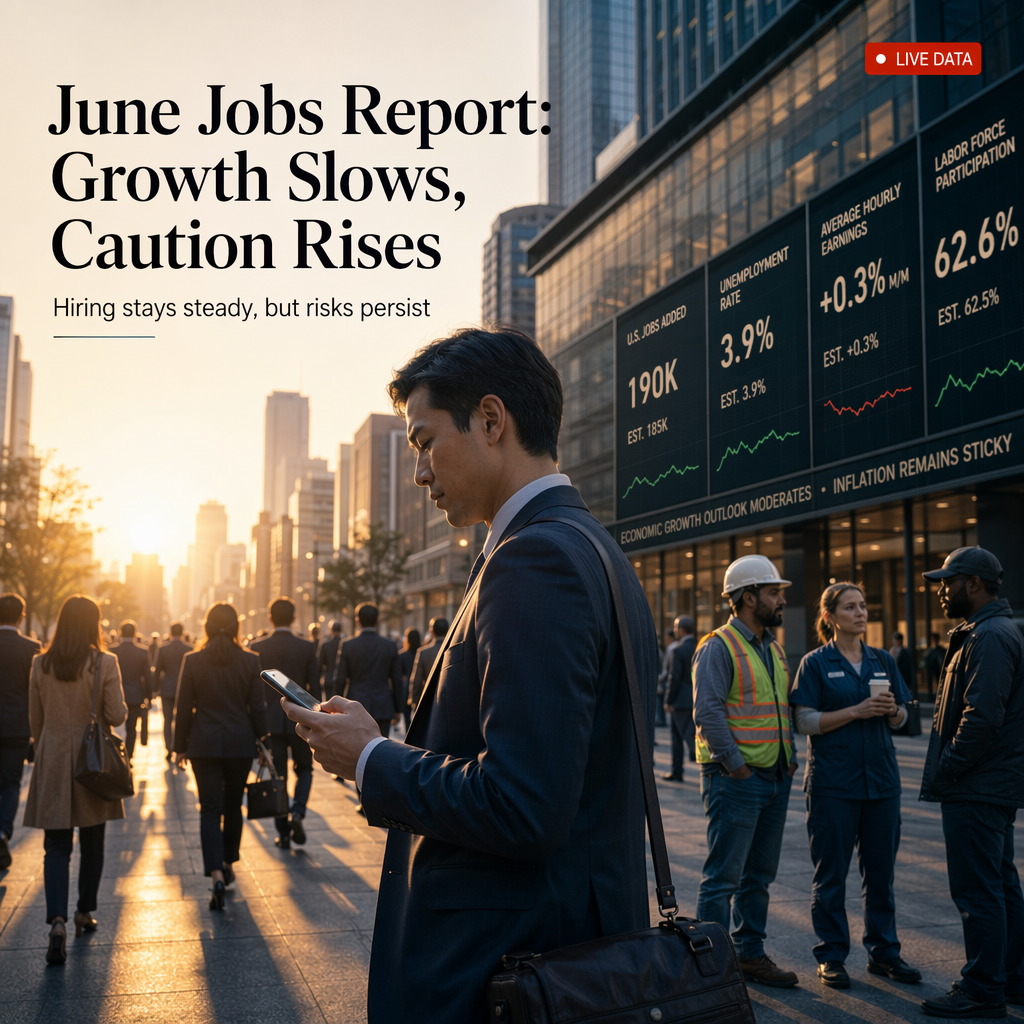
The upcoming U.S. Bureau of Labor Statistics June jobs report, scheduled for release on Thursday at 8:30 a.m. ET, is anticipated to show continued stable hiring for the fourth consecutive month, with a projected gain of 115,000 jobs and the unemployment rate remaining largely unchanged at 4.3% according to a Dow Jones survey of analysts and economists [1]. Average hourly wage growth is expected to be 3.5%, which remains below the rate of inflation [1]. This release is taking place on Thursday instead of the usual Friday due to U.S. market closures for Independence Day on July 3 [1].
The labor market has shown signs of recovery over the past three months, with each month posting job gains exceeding 170,000 following a period of net job losses near the end of 2025 [1]. However, if the June figure comes in at 115,000, it would represent the smallest monthly gain since February [1]. Citigroup economist Veronica Clark cautioned that despite recent stability, other weaker data points suggest that the strength in payroll data may not indicate sustainably stronger demand for workers. Citigroup forecasts a more modest increase of just 25,000 payroll jobs in June, with the unemployment rate holding at 4.3% [1].
UBS economists highlighted the potential impact of the upcoming North American World Cup, estimating that the event could add 15,000 to 20,000 jobs to June's private employment figures, primarily in temporary help, spectator sports, and venues, but with minimal effect on accommodation and food services [1]. They also warned that these temporary jobs could modestly depress employment gains in July and August as the event concludes [1].
While some analysts remain cautious about the sustainability of recent job growth, others, such as Bank of America economist Shruti Mishra, offer a less bearish outlook, though her full comments were not included in the article [1].
CONCLUSION
The June jobs report is expected to show continued, albeit slower, job growth and a stable unemployment rate, but economists warn of underlying risks and temporary factors influencing the data. Market participants are likely to interpret the report as a sign of stabilization, though concerns about the sustainability of labor market strength persist.