
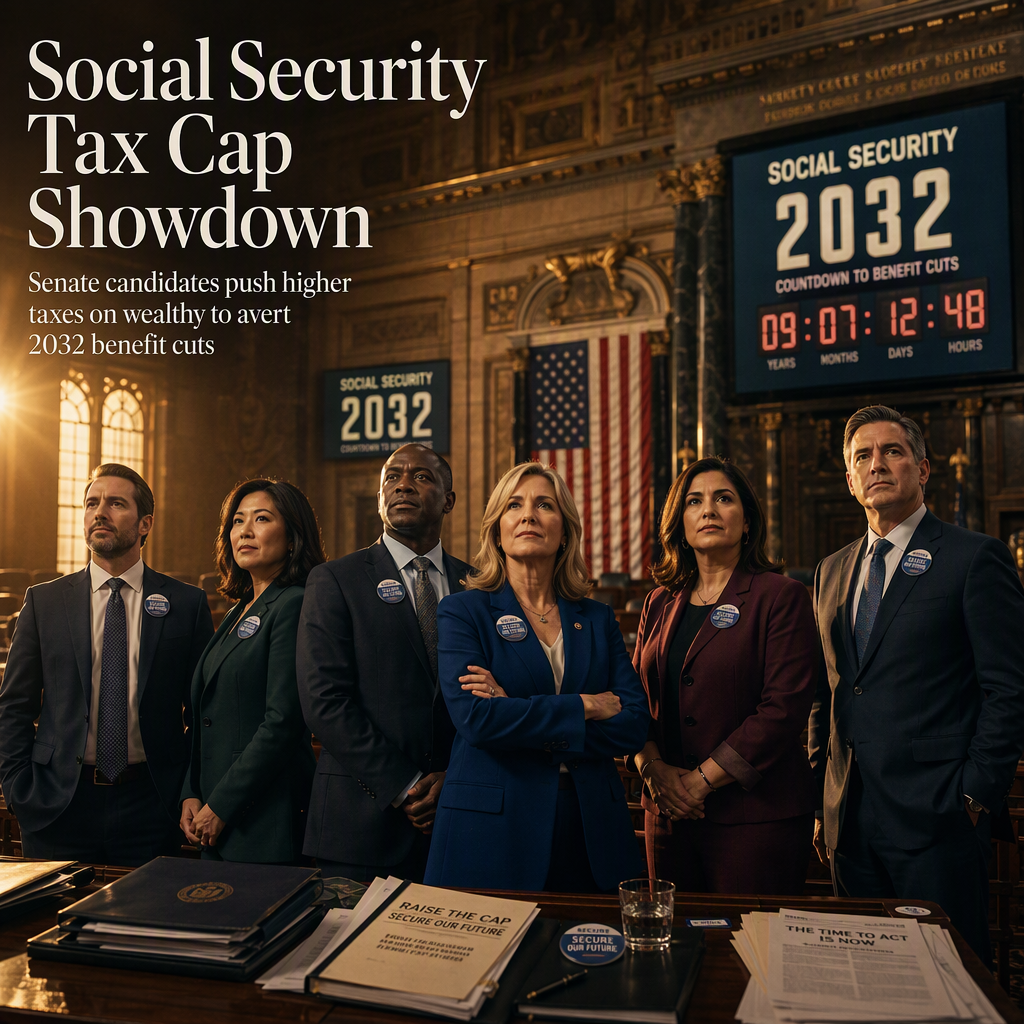
A growing number of Senate candidates from both Democratic and Republican-leaning states are centering their campaigns on raising Social Security taxes for higher incomes, aiming to prevent an automatic benefit cut scheduled to take effect in less than six years unless Congress intervenes [1]. Currently, Social Security taxes are applied to earnings up to $184,500, but these candidates—primarily Democrats—are advocating for lifting or eliminating this cap to increase program revenues ahead of the projected 2032 insolvency deadline [1].
According to the latest trustees report, Social Security is fully funded until the fourth quarter of 2032, after which benefits will be automatically reduced by 22% unless legislative action is taken [1]. The senators elected in the upcoming fall election will serve terms ending in January 2033, positioning them to address this critical deadline [1].
In Michigan, Democratic nominee Abdul El-Sayed has pledged to end the Social Security tax cap, stating, “I will end the cap on Social Security tax to make sure the rich pay their fair share. That way Social Security can last for decades to come” [1]. Similarly, Iowa Democrat Josh Turek supports eliminating the payroll tax cap, with his campaign emphasizing the need to "protect Social Security by lifting the cap to make billionaires pay their fair share" [1]. In Texas, Democrat James Talarico is running on a platform to "ensure the wealthiest Americans pay their fair share into Social Security by eliminating the tax cap on those earning over $400,000 a year" [1].
There is, however, some disagreement among supporters regarding whether to eliminate the cap entirely or set a new threshold at $400,000, reflecting political sensitivities about raising taxes on incomes below that level—even among Democrats [1].
CONCLUSION
The debate over raising or eliminating the Social Security tax cap is becoming a central issue in Senate campaigns, with candidates proposing measures to prevent a 22% benefit cut projected for 2032. The outcome of these proposals could have significant implications for Social Security's long-term solvency and the tax burden on higher-income earners.