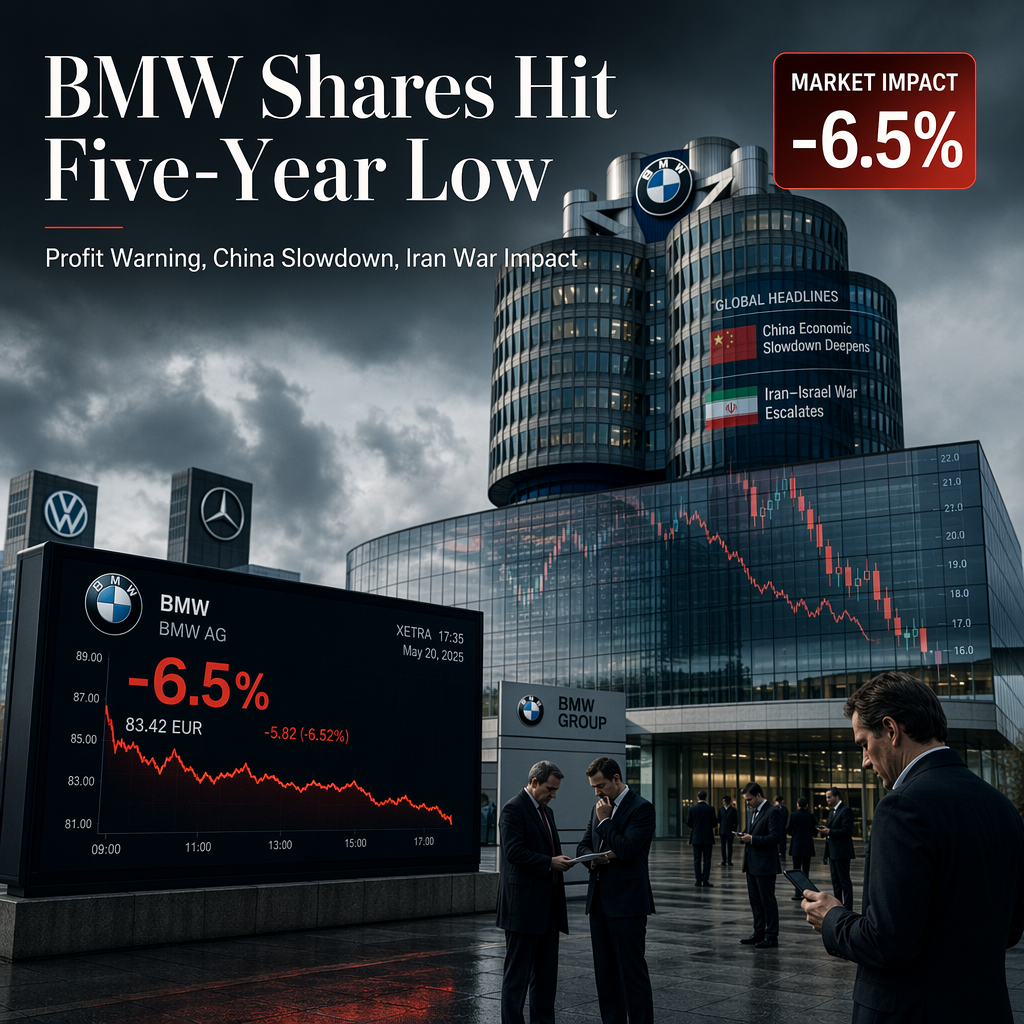
BMW shares dropped 6.5% to their lowest levels in over five years on Wednesday following a significant downgrade to the company's 2026 profit outlook, as announced in a statement released Tuesday morning [1]. The German automaker cited a slowdown in Chinese demand and disruptions caused by the Iran war as key factors behind the revised guidance. Elevated energy prices, driven by the conflict in Iran, are increasing costs and negatively impacting consumer sentiment globally, according to BMW [1]. The company stated that positive volume developments in Europe and the USA are insufficient to offset the sales decline in China and Asia Pacific [1].
BMW now expects its pre-tax profit to fall 'significantly,' with Citi analysts reducing their China sales assumptions by over 50,000 units and anticipating total sales will fall below 500,000 by year-end [1]. Deutsche analysts expressed concern after BMW's conference call, noting a lack of comprehensive updates on company structures and costs [1]. Citi analysts further commented that, given the absence of a positive equity narrative, continued downward pressure on full-year earnings, negative industry trends, and punishing EU regulations, BMW's undervaluation may persist [1].
The profit warning had broader implications for the European auto sector, as shares in BMW's German rivals Volkswagen and Mercedes-Benz also came under pressure [1]. Volkswagen had previously reported weaker-than-expected first-quarter profit in April, attributing the results to higher U.S. tariffs and intensifying competition from Chinese car brands. CEO Oliver Blume highlighted 'wars, geopolitical tensions, trade barriers, stricter regulations, and intense competition' as ongoing challenges for the group [1].
European carmakers are increasingly losing market share to Chinese rivals, who have rapidly expanded their electric vehicle (EV) footprint across Europe, the U.K., Asia, and Australia by exporting millions of competitively priced vehicles, building factories, and widening supply chains [1]. The sector is also exploring opportunities in the defense industry, with Ineos Automotive and Daimler Truck recently announcing plans to produce military vehicles [1].
CONCLUSION
BMW's profit warning and subsequent share slump underscore the mounting challenges facing European automakers, including slowing demand in China, geopolitical disruptions, and rising costs. The negative sentiment and high market impact reflect persistent industry headwinds and a lack of positive outlook for BMW and its peers. Investors may continue to see undervaluation in the sector amid ongoing structural and regulatory pressures.