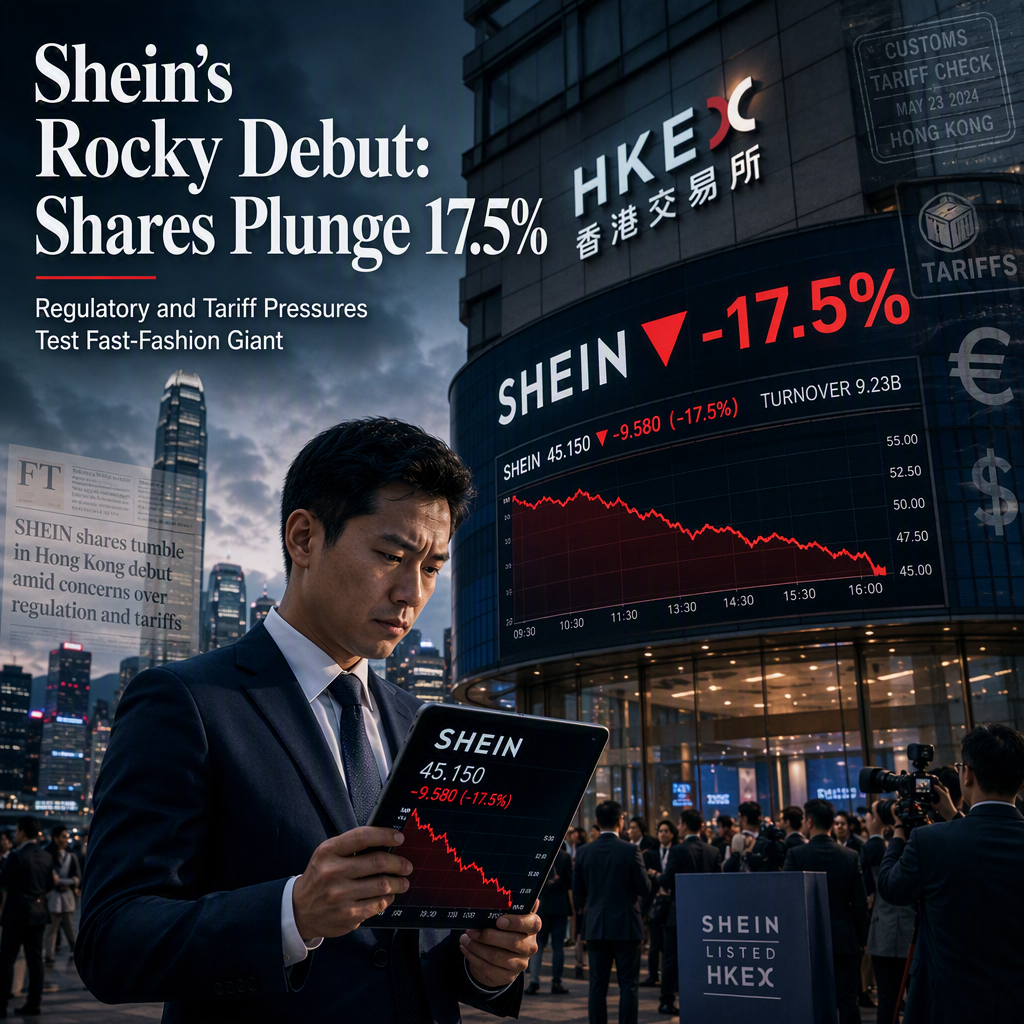
Shein, the Singapore-headquartered fast-fashion retailer, has experienced a challenging entry into the Hong Kong stock market, with its shares trading lower for a fourth consecutive day and losing 17.5% since their debut on Tuesday [1]. This negative market reaction has intensified scrutiny on Shein's ability to sustain its rapid growth, as the company's low-cost, trend-driven business model faces mounting regulatory and tariff headwinds [1].
In 2025, Shein reported revenue of $41.8 billion, up from $38.7 billion the previous year, but the company posted a net loss of $99 million in the first quarter of this year, reversing a profit from the same period a year earlier [1]. Analysts highlight that Shein's core U.S. and European markets have tightened rules that previously allowed low-value imports to enter duty-free, with the U.S. ending de-minimis treatment for shipments from China and Hong Kong in May last year, and the EU imposing a temporary 3-euro duty per item after ending its customs-duty exemption for imports up to 150 euros in July [1]. Nearly 5.9 billion low-value items entered the EU in 2025, according to European Commission data [1].
Industry experts note that these regulatory changes have eroded the structural advantage that enabled Shein to ship low-cost items globally, forcing the company to raise prices and potentially shifting consumer focus from price to quality—a competitive area where Shein has less experience [1]. While Shein's technology-driven manufacturing network remains a competitive edge, analysts warn that rivals are closing the gap in digital fast fashion capabilities [1].
Looking ahead, analysts suggest Shein must localize operations, diversify growth beyond its main markets, and redefine its value proposition beyond low prices and constant novelty. This includes curating marketplace offerings, developing new services, and improving its brand image as regulatory scrutiny and public opinion intensify [1].
CONCLUSION
Shein's rocky Hong Kong market debut and subsequent share decline underscore the challenges posed by new tariffs and regulatory changes in its key markets. The company faces pressure to adapt its business model, enhance its value proposition, and restore investor confidence amid a shifting competitive landscape.