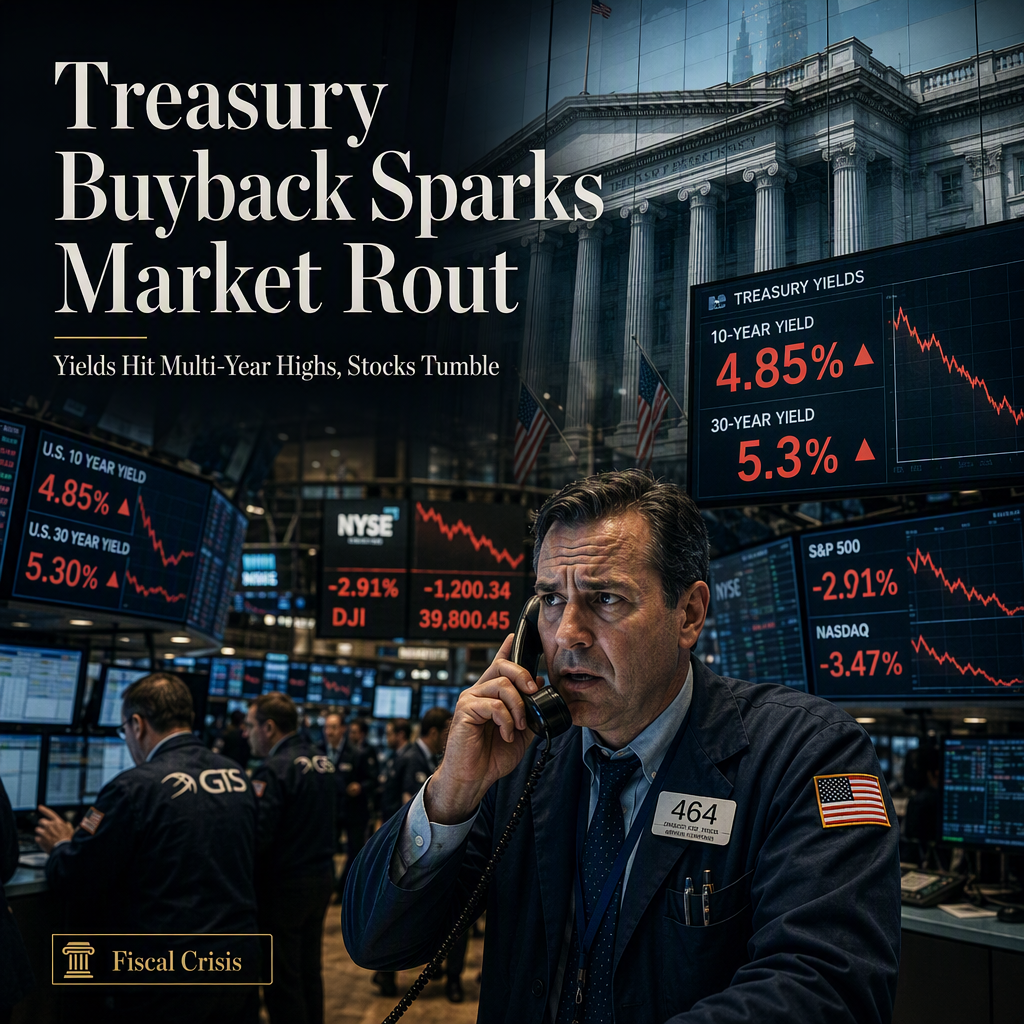
On Wednesday, Treasury Secretary Scott Bessent announced a $6 billion repurchase of 10- to 20-year U.S. government bonds, aiming to reduce the supply of bonds in the market and thereby lower soaring yields, which had reached levels not seen in decades [1]. Contrary to expectations, the announcement triggered a sharp sell-off in bonds, causing yields to surge even higher. The 10-year Treasury yield climbed to 4.85%, its highest since November 2023, while the 20- and 30-year yields rose to 5.3% [1].
The stock market reacted negatively to the spike in yields. The Nasdaq Composite, which is particularly sensitive to interest rates due to its concentration of major technology companies, fell by 0.8% at midday, and the S&P 500 dropped 0.6% [1]. This market response highlights skepticism about the Treasury's ability to control yields and reflects broader concerns about the government's diminishing tools to manage key economic levers, including bond yields, gas prices, and tariffs [1].
Yields have been on an upward trajectory since the beginning of the year, accelerating after Federal Reserve Chairman Kevin Warsh signaled a lack of strong commitment to using monetary policy tools to curb inflation during a late July press conference [1]. This, combined with inflationary pressures from the ongoing Iran war and higher import prices due to President Donald Trump's trade policies, has fueled market anxiety [1].
Bessent attributed the market's "fever" to narratives in the financial press and emphasized his role in seeking equilibrium, but investors remain wary. Legendary investor Stanley Druckenmiller warned in August that attempts by the Treasury to defend bond prices could backfire, as markets would continually test the government's resolve, requiring ever-larger interventions [1]. Peter Boockvar, chief investment officer at One Point BFG Wealth, echoed this sentiment, suggesting that markets will keep testing the Treasury if fundamentals justify it [1]. The U.S. national debt recently surpassed $40 trillion, further intensifying concerns about fiscal sustainability [1].
CONCLUSION
The Treasury's bond repurchase plan failed to calm markets, instead driving yields to multi-year highs and prompting a sell-off in stocks. Investor skepticism about government intervention and concerns over rising debt levels suggest continued volatility in the bond market.