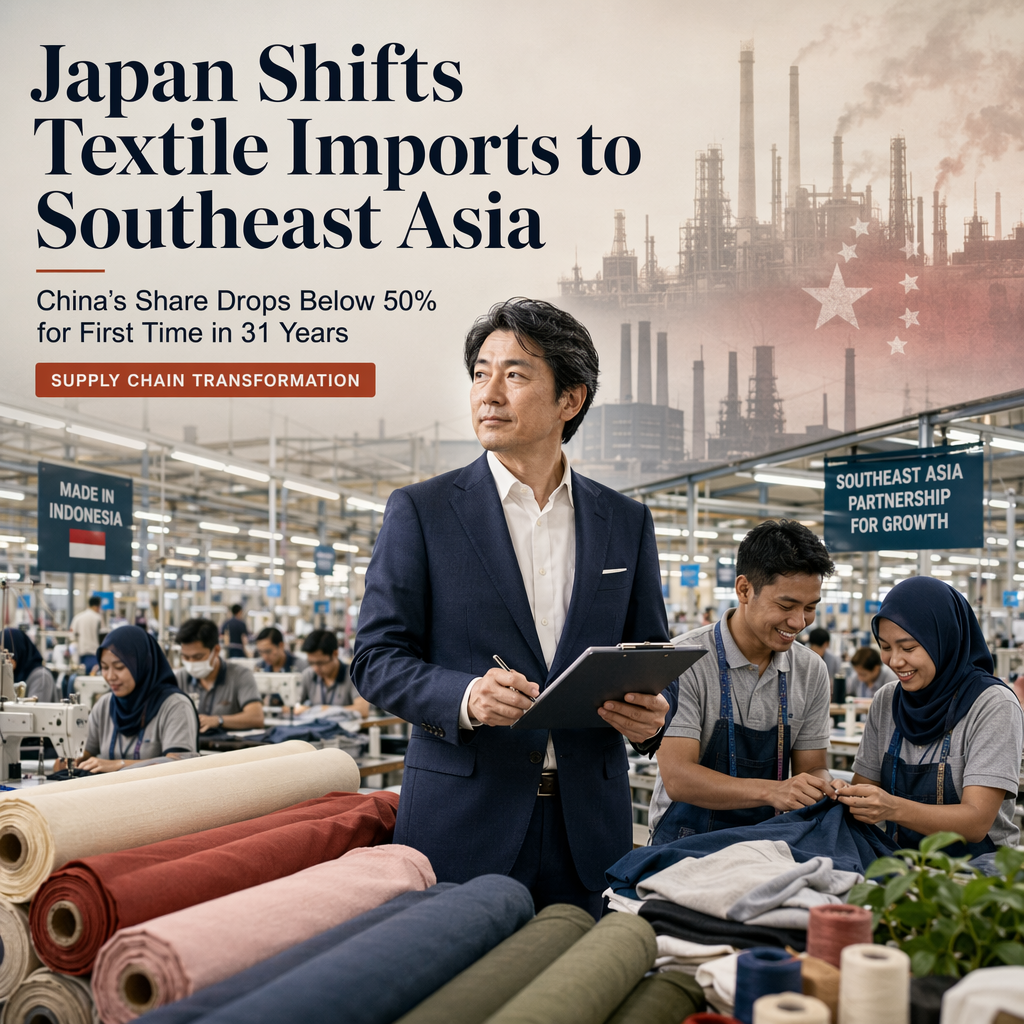
Japan's clothing import sector is experiencing a major transformation as companies increasingly shift production away from China to Southeast Asian countries such as Vietnam and Indonesia. In 2025, China's share of Japan's textile product imports fell below 50% for the first time in 31 years, marking a significant milestone in the country's supply chain diversification efforts [1]. This shift is primarily driven by rising labor costs in China and growing geopolitical risks, prompting Japanese apparel makers—including suppliers for major brands like Uniqlo—to seek more cost-effective and stable production bases [1].
Key industry players are responding to these trends with concrete investments. For example, Matsuoka, a supplier for Uniqlo, is building a second factory in Indonesia to complement its existing facility in Vietnam, signaling a clear commitment to reducing reliance on Chinese manufacturing [1]. Industry analysts note that the diversification strategy is expected to continue, with more Japanese apparel companies exploring opportunities across Southeast Asia [1].
The move away from China is anticipated to reshape the competitive landscape for textile and garment production in Asia. Japanese companies are actively seeking new supply chain partners and developing infrastructure in countries like Vietnam and Indonesia, a trend that is likely to accelerate as labor costs in China rise and geopolitical tensions persist [1].
Market sentiment among Japanese apparel brands favors ongoing diversification of production sources, with the goal of reducing exposure to China and enhancing supply chain resilience [1]. No specific price levels, technical indicators, or ticker symbols were mentioned in the article.
CONCLUSION
Japan's apparel industry is rapidly diversifying its supply chain away from China, with China's share of textile imports dropping below 50% for the first time in over three decades. This strategic shift is expected to continue, driven by cost and risk considerations, and will likely have a lasting impact on the Asian textile market landscape.