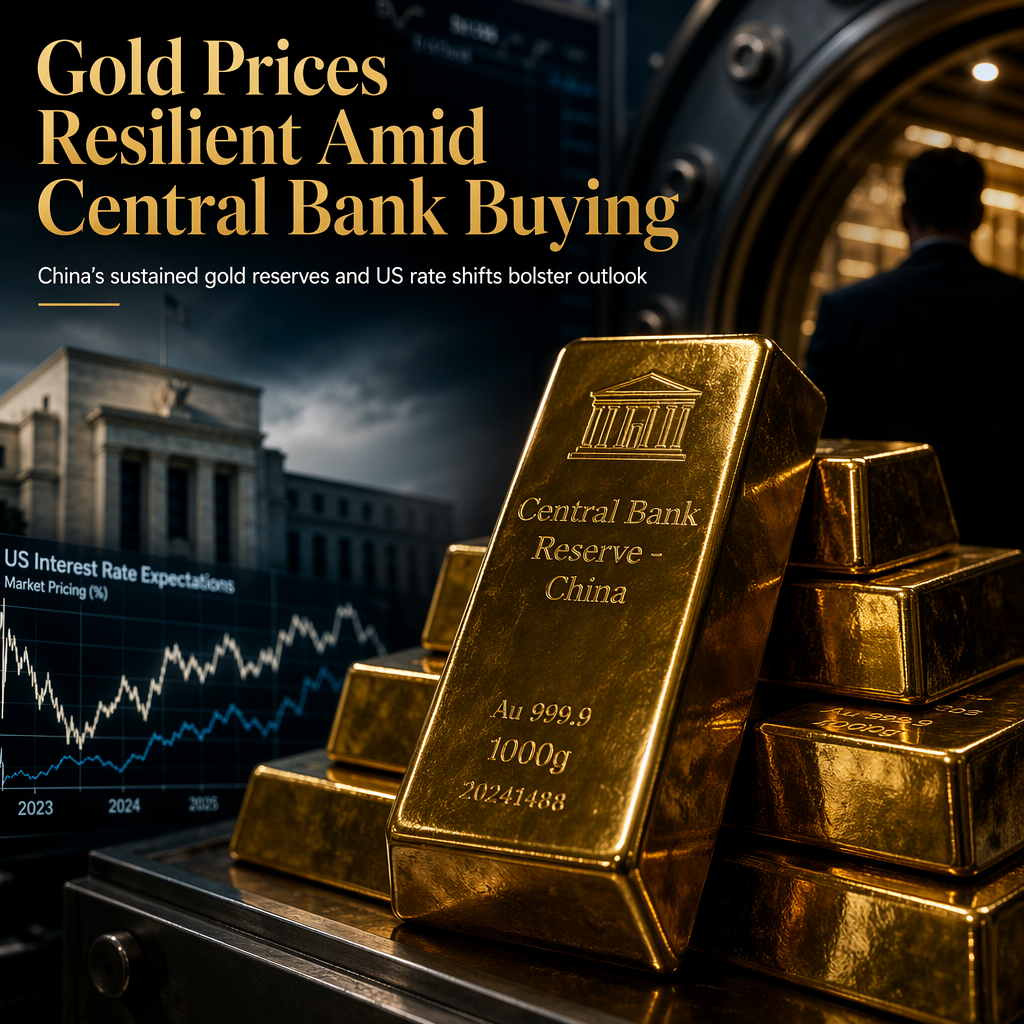
Gold prices experienced a slight decline in Tuesday afternoon trading after an initial advance, as investors awaited the release of the June Federal Open Market Committee (FOMC) minutes for further insight into the Federal Reserve's policy direction. Despite this dip, gold remained supported above the $4,000/oz level, trading in line with evolving US rate expectations. Last week's weaker-than-expected jobs data contributed to reduced expectations of further monetary tightening, which helped stabilize gold prices above the key threshold [1].
A significant factor underpinning gold's resilience is ongoing official-sector demand, particularly from central banks. The People's Bank of China increased its gold reserves for the 20th consecutive month in June, marking its largest monthly purchase since late 2023. This sustained accumulation underscores China's efforts to diversify its reserves and reflects a broader trend of robust central bank buying globally. ING strategists Warren Patterson and Ewa Manthey note that this trend is expected to continue providing crucial support for gold prices, even amid recent market volatility [1].
Additionally, security concerns in the Strait of Hormuz have contributed to the supportive environment for gold, reinforcing its status as a safe-haven asset. The combination of geopolitical risks, central bank accumulation, and shifting US rate expectations continues to shape the outlook for gold in the near term [1].
CONCLUSION
Gold prices remain resilient above $4,000/oz, bolstered by sustained central bank demand—especially from China—and evolving US monetary policy expectations. While short-term volatility persists, these factors are expected to continue supporting gold's outlook according to ING strategists.