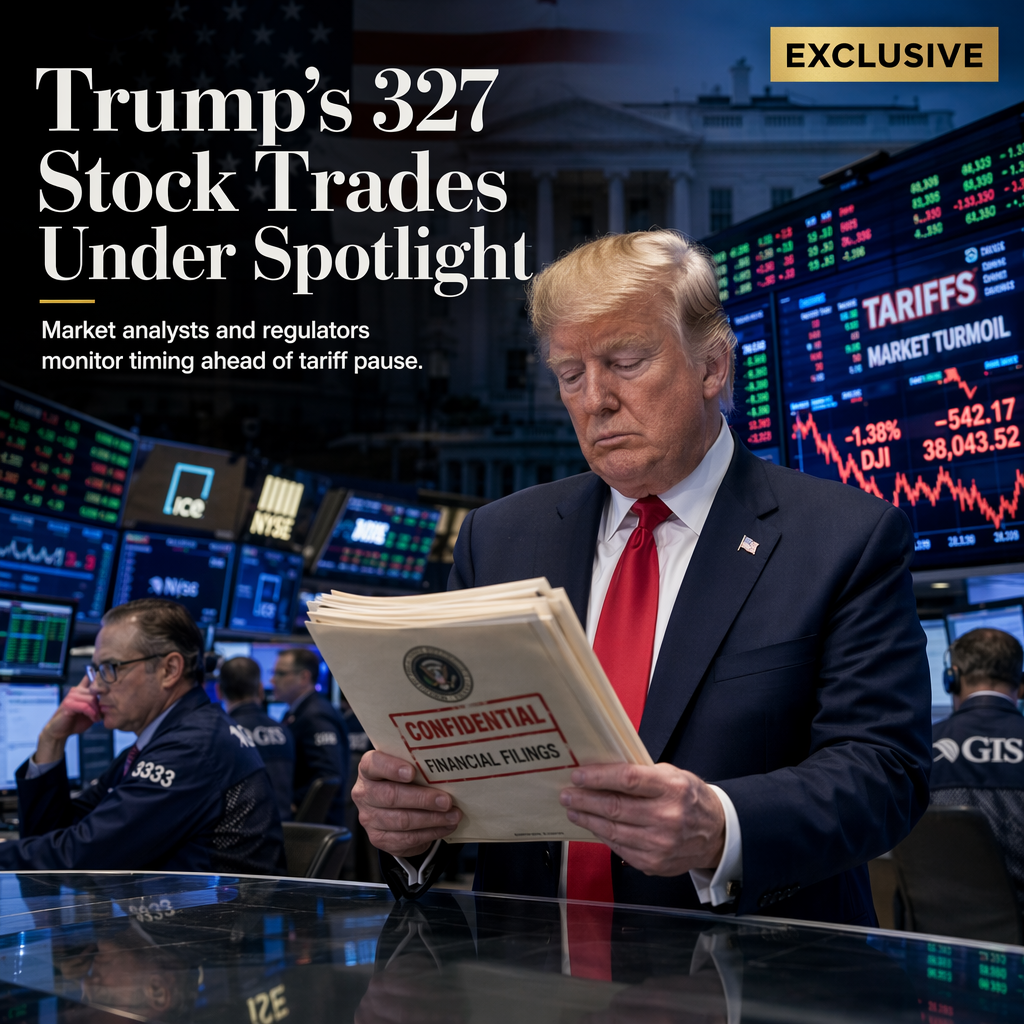
Recent financial disclosures reveal that former President Donald Trump executed 327 stock trades in a single day, occurring just one day before the announcement of a pause on tariffs [1][2]. The filings highlight the significant volume and timing of these trades, which market analysts describe as highly unusual for an individual investor, particularly a public figure [1][2]. The specific equities involved and the dollar values of the trades were not disclosed in the filings [2].
The timing of these trades in relation to the tariff pause announcement has raised questions among market analysts and technical experts, who are examining whether there are any patterns or strategies that could have influenced market performance or investor sentiment [1][2]. While no direct evidence of insider trading or market manipulation has been presented, both sources indicate that regulatory agencies and financial analysts are closely monitoring the situation for any signs of wrongdoing [1][2].
Traders and investors are being advised to exercise caution in light of these disclosures, as high-profile trading activity linked to major policy events can increase short-term volatility, particularly in sectors most affected by tariff policies [1][2]. Market sentiment remains mixed, with some suggesting that the trades could influence volatility, while others await further disclosures or regulatory actions [1][2].
No specific price levels, technical indicators, or named equities were cited in the filings, and the reports do not provide details on support or resistance zones [2]. Market participants are watching for any spillover effects in the equities mentioned in the reports, though the exact securities remain unspecified [2].
CONCLUSION
The disclosure of 327 stock trades by Donald Trump just before a major tariff policy announcement has prompted scrutiny from analysts and regulators, though no evidence of wrongdoing has been presented. Investors are advised to remain cautious as further details and potential regulatory actions emerge, with the potential for increased volatility in sectors sensitive to tariff changes.