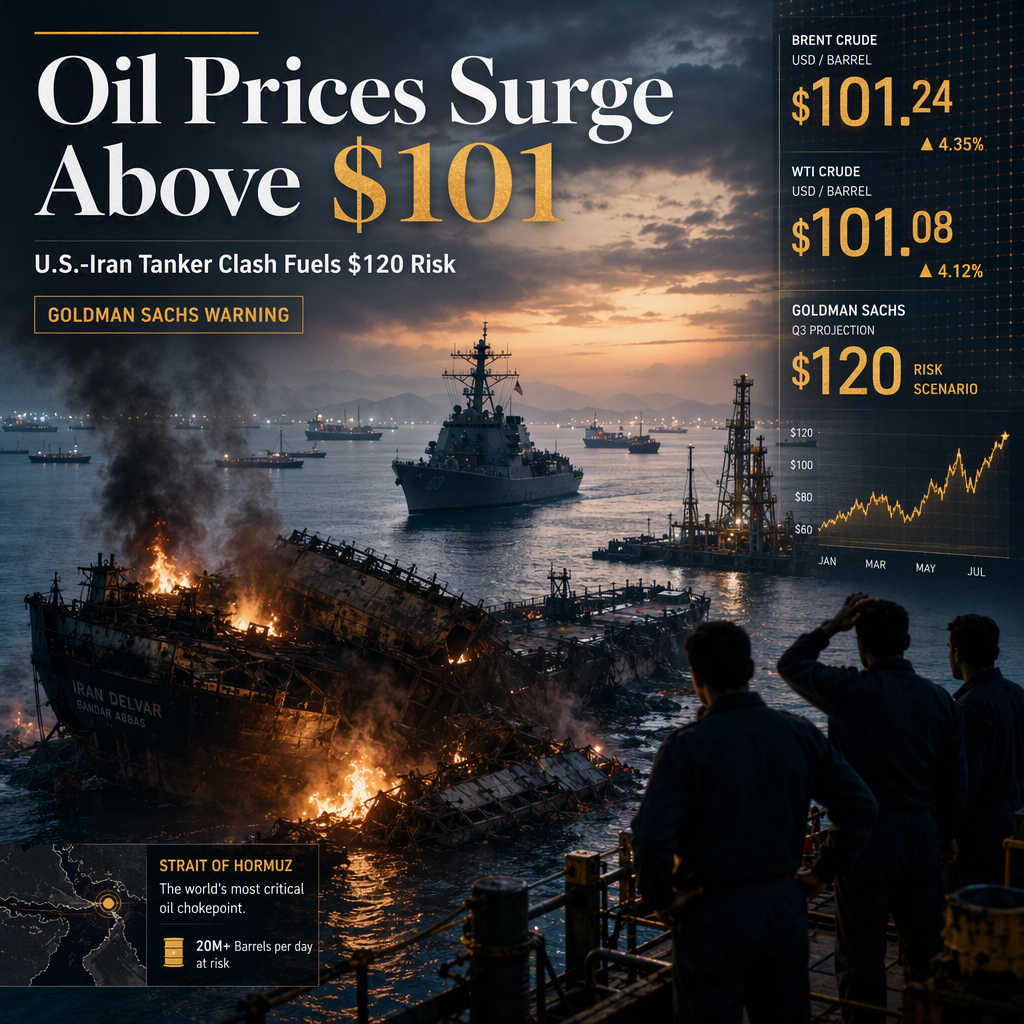
Oil prices extended their gains on Thursday following a significant escalation in the ongoing U.S.-Iran conflict, which has now lasted seven months [1]. The U.S. military destroyed five Iranian crude oil tankers on Tuesday in retaliation for attempted attacks on an American warship, according to U.S. Central Command. The warship successfully evaded the Iranian attack, and no American personnel were harmed [1]. As a result of these developments, Brent crude futures for November delivery rose 0.62% to $101.84 a barrel, while U.S. West Texas Intermediate (WTI) futures for October advanced 1.01% to $96.06 per barrel [1].
Goldman Sachs has warned that the risk of oil prices surging above $120 a barrel is increasing as attacks on shipping intensify in the region. Daan Struyven, co-head of global commodities research at Goldman Sachs, stated that the escalation could further exacerbate supply disruptions and drive prices higher [1]. Andrei Constantin, commercial director and trading adviser at TFP Software FZCO, noted that the physical oil market may tighten further if there is a decline in transit volumes, broader escalation, or threats to energy infrastructure, which could extend the upward move in oil prices [1].
David Morrison, senior market analyst at Trade Nation, observed that WTI has completely unwound its selloff between early June and July, and Brent prices are now well above those seen in early June [1]. Market sentiment remains bullish as analysts cite growing risks of supply disruption, with concerns about declining transit volumes and potential threats to energy infrastructure expected to further tighten the market and support higher price levels [1].
Numerous merchant ships belonging to Iran and other countries remain at anchor in the Strait of Hormuz in Bandar Abbas, Iran, as of September 8, 2026, highlighting ongoing risks to shipping and supply chains in the region [1].
CONCLUSION
The destruction of Iranian oil tankers by the U.S. has intensified the U.S.-Iran conflict, driving oil prices above $101 and prompting warnings from Goldman Sachs about the risk of prices surging above $120 per barrel if attacks continue. Market sentiment is bullish, with analysts expecting further tightening of the physical oil market and elevated price levels amid ongoing supply disruption risks.