
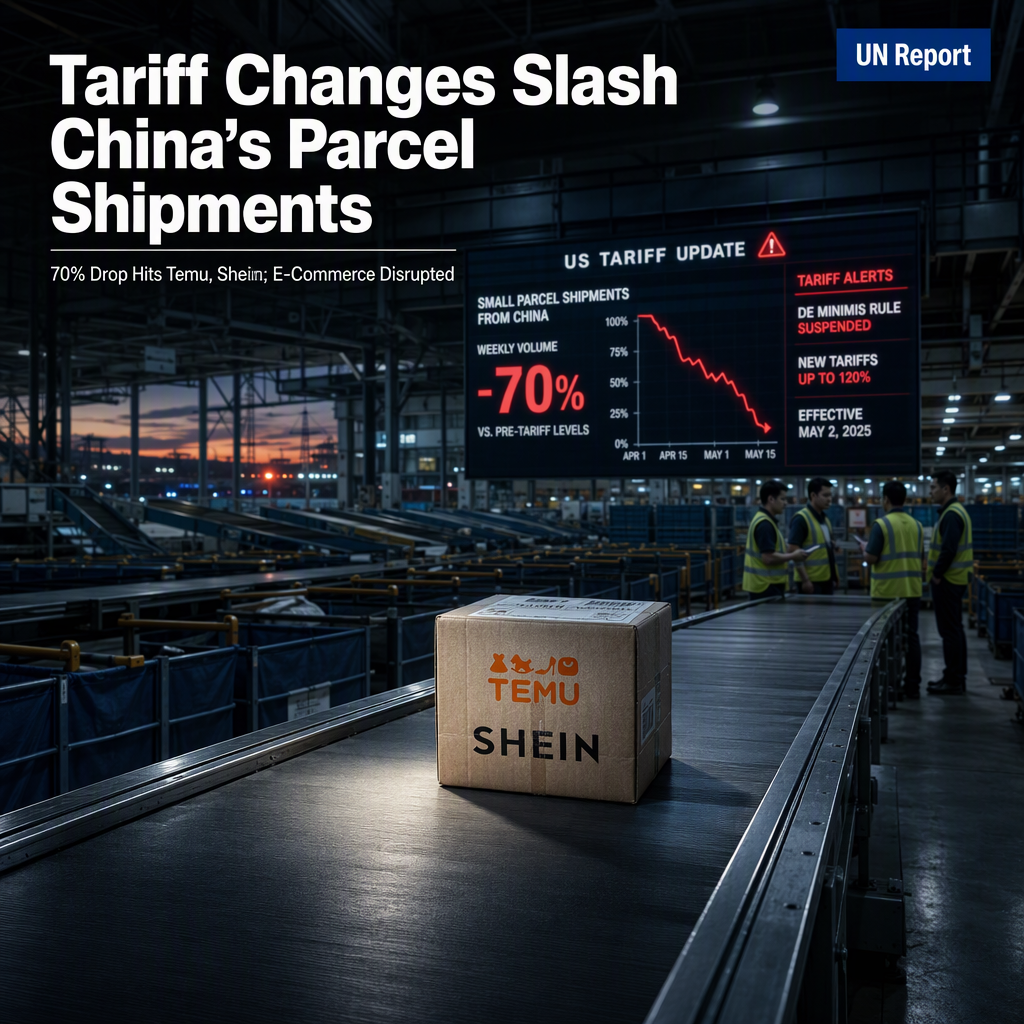
A recent UN report reveals that the volume of small international parcels entering the U.S. and EU has fallen sharply following the elimination of tariff exemptions for such shipments, known as the 'de minimis' rule. The report states that shipments dropped 70% by weight after the policy change, highlighting the reliance of Chinese e-commerce platforms Temu and Shein on these exemptions to reach U.S. customers [1].
The removal of the de minimis rule has led to higher costs for U.S. importers and forced Chinese sellers to rethink their logistics and pricing strategies in order to remain competitive. As a result, some U.S. buyers are reportedly seeking domestic alternatives, as imported goods become less price-competitive [1].
The UN report notes that the tariff changes have introduced volatility into the e-commerce supply chain, particularly for low-cost goods typically shipped in small parcels. It recommends that traders and logistics providers closely monitor further customs policy changes and adjust their risk management strategies accordingly [1].
Postal services and cross-border shipping networks have also been affected, with reduced throughput prompting delivery networks to seek new ways to maintain profitability amid declining volumes. The report suggests that unless there is a reversal or modification of current tariff rules, the trend of shrinking small parcel deliveries is likely to persist. Traders are advised to watch for policy changes and adapt their supply chains as needed [1].
CONCLUSION
The elimination of tariff exemptions for small parcels has caused a significant 70% drop in shipments from platforms like Temu and Shein, disrupting e-commerce and postal networks. Market volatility and higher costs are expected to persist unless tariff policies are revised. Traders and logistics providers should remain vigilant for further policy changes and adjust their strategies accordingly.