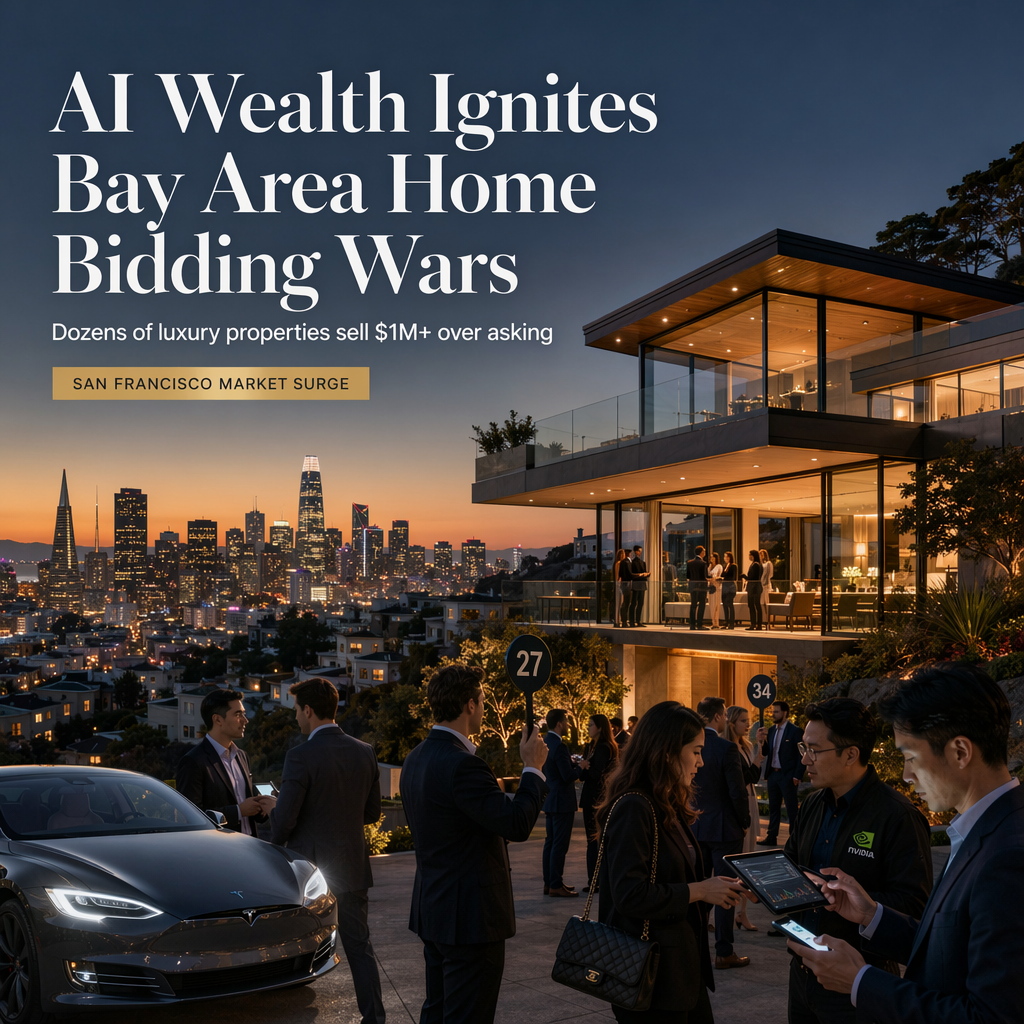
The San Francisco Bay Area luxury housing market is experiencing an unprecedented surge in bidding wars, driven by the artificial intelligence (AI) boom. According to Mike Simonsen, chief economist at Compass International Holdings, 44 homes in San Francisco sold for at least $1 million above their final asking price in June, totaling over $60 million in sales. This marks a sharp increase compared to previous months: April and May each saw just over 30 such sales totaling over $40 million, while March had 20 sales totaling about $30 million. In contrast, from February 2024 through February 2026, some months saw zero homes selling $1 million above asking, and no month exceeded nine such transactions, highlighting the rapid escalation in luxury market competition [1].
Most of these high-premium sales occurred in San Francisco's 94114 zip code, which includes neighborhoods like The Castro, Noe Valley, and Dolores Heights. The AI boom and the rise of IPOs among tech companies with Bay Area presences have injected significant cash into the market, intensifying demand for luxury homes. Joel Berner, senior economist at Realtor.com, described the overall San Francisco housing market as a 'seller's market,' with buyers competing over a limited supply of listings and homes selling 18% faster than a year ago [1].
Despite the luxury market's strength, the median listing price across the broader market has declined 4.9% year-over-year to $1.137 million, a trend attributed to smaller homes entering the market. However, Berner emphasized that the luxury tiers (95th and 99th percentiles) are experiencing stronger price growth than the median. He also noted that the surge in buyer activity aligns with increased cash availability from the AI sector, but supply constraints persist due to San Francisco's challenging construction environment, characterized by expensive and scarce land and high regulatory hurdles [1].
Looking ahead, Berner suggested it is unlikely that a significant wave of new construction will emerge to balance the market, given these persistent supply-side challenges [1].
CONCLUSION
The AI-driven influx of wealth is fueling intense competition for luxury homes in San Francisco, with dozens of properties selling far above asking prices. While the broader market sees declining median prices, the luxury segment is booming amid limited supply and rapid sales. Market conditions are expected to remain tight, as new construction is unlikely to keep pace with demand.