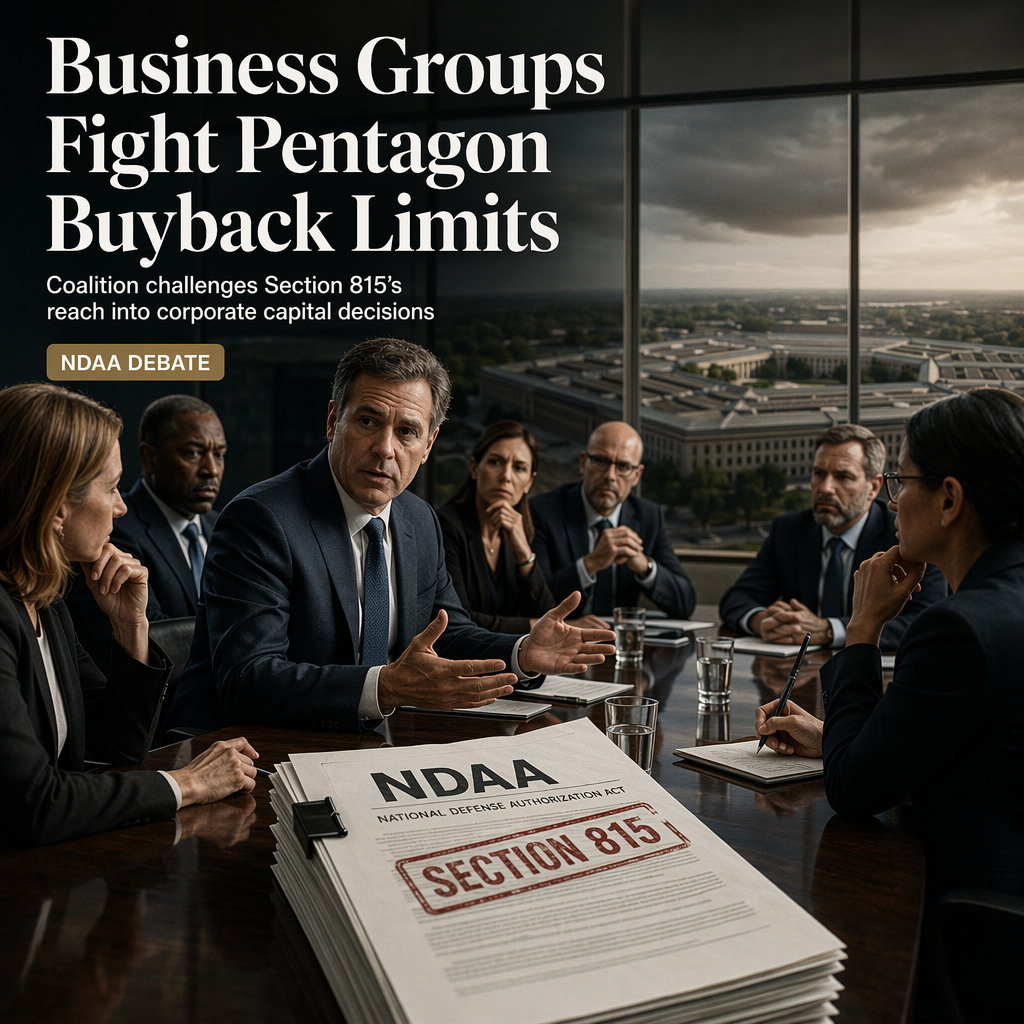
A coalition of business groups, led by the U.S. Chamber of Commerce and joined by 40 other organizations, is strongly opposing a provision in the National Defense Authorization Act (NDAA) that would restrict Pentagon contractors from executing stock buybacks and paying dividends without explicit approval from the Defense Department [1]. This provision, known as Section 815, was introduced by Senator Elizabeth Warren (D-Mass.) and was included in the NDAA on a bipartisan basis, as confirmed by members of the Senate Armed Services Committee following a closed-door vote [1].
The business groups sent a letter to Senate leaders on Tuesday, urging them to remove Section 815 from the must-pass defense bill before it reaches the president's desk [1]. They argue that the measure represents an unprecedented government intervention into the capital allocation decisions of tens of thousands of companies that do business with the Pentagon, ranging from major defense contractors to smaller vendors such as food suppliers [1]. The letter states, "By prohibiting dividends, share repurchases, and other capital distributions absent a government waiver, Section 815 would shift responsibility for ordinary capital allocation decisions from corporate leadership to Washington" [1].
The inclusion of Section 815 in the NDAA, which has already been approved by the Senate Armed Services Committee, significantly increases the likelihood that the provision will become law and reduces the chances of it being removed before a Senate vote [1]. The business community's strong opposition highlights the perceived threat to corporate governance and capital management practices among Pentagon contractors [1].
No specific market reactions, analyst opinions, or forward-looking statements are provided in the article [1].
CONCLUSION
The proposed Section 815 in the NDAA has sparked significant opposition from business groups, who view it as a major government overreach into corporate capital decisions. With bipartisan support and committee approval, the provision's chances of becoming law are high, raising concerns among Pentagon contractors about future restrictions on dividends and buybacks.