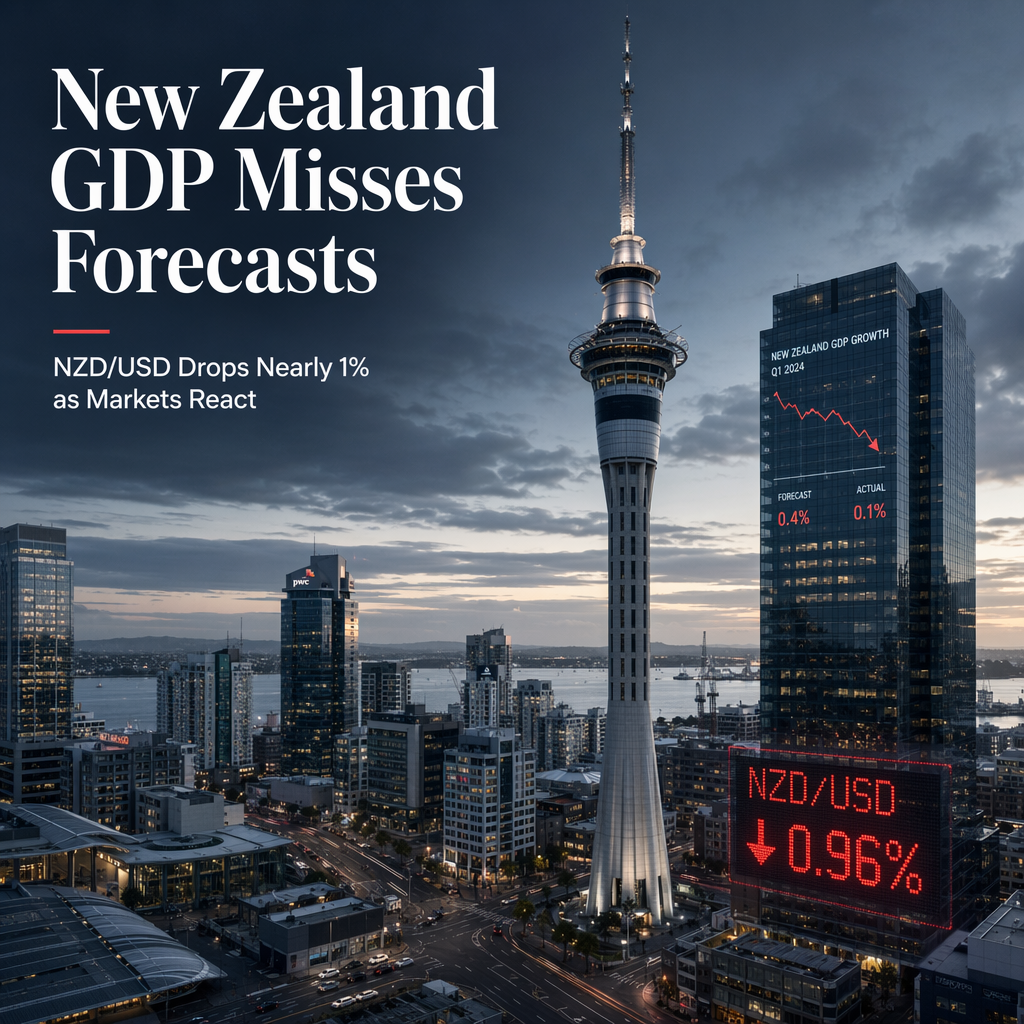
New Zealand's Gross Domestic Product (GDP) expanded by 0.8% quarter-on-quarter (QoQ) in the first quarter of 2026, according to Statistics New Zealand. This figure was below market expectations, which had forecast a 0.9% increase. The previous quarter's GDP growth was revised upward to 0.5% from 0.2% [1]. On a year-on-year (YoY) basis, GDP rose by 1.5% in Q1 2026, matching the revised 1.5% growth in Q4 2025 and surpassing the estimated 1.1% increase [1].
The market reacted negatively to the weaker-than-expected GDP data, with the NZD/USD currency pair falling 0.96% on the day to 0.5775 at the time of reporting [1]. This decline reflects investor disappointment over the lower QoQ growth figure, despite the YoY number beating forecasts.
The article notes that GDP is a key indicator of economic health and typically influences currency markets. Higher GDP growth is generally positive for a nation's currency, as it signals a robust economy and can attract foreign investment. Conversely, weaker GDP results tend to weigh on the currency, as seen in the NZD/USD reaction [1].
No forward-looking statements or analyst opinions were provided in the article regarding future GDP trends or central bank policy. The article does explain that GDP growth can impact inflation and interest rates, which in turn affect currency and gold prices, but does not offer specific projections for New Zealand [1].
CONCLUSION
New Zealand's Q1 2026 GDP growth fell short of expectations, prompting a nearly 1% drop in the NZD/USD exchange rate. While annual growth exceeded forecasts, the weaker quarterly figure drove negative sentiment in currency markets. The market takeaway is that investors remain sensitive to GDP surprises, with immediate impacts on the New Zealand dollar.