
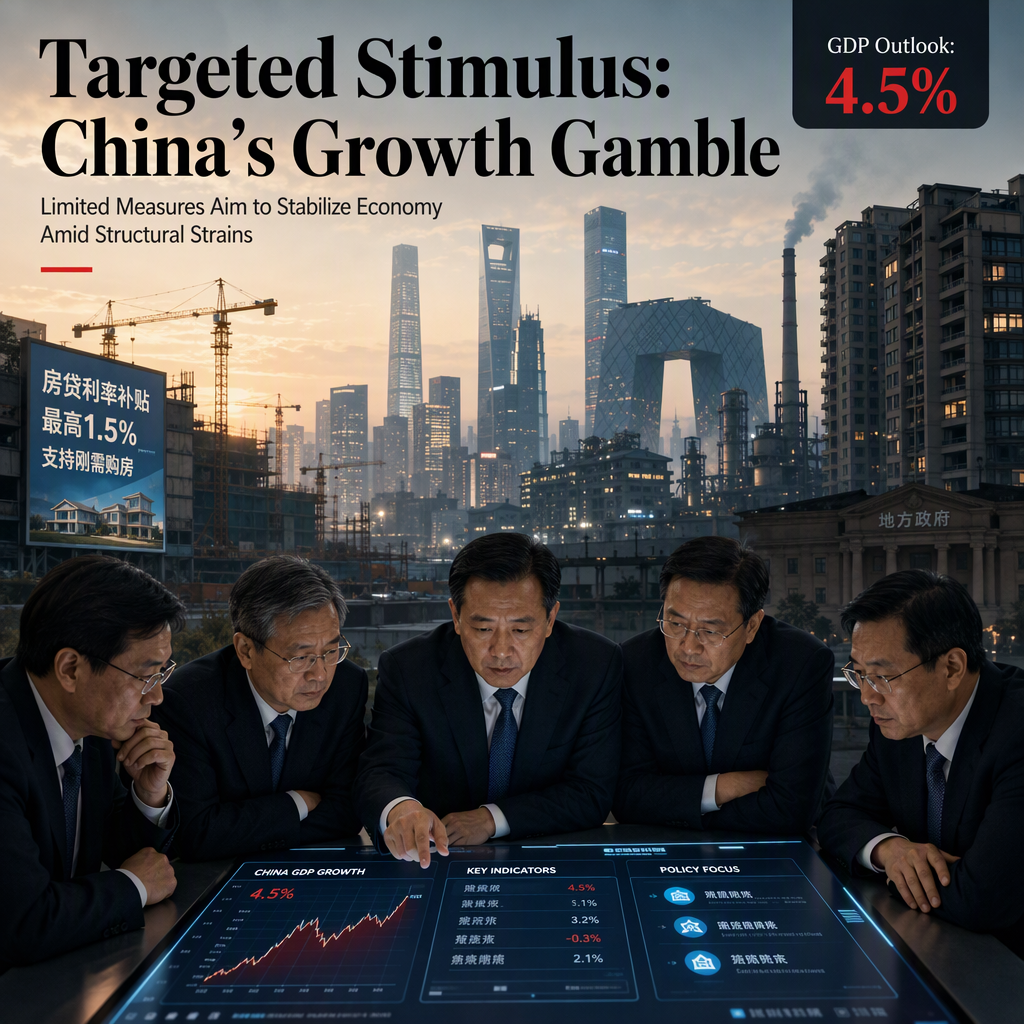
Societe Generale strategist Michelle Lam reports that the Chinese government has introduced a new round of targeted property and monetary easing measures in response to a slowdown in economic activity, aiming to stabilize growth and help China meet its Gross Domestic Product (GDP) target at the lower end of the range [1]. The measures include mortgage subsidies and efforts to boost fixed asset investment (FAI), though Lam notes that the impact of mortgage subsidies is limited and infrastructure spending is constrained by local government budget pressures [1].
Despite these constraints, Lam expects the recent stimulus to result in a recovery in FAI in the coming months. However, she highlights a growing disconnect between the central government's intent to support growth through infrastructure and the fiscal realities faced by local governments [1]. The State Council has reiterated the need to 'work hard to achieve this year's development targets,' and Societe Generale forecasts that China will meet its GDP target at the lower end, specifically at 4.5% [1].
The current recovery is described as K-shaped, with growth driven primarily by technology investment and manufacturing upgrades, while household demand remains weak [1]. Lam suggests that unless policymakers implement more forceful demand-side measures to directly support households, the Chinese economy is likely to remain in a state of structural malaise [1].
Additionally, the targeted nature of the stimulus reduces the urgency for the People's Bank of China (PBoC) to cut rates, especially given recent rate hikes by the U.S. Federal Reserve [1].
CONCLUSION
China's latest targeted stimulus measures are expected to support growth and help the country meet its GDP target at the lower end of the range, despite ongoing structural challenges and weak household demand. The market impact is moderate, with the focus remaining on technology and manufacturing rather than broad-based demand recovery.