
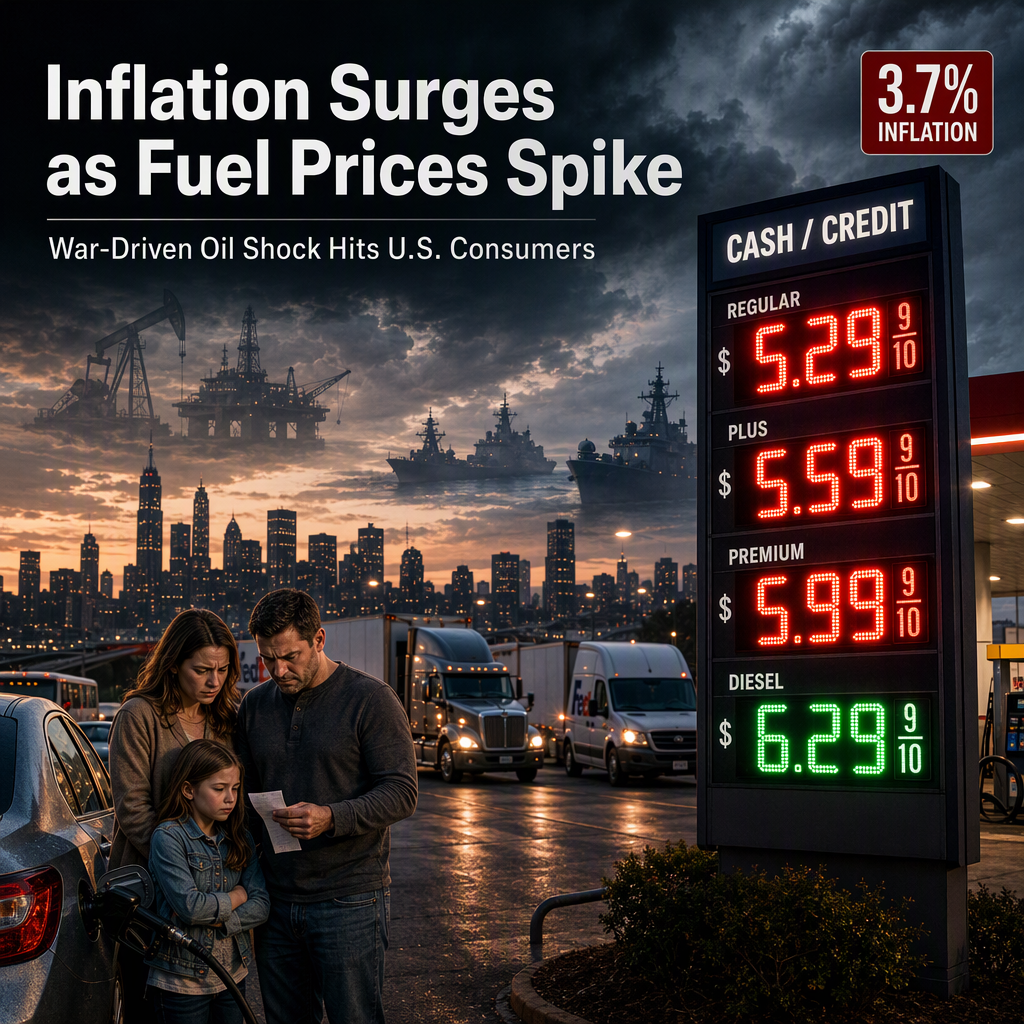
The annual U.S. inflation rate has risen to 3.7%, with the primary driver being a sharp increase in gas and diesel prices linked to the ongoing U.S. war with Iran, which has disrupted oil supply chains and pushed energy prices higher [1]. This surge in fuel costs is expected to have a broad impact on American consumers, with price hikes anticipated in transportation, groceries, and other essential goods as higher shipping and delivery costs ripple through the economy [1].
Christine Romans of NBC notes that 'energy costs are always the wild card in the inflation equation, and when you see oil prices spike, it impacts everything from shipping to food prices at the supermarket' [1]. Specifically, transportation costs—including airline tickets and public transit fares—are likely to rise, while groceries, especially those requiring long-distance shipping, could see notable price increases. Additionally, home heating costs may increase as winter approaches, particularly in regions dependent on oil-based heating [1].
The Federal Reserve is closely monitoring these developments, with Romans stating that the duration of elevated energy prices will be critical in determining whether inflation remains above target for several more months [1]. Traders and investors are watching crude oil price levels, with analysts identifying $100 per barrel as a key resistance point; a break above this level could lead to further inflationary pressures [1].
Consumers are advised to budget for higher transportation and energy costs in the coming months, while businesses reliant on shipping and logistics should prepare for increased operating expenses. Investors may consider opportunities in energy stocks or inflation-hedged assets if the trend of rising fuel prices continues [1].
CONCLUSION
The spike in U.S. inflation to 3.7% is primarily attributed to war-driven increases in fuel prices, with broad impacts expected across transportation, food, and utilities. Market participants and the Federal Reserve are closely watching energy prices, as sustained high levels could keep inflation elevated and influence investment strategies.