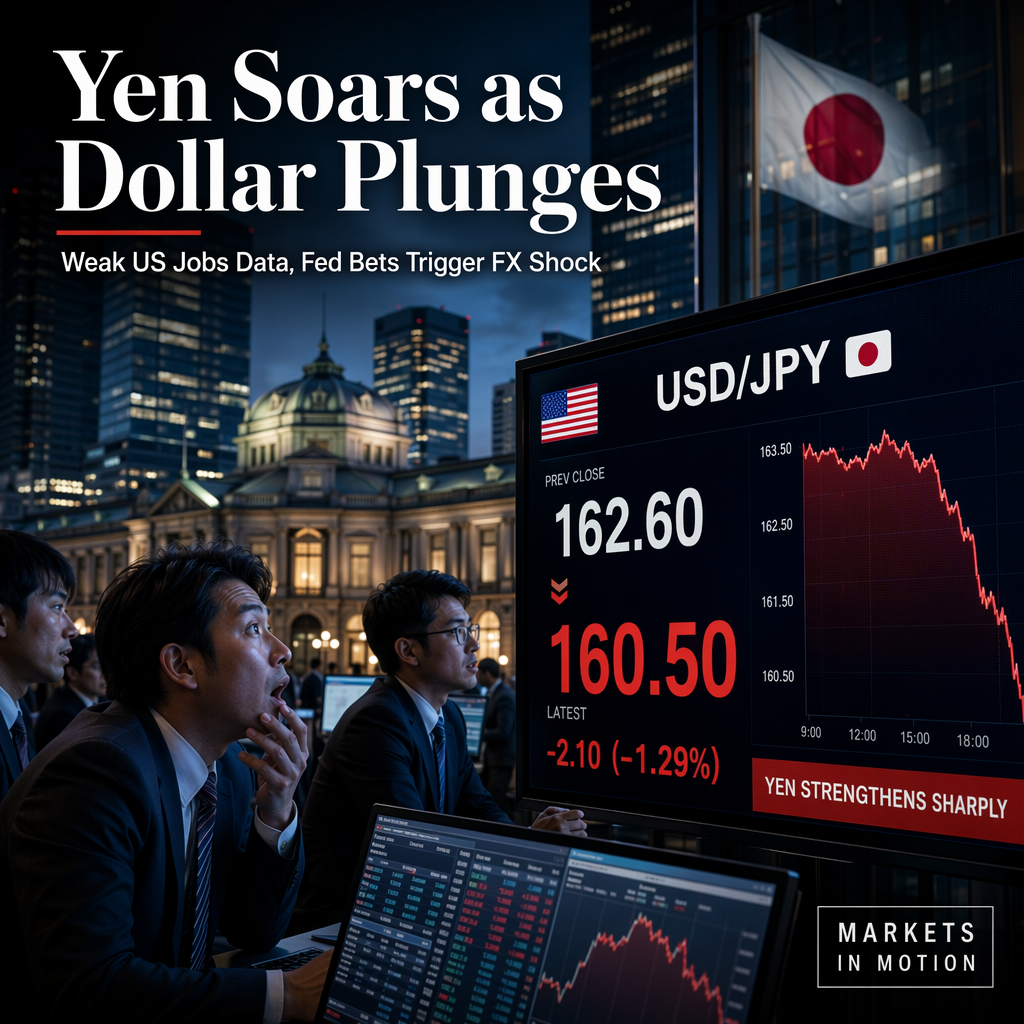
The Japanese Yen experienced a significant rally against the US Dollar, with USD/JPY plunging from a 40-year low near 162.60 to the 160-161 range in a single session [2]. This sharp reversal was driven by a combination of much weaker-than-expected US nonfarm payrolls data and intense market speculation about possible, though unconfirmed, foreign exchange intervention by the Japanese Ministry of Finance (MoF) [1][2]. According to Commerzbank, US job growth in June was only 57,000, well below the consensus expectation of 110,000, and previous months' payrolls were revised downward significantly [1][2]. This disappointing labor data led to a reassessment of Federal Reserve policy expectations, with Fed funds futures pricing in a cumulative 30 basis points of hikes by year-end, down from 36 basis points earlier in the week [1][2].
The weaker US jobs report has eased pressure for a near-term Fed rate hike, with Commerzbank and MUFG both expecting US key interest rates to remain unchanged for the rest of the year and into 2026 [1][2][3]. MUFG's Derek Halpenny noted that the labor market softness and receding inflation risks have shifted market pricing from rate hikes toward a greater risk of cuts, with OIS pricing indicating only a 20% probability of a 25bp hike at the July 29 FOMC meeting and 60% by September [3]. The rapid adjustment in rate expectations has undermined the US Dollar, prompting a retracement of its recent rally and supporting the Yen [1][2][3].
Market participants are also closely watching for potential FX intervention by Japanese authorities. While there has been no official confirmation, MUFG analysts suggest that the current environment of low summer liquidity could provide an ideal opportunity for the MoF to extend any intervention campaign to flush out speculative short positions in the Yen [2]. The combination of capped US rate expectations and possible intervention leaves USD/JPY vulnerable to further declines, especially if upcoming US inflation data disappoints [2].
In related currency moves, the Euro's rally against the US Dollar has shown signs of fatigue, with ING noting that EUR/USD price action after the US jobs report reflects skepticism about further ECB hikes. Market pricing for ECB tightening has diminished, and ING expects EUR/USD rallies to stall above 1.150-1.153, with a move above 1.16 likely only later in the summer [4].
CONCLUSION
The Japanese Yen's sharp appreciation was triggered by weaker US jobs data and a rapid repricing of Fed rate hike expectations, with additional support from speculation about possible Japanese FX intervention. Analysts expect US rates to remain unchanged, capping USD/JPY upside and leaving the pair vulnerable to further declines. The market's focus now shifts to upcoming US inflation data and potential central bank actions.