
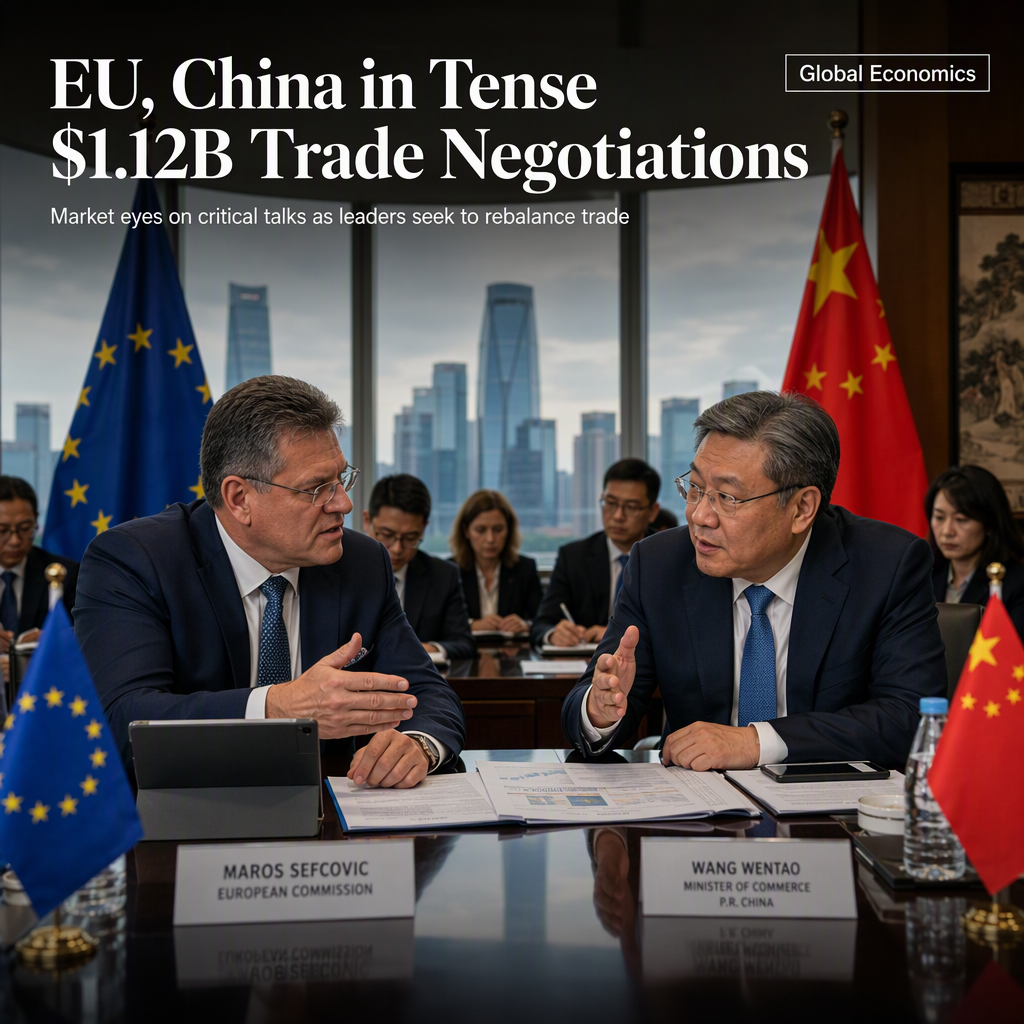
European Commissioner for Trade and Economic Security Maros Sefcovic is in Beijing for negotiations with Chinese Minister of Commerce Wang Wentao, aiming to reduce the European Union's significant trade deficit with China, which stands at $1.12 billion per day [1]. The two sides are concluding two days of talks intended to ease tensions that have arisen from this persistent imbalance, which has become a major concern in Brussels [1].
Sefcovic faces pressure from EU leaders and business lobbies to secure 'tangible' outcomes, particularly regarding market access and Chinese subsidies, as the European Commission has warned that ongoing imbalances threaten the competitiveness of European industries [1]. In response, the EU is considering new trade defense tools, with France and Germany calling for swift action to protect domestic sectors from what they describe as unfair Chinese practices [1].
Market observers are closely monitoring the negotiations, as a failure to reach an agreement could escalate into a broader trade conflict, potentially disrupting global supply chains and affecting investor sentiment [1]. The results of these talks are expected to have implications not only for tariff policy but also for the overall trajectory of EU-China economic relations, including the possibility of retaliatory measures and the future of investment agreements [1].
As of Friday evening, no major market-moving statements have been issued, but analysts emphasize that the EU's $1.12 billion daily trade deficit with China remains a central issue and a key point of leverage in the ongoing discussions [1].
CONCLUSION
The EU-China trade talks are at a critical juncture, with both sides under pressure to address the substantial trade imbalance. While no decisive outcomes have been announced, the negotiations are being closely watched for their potential to impact global supply chains and future economic relations. The market remains cautious as stakeholders await concrete results.