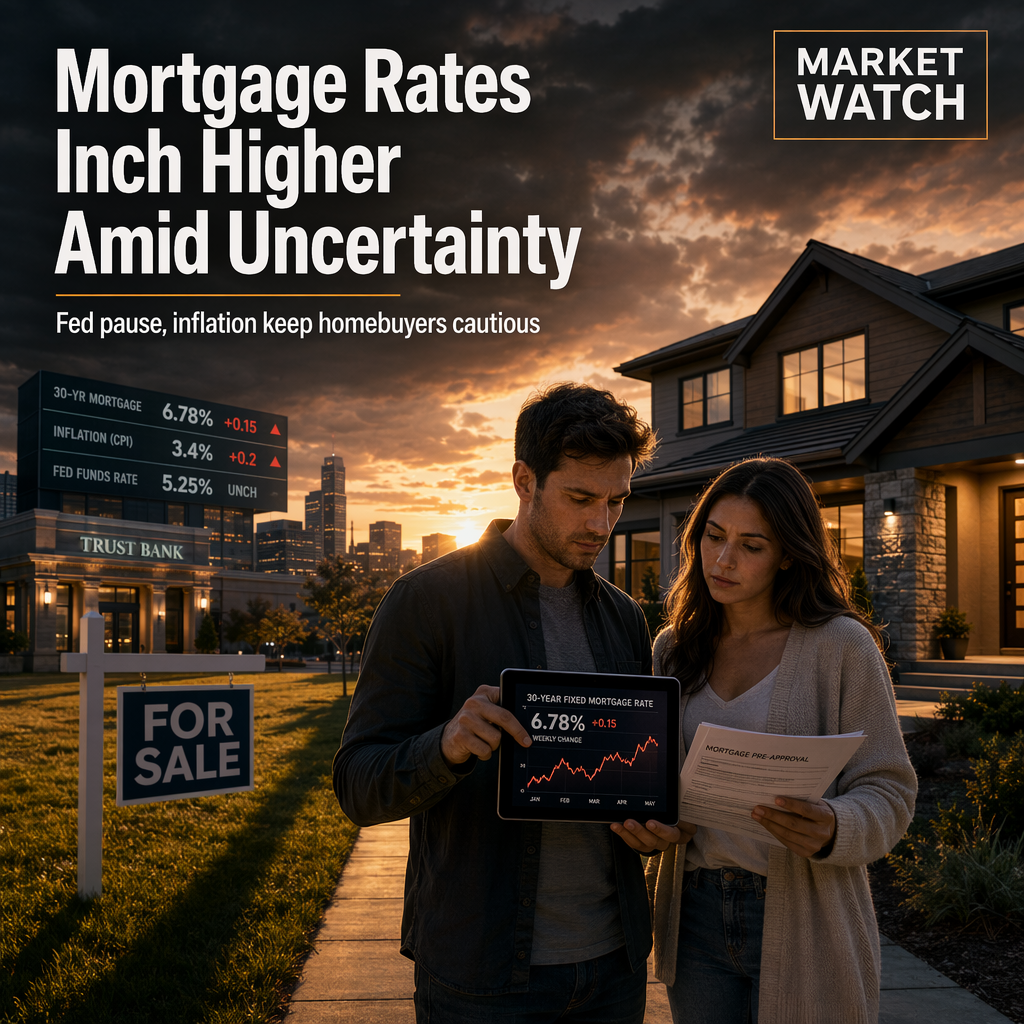
Mortgage rates experienced a slight uptick this week, with Freddie Mac reporting the average 30-year fixed mortgage rate rising to 6.49%, compared to 6.47% the previous week and 6.52% two weeks prior. This rate remains below the 6.77% recorded a year ago. The 15-year fixed mortgage rate also increased marginally to 5.84%, up from 5.81% last week, but still lower than the 5.89% seen a year earlier. According to Sam Khater, chief economist at Freddie Mac, rates have been relatively stable over the past six weeks. He noted that purchase activity has eased modestly, while refinance activity has picked up, indicating borrowers are responding to current rate levels [1].
Mortgage rates are influenced by several factors, including Federal Reserve policy and geopolitical developments. While not directly tied to the Fed's interest rate decisions, mortgage rates closely track the 10-year Treasury yield, which hovered around 4.4% as of Thursday afternoon [1]. The Federal Reserve recently voted unanimously to keep its benchmark interest rate steady at 3.5% to 3.75%, following new Fed Chair Kevin Warsh's first policy meeting. This decision was made amid persistent inflation pressures, partly attributed to the Iran war's impact on oil supplies [1].
The Commerce Department's release of the personal consumption expenditures (PCE) index showed headline PCE inflation up 4.1% year-over-year, with core PCE rising 3.4%. Both figures remain well above the Fed's 2% long-run inflation target, reducing market expectations for a rate cut this year. The CME FedWatch tool indicates that the most likely scenario is for rates to remain unchanged through year-end, with a higher probability of a rate hike than a cut, as reflected in the Fed's 'dot plot,' where nine out of seventeen FOMC members project a rate increase before year-end [1].
CONCLUSION
Mortgage rates have remained relatively stable but edged slightly higher amid ongoing inflation concerns and geopolitical uncertainty. With the Fed signaling a steady policy stance and inflation running above target, markets are now anticipating rates to hold or potentially rise further this year.