
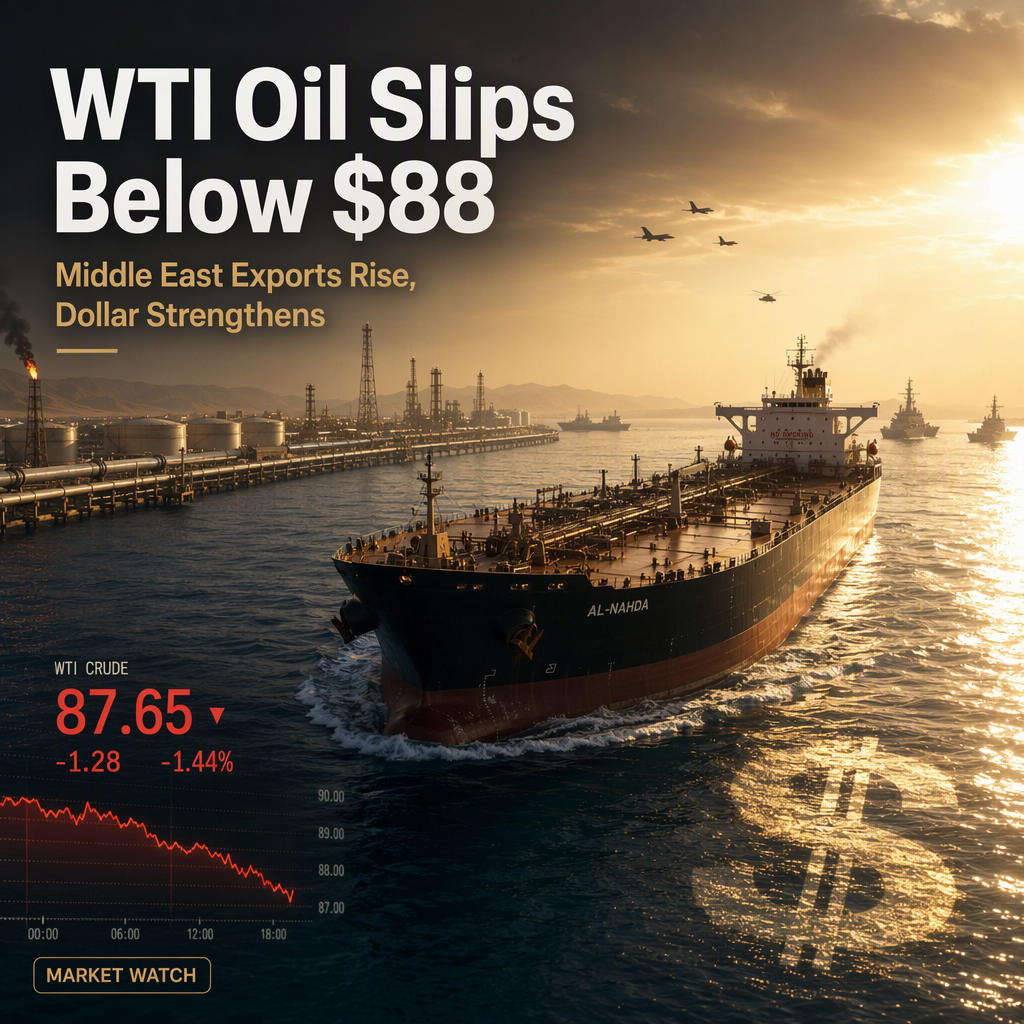
West Texas Intermediate (WTI) Oil prices declined on Wednesday, reversing earlier gains as a combination of recovering Middle East exports and a stronger US Dollar outweighed support from a surprise drop in US crude inventories [1]. WTI was trading around $87.65 per barrel at the time of reporting, after briefly rising above $90.00 earlier in the day [1].
According to data from the US Energy Information Administration (EIA), US crude inventories fell by 3.186 million barrels for the week ending October 2, defying expectations for a 1.9 million-barrel increase and reversing the previous week's build of 922,000 barrels [1]. Despite this bullish inventory data, the market was pressured by signs of improving crude exports from the Middle East, particularly Saudi Arabia's restart of its East-West pipeline, which enables crude shipments to the Red Sea without passing through the Strait of Hormuz [1].
Geopolitical risks in the region remain elevated, with at least 12 attacks or incidents involving tankers reported between September 28 and October 5, according to maritime security sources cited by Reuters [1]. Iran stated that the Strait of Hormuz would remain closed until its demands are met and threatened to block what it described as "illegal" shipping routes [1]. Diplomatic efforts to resolve the US-Iran conflict are stalled, with US Vice President JD Vance insisting on a "meaningful" reduction in Iran's nuclear enrichment capacity, while a senior Iranian official maintained that Tehran would not relinquish its right to enrich uranium [1].
Additionally, the US Dollar Index is trading near its highest level since April 2025, supported by elevated Treasury yields, making Dollar-denominated oil more expensive for buyers using other currencies and adding further pressure on crude prices [1].
CONCLUSION
WTI oil prices retreated below $88 per barrel as recovering Middle East exports and a stronger US Dollar offset the impact of a larger-than-expected US crude inventory draw. Ongoing geopolitical tensions and deadlocked US-Iran negotiations continue to pose risks, but immediate market sentiment has turned cautious amid improving supply signals and currency headwinds.