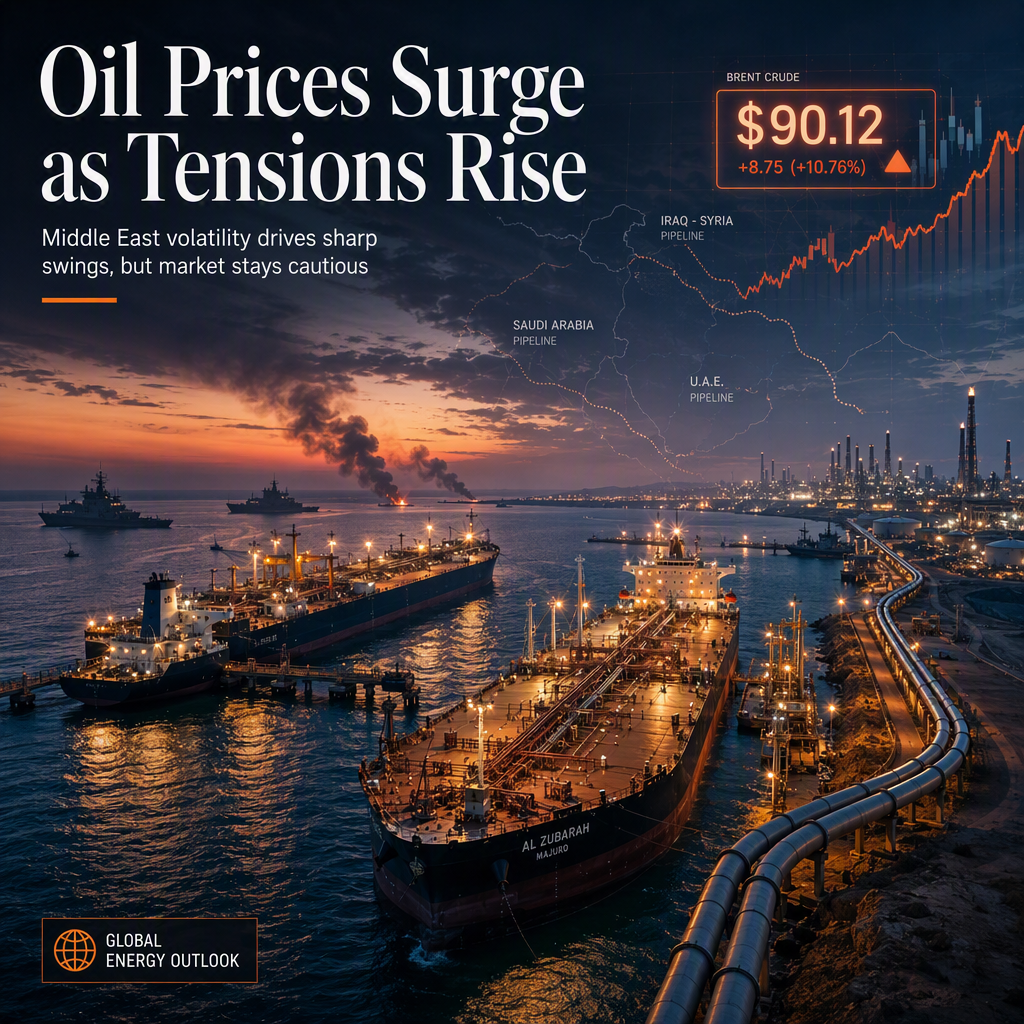
Global oil markets have experienced significant volatility following a surprise missile attack by Iranian militants on U.S. forces in Jordan, which was repelled without causing damage [1]. This incident has heightened concerns about ongoing instability in the region, with the article noting that such events continue to unsettle investors and reinforce the fragility of the current ceasefire around Iran [1]. In response to these developments, oil prices have swung dramatically, dropping from over $90 per barrel to the high $60s before briefly surging back above $90—a nearly 40% increase from July lows to July highs, marking a substantial move for the commodity [1].
Despite these sharp price movements, some market participants are questioning why oil prices are not even higher given the geopolitical risks. JPMorgan analyst Natasha Kaneva suggests that the market is 'reluctant to replace risk repeatedly' because investors see a 'prolonged stalemate as unlikely' and are therefore pricing in the possibility of some resolution to the conflict [1]. Prediction markets reflect this sentiment: Kalshi traders assign a 65% probability that WTI crude will end the year at $75 or higher, but only a 32% chance of prices exceeding $90, indicating expectations for elevated but not extreme prices [1].
The article also highlights strategic shifts in oil logistics as countries seek to reduce reliance on the Strait of Hormuz, which Iran has repeatedly threatened. Saudi Arabia is maximizing use of its East-West pipeline to the Red Sea, the U.A.E. is accelerating construction of an alternative pipeline, and Chevron is exploring reopening a pipeline from Iraq to Syria to bypass maritime routes [1]. There is also discussion of Israel potentially offering an old pipeline to Saudi Arabia, further diversifying export options [1]. These moves suggest that Iran's actions may be diminishing the strategic value of the Strait of Hormuz as a bargaining chip [1].
Additionally, the article notes that the situation in Russia is evolving, with Ukraine increasingly using drones to strike targets deep inside Russian territory, adding another layer of complexity to the global energy landscape [1].
CONCLUSION
Oil prices have surged nearly 40% amid renewed Middle East tensions, but market participants remain cautious about the potential for further spikes, as reflected in both analyst commentary and prediction market data. Strategic efforts to bypass the Strait of Hormuz may reduce future supply risks, while ongoing geopolitical developments continue to drive volatility in energy markets.