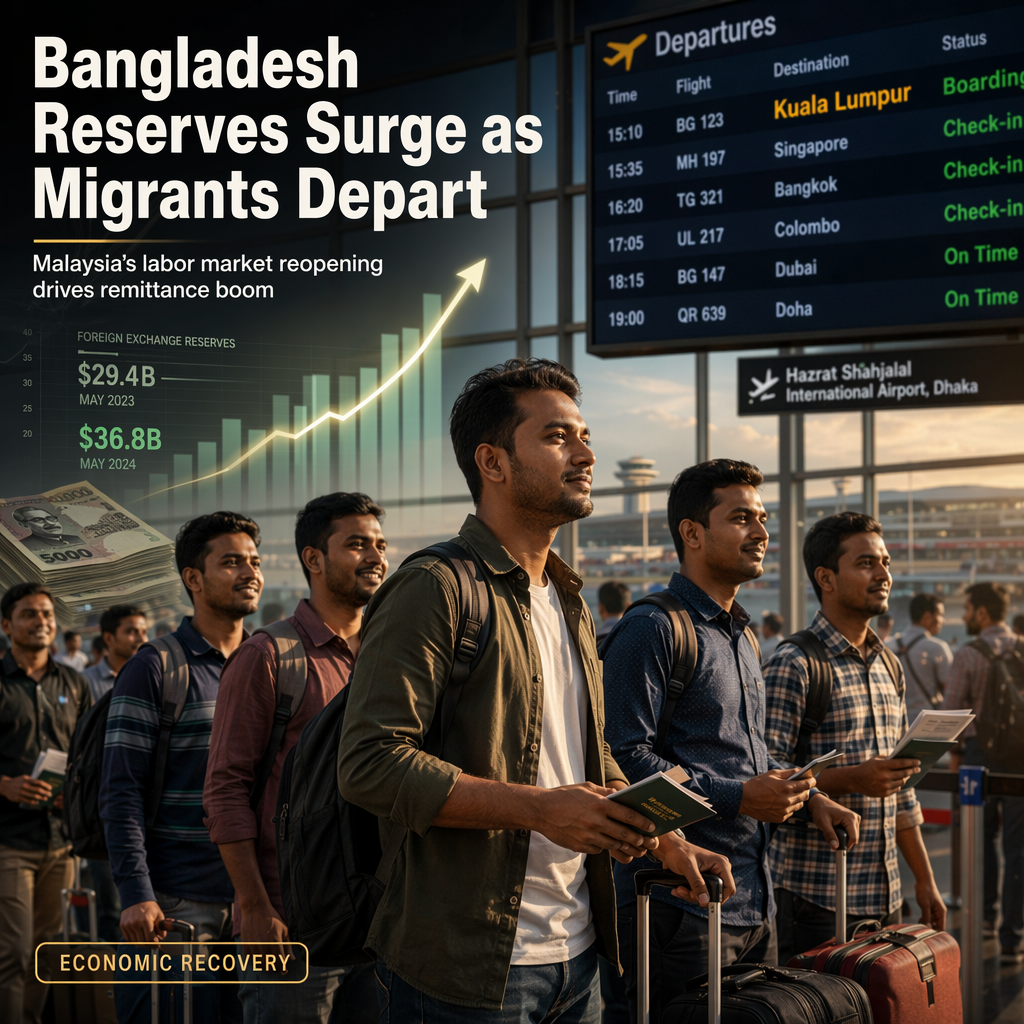
Bangladesh's foreign exchange reserves have returned to levels last seen in 2022, signaling a significant recovery in the country's external finances after a period of sustained pressure [1]. This improvement has been driven by higher remittance inflows, particularly from Saudi Arabia and other countries, as more Bangladeshi workers secure employment overseas [1].
A key development contributing to this positive trend is Malaysia's decision to reopen its labor market to Bangladeshi workers. Bangladeshi officials expect this move to further boost remittance inflows, which are a critical source of foreign currency for the nation [1]. The anticipated increase in remittances from Malaysia is expected to provide additional support to Bangladesh's balance of payments and help maintain the momentum in foreign exchange accumulation [1].
The recovery in reserves is viewed as essential for Bangladesh's economic stability, especially as the country continues to navigate external debt obligations and the need for stable import cover [1]. Authorities emphasize that sustaining robust remittance growth is vital for shoring up investor confidence and ensuring ongoing economic resilience [1].
CONCLUSION
Bangladesh's foreign exchange reserves have rebounded to 2022 levels, supported by rising remittances and the reopening of Malaysia's labor market to Bangladeshi workers. Officials are optimistic that continued remittance growth will further strengthen the country's external position and economic stability.