
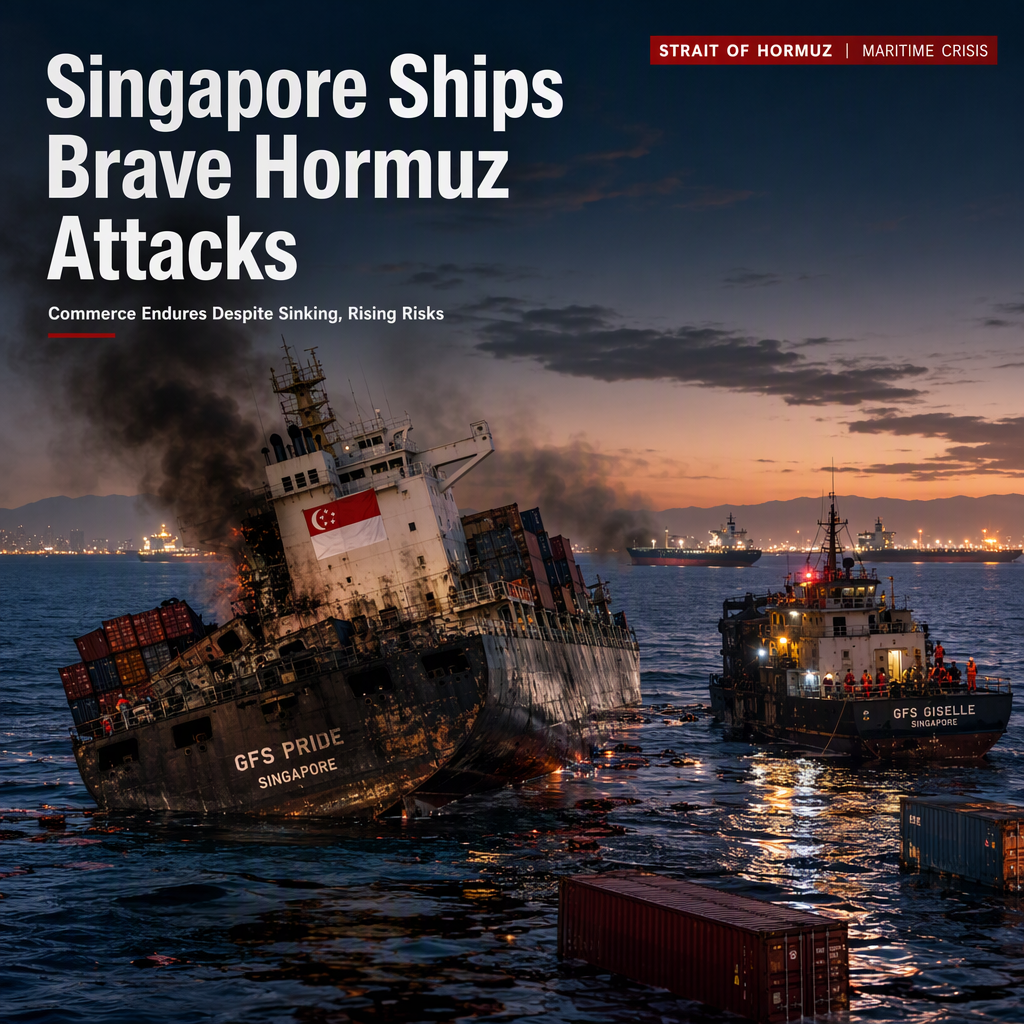
The Strait of Hormuz, a critical maritime chokepoint, has witnessed escalating attacks on commercial shipping, including two Singapore-flagged container ships this week. The GFS Pride was sunk after being struck by a projectile and catching fire, while the GFS Giselle was damaged; however, crew members from both vessels were reported safe [1]. These incidents have heightened concerns over the safety of commercial shipping in the region, with crossings through the Strait dropping to 131 in the week ended October 14, down from 176 the previous week, according to maritime analytics firm Kpler. It is noted, however, that this decline cannot be attributed solely to the latest attacks [1].
Despite the increased risks, maritime experts and analysts suggest that commercial incentives remain strong enough for some operators to continue transiting the Strait. Collin Koh, a senior fellow at Singapore's S. Rajaratnam School of International Studies, stated that Singapore-flagged ships and shipping companies are unlikely to avoid the Strait entirely in the short term if commercial opportunities exist [1]. Koh emphasized that some operators are prepared to accept higher risks and costs, especially given the strong demand for oil from Asia, which continues to incentivize tanker operators to transport energy supplies from the Persian Gulf [1].
Singapore Foreign Minister Vivian Balakrishnan highlighted the economic rationale behind continued voyages through the Strait, referencing a conversation with a Gulf counterpart. The official noted that his country was earning more from oil exports than before the conflict by operating a 'Hormuz shuttle' with about 20 very large crude carriers, which were effectively self-insured against attacks. Higher crude prices have made these risky voyages financially worthwhile, despite the ongoing security threats [1].
Dimitris Ampatzidis, maritime risk and compliance manager at Kpler, underscored that the attacks demonstrate Iran's ongoing capability to threaten commercial vessels, with risks extending beyond just oil and gas transportation [1].
CONCLUSION
Despite the sinking of a Singapore-flagged vessel and increased security threats in the Strait of Hormuz, commercial incentives—particularly strong demand for oil—are prompting some operators to continue transiting the region. While major container lines are largely avoiding the area, the market impact remains high as operators weigh risk against potential financial gains.