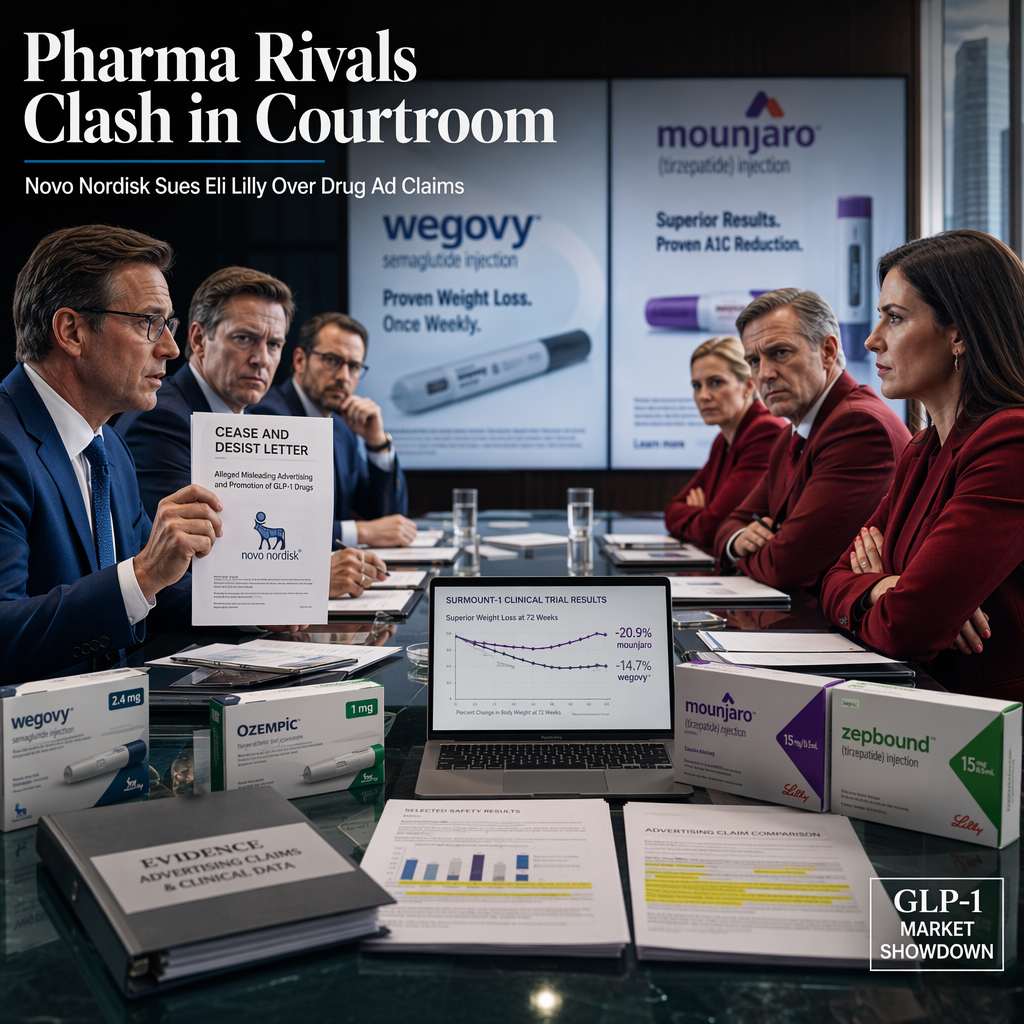
Novo Nordisk filed a lawsuit against Eli Lilly on Tuesday, alleging that Lilly's advertising campaigns for its obesity and diabetes drugs are misleading consumers regarding the efficacy of Lilly's products compared to Novo's rival injections [1]. Novo Nordisk claims that Lilly's nationwide ads use 'outdated' clinical trial data, comparing the highest doses of Lilly's medicines to lower doses of Novo's drugs, and do not include new evidence about Novo's recently approved high-dose version of its obesity injection, Wegovy, which entered the market in March and demonstrates weight loss results more comparable to Lilly's products [1].
John Kuckelman, Novo's group general counsel, stated that the lawsuit follows Lilly's refusal to remove or correct the ads after Novo issued a formal cease-and-desist request in April [1]. The suit, filed in the U.S. District Court for the District of New Jersey, seeks to permanently stop Lilly from running the ads, require corrective advertising, and award financial damages, though the specific amount sought is not disclosed [1]. Novo also warned that it would seek a preliminary injunction to block the ads immediately if they are not removed voluntarily [1].
The legal action is part of Novo's broader strategy to regain market share in the GLP-1 space, leveraging its new obesity pill, strategic price cuts, and the high-dose Wegovy to compete with Lilly's top-selling obesity injection Zepbound and diabetes drug Mounjaro [1]. Lilly's medications have become preferred treatments among many providers and patients due to their high efficacy, but Novo's high-dose Wegovy, which showed an average weight loss of around 19%, is positioned as a direct competitor [1].
Novo Nordisk is bringing federal and state unfair competition and false advertising claims, including under the Lanham Act, arguing that Lilly's campaigns are harmful because consumers rely on advertising to understand GLP-1 drugs, unlike healthcare professionals who have access to comprehensive scientific evidence [1]. Lilly did not immediately respond to a request for comment [1].
CONCLUSION
Novo Nordisk's lawsuit against Eli Lilly marks a significant escalation in the competitive battle for the GLP-1 obesity and diabetes drug market. The outcome could have substantial implications for both companies' market positions and advertising practices in this rapidly growing therapeutic area.