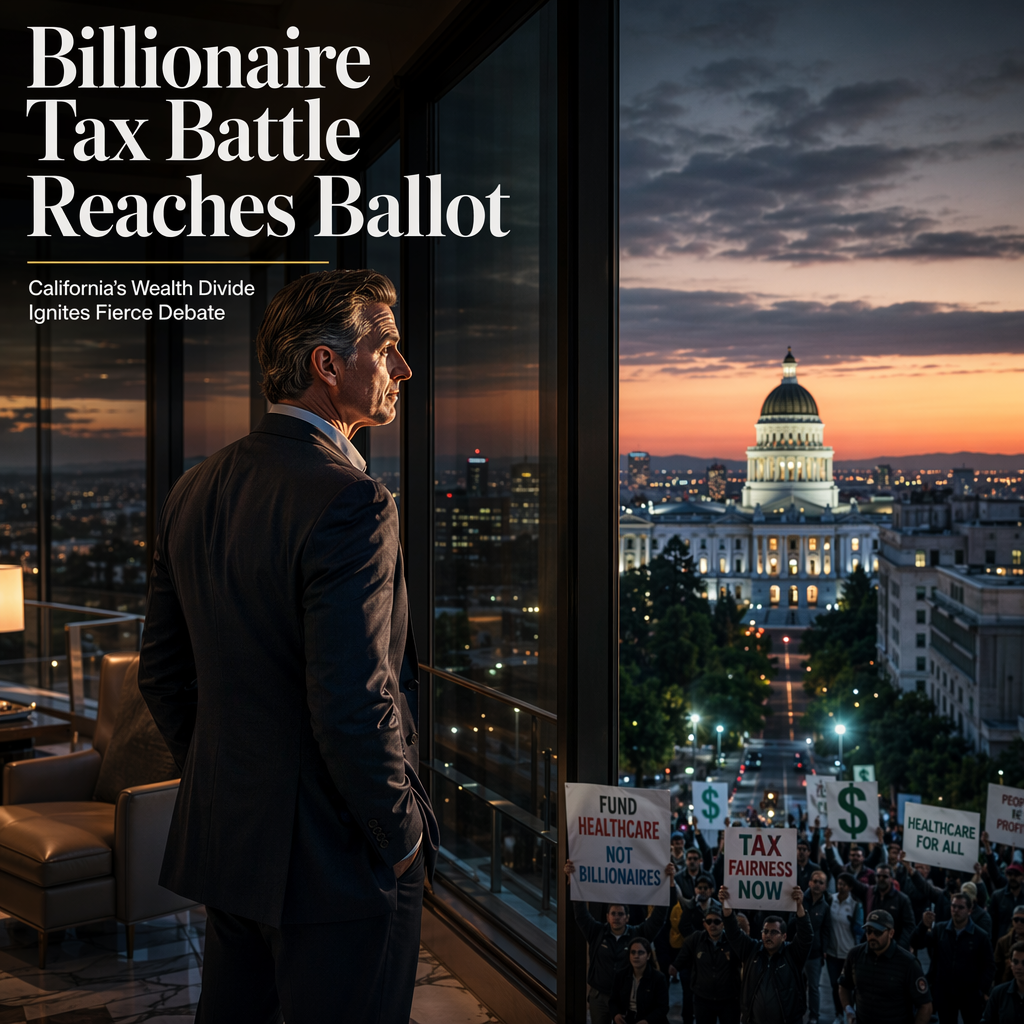
A proposal to impose a one-time tax on the wealthiest Californians has officially qualified for the November ballot, according to California Secretary of State Shirley Weber, who confirmed that the required number of signatures had been verified by her department as of Wednesday [1]. The so-called billionaire tax, if approved by voters, would levy a one-time 5% tax on the assets of Californians whose net worth exceeds $1.1 billion, with a smaller tax for those worth between $1 billion and $1.1 billion. The taxes would apply retroactively to anyone living in the state as of January 1, 2026 [1].
The measure mandates that 90% of the new revenue be allocated to healthcare, with the remaining 10% split between education and food assistance programs. This allocation has caused frustration among some Democratic groups advocating for education and food assistance, who feel the split is insufficient [1]. The proposal's supporters are led by the Service Employees International Union-United Healthcare Workers West, a major California healthcare workers union [1].
The initiative has sharply divided prominent Democrats in the state. Governor Gavin Newsom and former Health Secretary Xavier Becerra, the leading candidate to succeed Newsom, both oppose the tax, arguing it could drive wealthy investors and tech leaders out of California. In contrast, Rep. Ro Khanna and billionaire activist Tom Steyer support the measure, contending it would help address income inequality and offset state budget shortfalls resulting from Medicaid cuts in federal legislation signed by President Donald Trump last year [1].
Despite qualifying for the ballot, there remains a possibility the initiative may not appear in November, as supporters have until June 25 to decide whether to proceed. Ongoing negotiations among various groups and lawmakers aim to reach a compromise that could satisfy unions and potentially keep the measure off the ballot [1].
CONCLUSION
The California billionaire tax proposal has advanced to the November ballot, igniting significant debate among state leaders and interest groups. With high-profile supporters and opponents, the measure's outcome could have major fiscal and political implications for California, particularly regarding healthcare funding and the state's business climate.