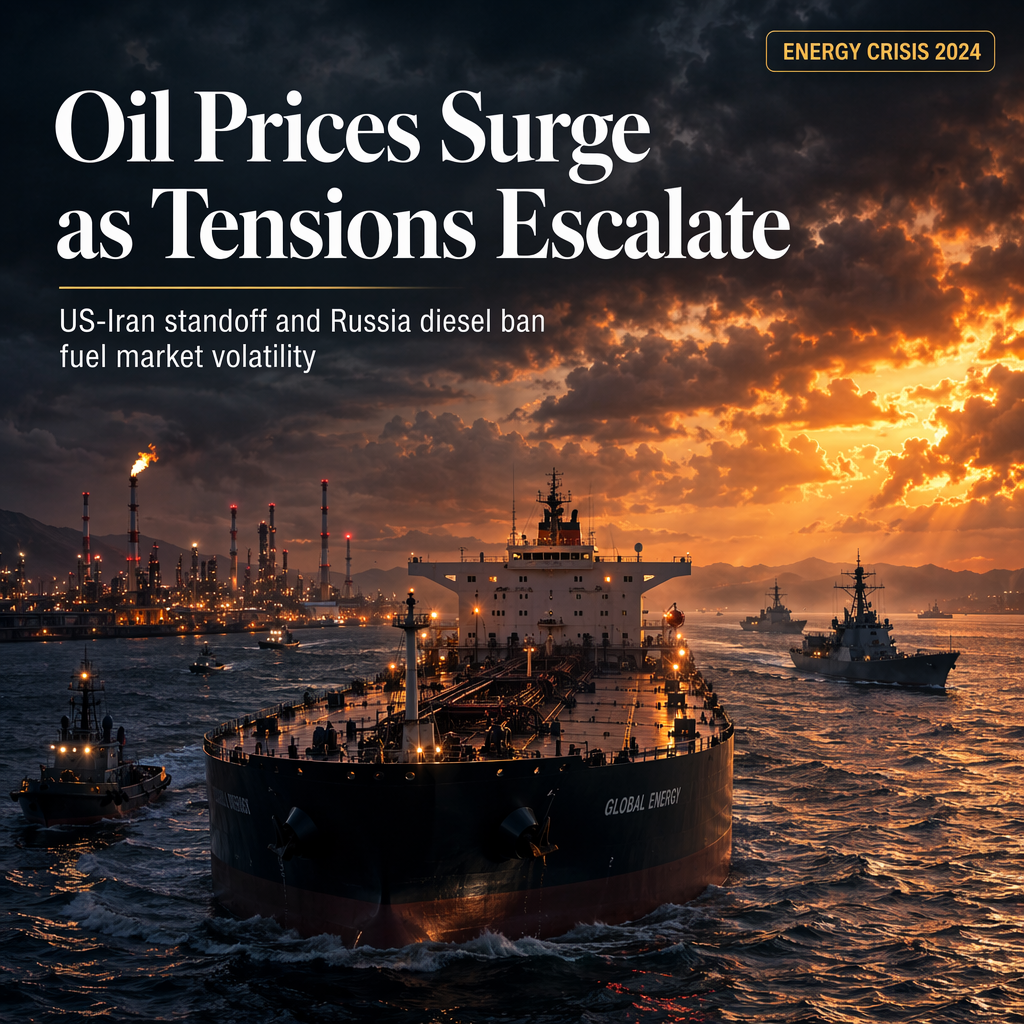
Oil prices have extended their rally amid rising geopolitical risks, with renewed tensions between the US and Iran threatening the fragile ceasefire and disrupting flows through the Strait of Hormuz, a critical energy transit point [1]. ICE Brent crude settled 5.2% higher, closing at just over $78 per barrel, and further upside is anticipated following additional US strikes against Iran in response to earlier attacks on several vessels in the region [1].
A key factor for the oil market outlook is whether the US and Iran can quickly de-escalate the latest surge in tensions. The market is closely monitoring whether shipping activity through the Strait of Hormuz will rebound in the coming days or if heightened risks will continue to deter shipowners from navigating this vital route [1].
Compounding supply concerns, Russia has announced a ban on diesel exports until the end of July, intensifying worries about middle distillate availability [1]. This move, combined with already tighter US product inventories, is expected to boost demand for US barrels even further, according to ING analysts Warren Patterson and Ewa Manthey [1].
The combination of geopolitical instability and supply-side constraints is supporting higher oil prices and raising uncertainty about near-term market dynamics [1].
CONCLUSION
Oil markets are experiencing significant upward pressure due to escalating US-Iran tensions and Russia's diesel export ban. With supply disruptions and rising demand for US barrels, market participants are bracing for continued volatility and closely watching for any signs of de-escalation or further disruptions.